

A sharp rebuke from
the former deputy
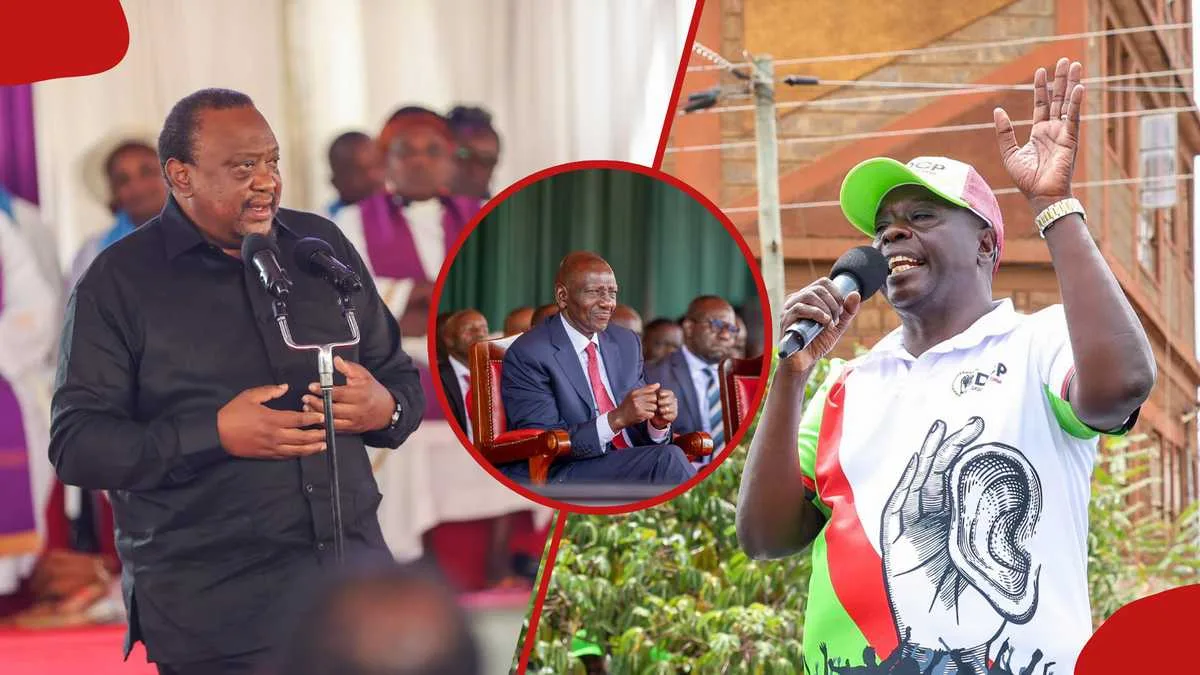
Former Deputy President Rigathi Gachagua has finally decided he’s seen enough. At a funeral service for the wife of Bishop David Macharia, Reverend Catherine Macharia, in Nakuru on Tuesday, he stood up and told Kenya Kwanza leaders that they need to stop their obsession with the retired President Uhuru Kenyatta.
Rigathi Gachagua, who now leads the Democracy for Citizens Party (DCP), reminded the crowd that being a retired leader doesn't mean one loses their voice in a democracy. He made it clear that while Uhuru Kenyatta is out of the official office, he’s very much still a citizen who’s allowed to air his thoughts on how the country is being run.
"Retired but not tired," the former deputy president noted during the service, challenging those currently in power to stop blaming the former head of state for every single problem facing their government today.
The politics of blame in the SHA rollout
There’s a lot of noise currently surrounding the Social Health Authority, which replaced the old National Health Insurance Fund. Many Kenyans have struggled to access basic services under this new system. This has left families across the country frustrated and scared for their health needs.
Instead of taking responsibility for these administrative stumbles, government insiders seem to find it easier to point fingers at the past regime. Rigathi Gachagua isn't buying it. He publicly wondered if Uhuru Kenyatta is somehow responsible for the current technical hitches, long queues, and confusion plaguing the new medical insurance transition.
He accused the current administration of engaging in endless blame games instead of fixing the broken systems. Attacking the former president serves as a lazy way to dodge questions about why things aren't working as promised when the new policy was launched.
Tribal politics and the church
Beyond just the health insurance headache, there’s a rising concern about the tone of political discourse in the country. Rigathi Gachagua didn't hold back, calling out various Kenya Kwanza leaders for drumming up tribal sentiments. He warned that this kind of rhetoric is dangerous and doesn't serve the interests of the ordinary citizen trying to make ends meet in Nairobi or elsewhere.
The tension isn't just between the former and current presidents. National Assembly Speaker Moses Wetang'ula recently took a swipe at church leaders. He claimed that many religious figures were suspiciously quiet when the previous government was in charge, but have suddenly found their voices to critique the current administration led by President William Ruto.
This creates a messy political atmosphere where everyone seems to be looking for someone else to hold accountable. As the political class continues to bicker over who did what during the previous term, the average Kenyan is left watching the clock. They are waiting to see if their local hospital will actually accept their health insurance card today or if they’ll be asked to pay cash once again.
The reality of the transition
The move from the old insurance model to the Social Health Authority was supposed to be a seamless upgrade for all Kenyans. The teething problems have been severe, with many patients reporting that their details aren't appearing in the system. This has caused massive public anxiety, especially for those with chronic conditions who can't afford to miss a single dose of medication.
By positioning himself as a defender of the right to speak out, Rigathi Gachagua is effectively carving out his own lane in the political arena. He’s no longer tied to the official government line, and he seems quite happy to use his freedom to highlight the cracks within the coalition he was once a heartbeat away from leading. He is creating a distinct political identity that separates him from the current administration’s platform.