

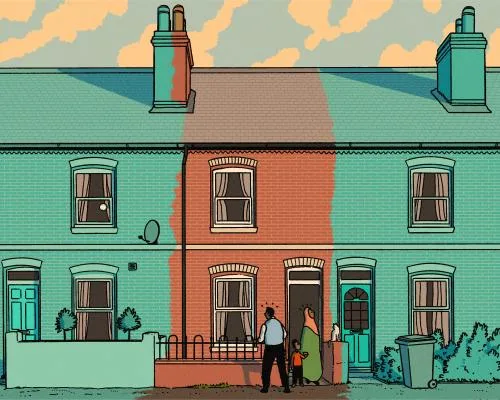
The single sharpest fact in the UK's recent local elections is that many parts of England have turned turquoise, with the Reform party gaining significant ground. Behind this shift in politics lies a more sinister reality: the spread of hate speech and racism. A newly elected Reform councillor has allegedly said "Can't believe the amount of Nigerians in town... should melt them all down and fill in the potholes". This comment has sparked widespread fear among ethnic minorities, who are worried about their safety and dignity under a Reform-led government. They're scared, and they don't know what the future holds.
This isn't an isolated incident. Another Reform candidate tweeted that Muslims "never coexist with others" and should be deported. Another stated that "The only solution" was to "remove the Muslims from our territory". These comments have been dismissed by the party's deputy leader, Richard Tice, as "smearing and sneering". But the reality is that such hate speech has become all too common in the UK's political landscape. It's a problem that won't go away, and it's getting worse.
Nigel Farage, the former leader of the Brexit Party, has a long history of making racist and inflammatory comments. He allegedly sang Hitler Youth songs as a joke and was a racist abuser while at school. He's also expressed admiration for Enoch Powell, a far-right politician known for his anti-immigrant views. Farage has blamed traffic congestion on immigration and has called for a ban on Muslim public prayer. He's made it clear where he stands, and it's not with the minority communities.
The Reform party's policies and talking points have become almost indistinguishable from the swirl of culture war and anti-immigration hysteria that now constitutes the UK's mainstream political culture. The party has promised to cut spending, reject proposals to house asylum seekers, and end diversity roles in local government. This will only succeed in spreading further fear, suspicion, and division. It's a recipe for disaster, and it won't help to build a more cohesive society.
Black and brown neighbours will now be the subject of suspicion, possibly as far as the policing of the languages they're allowed to speak. Farage has said that the number of students speaking English as a second language in Glasgow was tantamount to the "cultural smashing" of the city. Who will be exempt from this suspicion? That's a question that needs to be answered. Who is spared from the suspicion? It's not clear, and that's what's so worrying.
The anti-migrant right has been given too much space and time by the media and politicians to establish itself as the mainstream. So-called legitimate concerns around immigration have turned into covers for prejudice. Mentioning the racism that fundamentally defines this metastasising politics is seen as "woke". It's a problem that can't be ignored, and it won't go away on its own.
Reform will insist that it's about immigration – and no smears or sneers are going to stop them talking about it. They'll keep pushing their agenda, no matter what. But the real threat isn't the pretenders to Keir Starmer's leadership, but a Reform party that's edging further towards taking parliamentary seats at the next election. What's at stake aren't political careers, but the safety and dignity of ethnic minorities in the UK. The relegation of neighbours to second-class citizens is a very real possibility, and it's a scary thought.
The facts are clear: a newly elected Reform councillor allegedly said Nigerians should be "melted down" to fill potholes. Another Reform candidate tweeted that Muslims "never coexist with others" and should be deported. Nigel Farage has a history of making racist and inflammatory comments. The Reform party has promised to cut spending, reject proposals to house asylum seekers, and end diversity roles in local government. These are the facts, and they can't be ignored.
They're a reminder of what's at stake, and what could happen if the Reform party gets its way.