

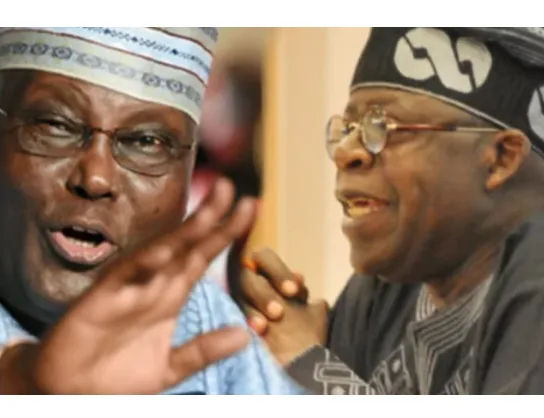
The Presidency isn't mincing words when it comes to former Vice President Atiku Abubakar's stance on the petrol subsidy. They're calling his recent pronouncements a "third U-turn" and a clear sign of "political posturing."
In a statement released on Wednesday, August 26, 2026, Special Adviser to the President on Information and Strategy, Bayo Onanuga, slammed Abubakar. Onanuga suggested Abubakar "is suffering from a lack of basic understanding of his newfound policy prescription." This jab comes after Abubakar, the presidential candidate for the African Democratic Congress (ADC), indicated he would reintroduce fuel subsidies if elected.
But the devil, as they say, is in the details. According to the Presidency, Abubakar's details have been changing faster than Lagos traffic.
First, Abubakar's spokesperson, Paul Ibe, put out a statement saying the former VP would bring back fuel subsidy but then phase it out. This was meant to be a temporary helping hand for Nigerians and businesses trying to get back on their feet. Simple enough, right?
Wrong. Just when Nigerians thought they understood the plan, another senior aide, Phrank Shaibu, jumped in to say Ibe's statement was totally unauthorized and misleading. Shaibu clarified that Abubakar wouldn't be setting a fixed date to end the subsidy. Instead, it would stay until domestic refining capacity grows, supply becomes steady, competition increases, and the market can naturally offer affordable prices without government intervention. This seemed like a more nuanced approach.
But wait, there's more! Hours after Shaibu's clarification, Abubakar himself stepped in, reaffirming his original stance. He insisted his position hadn't changed. He said he would bring back what he called a "targeted subsidy" to boost the purchasing power of Nigerians. This back-and-forth has left the Presidency asking if Abubakar is seriously proposing economic policy or just playing games with the temporary struggles Nigerians are facing.
According to Onanuga, this isn't just a matter of confusing semantics. It's a fundamental policy contradiction. If Abubakar's position truly hasn't changed, why did his aides offer two different explanations? Why did one even publicly disown the other? And why did Abubakar then have to intervene to reiterate the initial proposal?
The Presidency argues that Abubakar's reasoning also shows a misunderstanding of how the petroleum market actually works. They point out that petrol prices aren't simply made cheap by government orders or the mere promise of competition. A whole host of factors, including international crude oil prices, exchange rates, refining expenses, transportation costs, and other market dynamics, all play a role. While competition can boost efficiency, it can't magically shield Nigeria from global oil price fluctuations or other essential input costs.
The Presidency also took issue with Abubakar's simplified view that rising fuel prices directly cause rising transport and food costs, leading to family suffering. While energy and transport costs are indeed linked to food prices, the Presidency stressed that petrol prices alone have never been the sole cause of food inflation. Nigerians, they reminded, experienced rising food prices even when fuel subsidies were in place.
Factors like agricultural productivity, insecurity, exchange rates, logistics, storage, flooding, the cost of farm inputs, and the amount of money in circulation are also crucial drivers of food prices. The Presidency suggested that a serious economic program needs to tackle these complexities. This is much like President Bola Ahmed Tinubu has been doing for the past three years, rather than reducing the entire cost-of-living crisis to just petrol prices.
They've urged Abubakar to stop shifting his stance and provide concrete details. What exactly does he mean by "targeted subsidy"? How much would it cost? Who would actually benefit? How would these beneficiaries be identified? Where would the funding come from? And what specific economic conditions would determine when it finally ends? Nigerians, the statement implies, can't afford another subsidy program, however it's rebranded, that is opaque and potentially expensive.
Ultimately, the Presidency wants Abubakar to be honest with Nigerians. Does he have a clear, costed, and workable fuel policy, or is he simply engaging in political gamesmanship over a policy that has reportedly helped stabilize the nation's fiscal health and macroeconomic environment over the last three years? They believe the economy is too important for policy flip-flops, incoherence, and election gimmicks.