

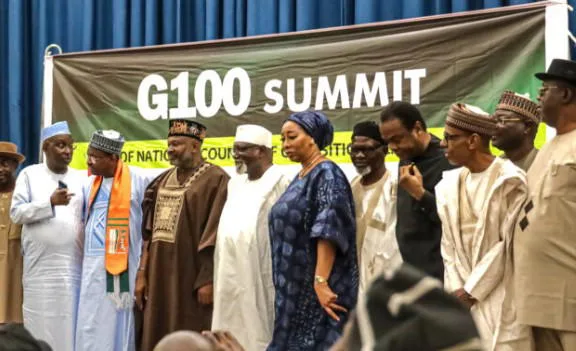
Six major opposition parties in Nigeria have joined forces, not by dissolving their individual ambitions, but by proposing a radical shift in political structure: a single, four-year presidential term. This move, aimed squarely at dethroning President Bola Tinubu in the 2027 elections, was hammered out at a summit in Abuja yesterday, though some heavyweight presidential hopefuls were conspicuously missing.
The idea, championed by figures like Mallam Salihu Lukman of the G-100 coalition, centres on a 'Government of National Competence'. This isn't about parties merging, but about a serious commitment to competence, integrity, and fair representation, all secured by a binding agreement for a single four-year presidential tenure. Lukman stressed the need for 'enforceable' agreements, recalling how past opposition efforts crumbled due to a lack of accountability, despite sincere promises.
Lukman pointed to the 2023 election as a stark lesson. The opposition, he explained, split its votes among multiple candidates, allowing President Tinubu to win with under nine million votes while the opposition collectively polled over thirteen million. "Nobody stole thirteen million votes. We divided them ourselves in public, and we did it knowing exactly what the consequence would be," he stated, framing the outcome as a self-inflicted wound rather than a conspiracy.
This strategy of unity over fragmentation has historical precedents. In Kenya, a 39-year ruling party was ousted in 2002, and Malaysia saw a 61-year coalition government fall in 2018, both times due to unified opposition forces. Lukman made it clear the victory wasn't about superior morality, but simple arithmetic: opposition strength lies in consolidation.
To make this unity work, the G-100 is proposing three standing coalition bodies: a Central Leadership Committee for political direction, a publicity committee for joint messaging, and a legal committee for strategy. Five working groups will also be established, with each party contributing a representative to draft proposals on democratic renewal, the single-term charter, a national reform agenda, opposition unity, and a roadmap for selecting a common presidential candidate.
Notably absent from the summit were presidential candidates Alhaji Atiku Abubakar of the African Democratic Congress (ADC), Mr. Peter Obi of the Nigeria Democratic Congress (NDC), and Engr. Seyi Makinde, the governor of Oyo State who is also associated with the Allied Peoples Movement (APM). Despite their absence, the meeting was attended by other significant figures, including Prince Adewole Adebayo of the Social Democratic Party (SDP) and Donald Duke of the Peoples Redemption Party (PRP), alongside vice-presidential candidates like Lawal Musa Daura of the APM.
The proposal for a single four-year term aims to fundamentally alter the political calculus, preventing the incumbent from seeking re-election and focusing governance on a defined period of national service. It's an ambitious framework designed to overcome the historical fragmentation that has plagued Nigerian opposition politics. Efforts to get a comment from the Presidency were unsuccessful, as spokespersons could not be reached.