

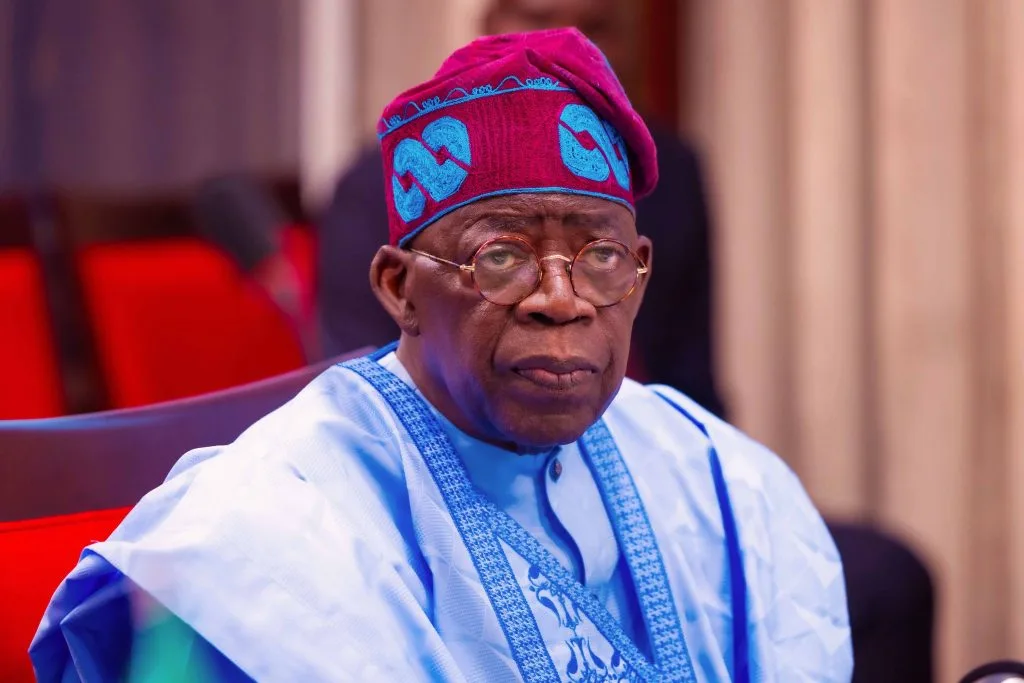
Nigeria's Leader in the Spotlight Over Academic Credentials
President Bola Ahmed Tinubu's educational certificates have become a contentious issue once again. The controversy, which has been ongoing since the 2023 presidential election, has sparked heated debate among Nigerians and opponents of the president.
'The ongoing debate about President Bola Ahmed Tinubu's educational certificates is not and should not be the defining issue in a Nigerian presidential election,' says Suleiman A. Suleiman. 'We cannot always reduce serious questions of governance in a presidential election to fitful hysteria about the academic credentials of candidates.'
According to Suleiman, the certificate controversy is distracting Nigerians from the substantive issues on which both Tinubu and his challengers should be judged in this election. He argues that the prominence being accorded this controversy is undermining the governance and leadership of the country.
While Tinubu has presented his Chicago State University undergraduate degree to INEC, opponents claim that he may not have attended or completed secondary school. Social media reports suggest that he has not submitted any certificates from primary or secondary school. This has raised questions over how he was admitted into university in the first place.
Furthermore, there are allegations that the degree certificate itself may not be genuine, which is effectively an allegation of forgery. This is a critical difference from the case of the late President Muhammadu Buhari, who was a challenger in the 2015 election and did not submit a secondary school certificate to INEC.
Section 131(d) of the Nigerian Constitution requires a presidential candidate to have been 'educated up to at least School Certificate level or its equivalent'. However, the Constitution does not insist on the particularity of a secondary school certificate as the only means by which that threshold can be met.
In contrast, Buhari had nearly three decades of active military service, rising to the position of Major-General, and was a former military head of state. This, combined with his education at Sandhurst and a university degree, was deemed sufficient justification for INEC to accept his submission.
The similarity between the two cases ends there, however. Tinubu's opponents claim that his lack of secondary school certificates and allegations of a forged degree certificate are sufficient grounds to question his eligibility for office.
The controversy has sparked a debate over the educational qualifications of presidential candidates and the relevance of academic credentials in determining their fitness for office.
# Key Facts - Suleiman A. Suleiman argues that the certificate controversy is distracting Nigerians from the substantive issues on which both Tinubu and his challengers should be judged in this election. - Tinubu has presented his Chicago State University undergraduate degree to INEC, but opponents claim that he may not have attended or completed secondary school. - There are allegations that the degree certificate itself may not be genuine, which is effectively an allegation of forgery. - Section 131(d) of the Nigerian Constitution requires a presidential candidate to have been 'educated up to at least School Certificate level or its equivalent'. - The Constitution does not insist on the particularity of a secondary school certificate as the only means by which that threshold can be met.
This article is intended to provide context and clarification on the controversy surrounding President Bola Ahmed Tinubu's educational certificates.
Nigerian Angle
The controversy over Tinubu's certificates has raised questions over the educational qualifications of presidential candidates in Nigeria. This has sparked a debate over the relevance of academic credentials in determining their fitness for office.
The issue is not unique to Tinubu, however. In 2015, the late President Muhammadu Buhari faced similar criticism over his educational credentials.
INEC's Response
INEC has accepted Tinubu's submission, citing Section 131(d) of the Nigerian Constitution. However, opponents claim that the agency has not done enough to investigate the allegations of forgery.
The controversy has sparked a debate over the role of INEC in verifying the educational qualifications of presidential candidates.
The debate is expected to continue in the coming days, with opponents of the president calling for further investigation into the allegations of forgery.
This article provides context and clarification on the controversy surrounding President Bola Ahmed Tinubu's educational certificates.
The article is intended to provide readers with a clear understanding of the controversy and its implications for the country.