

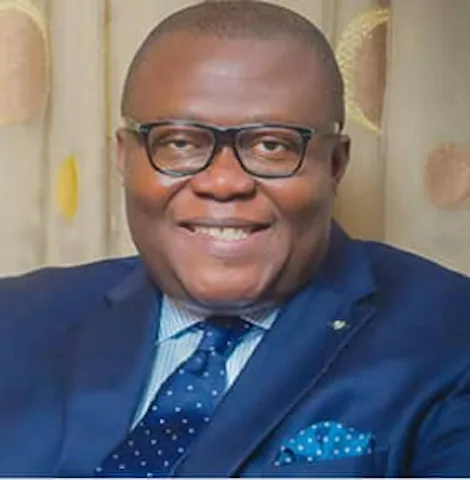
Last Friday, a television interview meant to inform Nigerians quickly turned into a spectacle. Lere Olayinka, who serves as the Senior Special Assistant on Public Communication and Social Media to the Minister of the Federal Capital Territory, Nyesom Wike, was a guest on Arise News's 'The Morning Show'. He was invited to discuss matters of public interest, a common duty for his role.
The show features three anchors: Dr. Reuben Abati, Ayo Mairo-Ese, and Rufai Oseni. Olayinka engaged with Dr. Abati and Mairo-Ese, answering their questions. However, when Rufai Oseni prepared to ask his questions, Olayinka abruptly declared he wouldn't participate. He stated that he considered Oseni an 'enemy' and only wished to speak with 'reasonable human beings.' This declaration brought the interview to an immediate halt.
Ayo Mairo-Ese, one of the anchors, intervened, pointing out the apparent contradiction. She reasoned that Olayinka knew the show had three anchors and had accepted the invitation to be there. Therefore, she argued, he couldn't then pick and choose which interviewer he deemed worthy of his attention.
Sources close to the matter, like Ehi Braimah in his analysis, suggest that Olayinka’s response was provocative and simply unacceptable. Braimah’s take, published today, September 9, 2026, argues that public communication officers don't get to decide who asks them questions. Once you step onto a major platform, you must be prepared for all the questions, even the uncomfortable ones.
Adversarial journalism, the style often employed by Rufai Oseni, is a critical tool in a democracy. It means holding power to account by rigorously scrutinizing officials, challenging their claims, testing evidence, and refusing to accept official narratives without question. Oseni is known for this approach. He frequently confronts government officials and politicians on their policies and records. His intense preparation and sharp intellect have earned him a large following.
This often makes for compelling television, boosting 'The Morning Show's' ratings.
However, the incident also raises questions about Oseni's interviewing style. While his tenacity is praised by many, it's a delicate balance between aggressive questioning and outright confrontation. The line between holding power accountable and becoming part of the news story itself can be thin. Experts like Braimah note that while passion and intellectual confidence are assets for an interviewer, they can become irritating if not managed. A tough interviewer doesn't have to be an angry one.
Challenging questions can be delivered calmly and effectively, sometimes with more impact than a raised voice.
Olayinka's public communication role means he will likely face further scrutiny. The incident has sparked wider discussions about the dynamics between government spokespersons and the media in Nigeria. It highlights the need for professionalism and preparedness on both sides.