

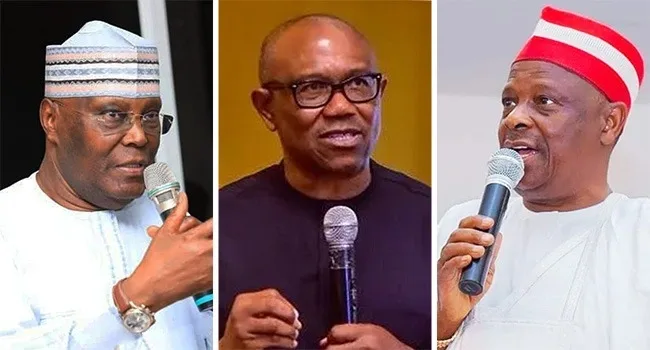
The Nigerian opposition, after a year of talking about unity, is now grappling with a far tougher question: who gets to lead their charge? The conversation, once about bringing forces together, has now turned into a public battle for the presidential ticket.
Rabiu Kwankwaso, a key figure in the opposition, has publicly called on his counterpart, Atiku Abubakar, to step aside in favour of Peter Obi. But Obi isn't backing down either, making it clear he has no intention of conceding his presidential aspirations. This standoff highlights the core problem for any coalition: getting politicians into the same room is one thing; convincing them to surrender their own dreams of leading is another entirely.
The opposition coalition has managed a significant feat by creating a platform for various political forces to negotiate. This platform, however, isn't an electoral strategy. It still needs to answer three critical questions: who will be the flagbearer? What rules will govern the alliance? And what's in it for everyone else if they decide to back down?
These questions aren't being whispered in closed-door meetings anymore; they're now out in the open, and that makes compromise much harder and more expensive. The harder positions become, the more difficult it is to find common ground.
Atiku Abubakar brings a wealth of experience from past presidential contests and a deeply rooted national political network. Peter Obi, on the other hand, carries the momentum from his strong performance in 2023, especially among younger and urban voters. He's backed by a movement showing remarkable enthusiasm. Then there's Rabiu Kwankwaso, commanding a strong political base in Kano and the North, bolstered by the widespread reach of his Kwankwasiyya movement.
The problem is, each man's political strength is precisely what makes it so difficult for him to give way to another. Kwankwaso's plea for Atiku to step down doesn't just reopen an old debate; it exposes the vital bargain the coalition has yet to seal. This is the real test: can these competing interests agree on a single leader and a common path forward?
It's tempting to see every disagreement as a sign the coalition is about to crumble. But it might just be a sign that the coalition is actually working, bringing together different voices to hash things out. The real challenge isn't disagreement itself, but whether these competing interests can eventually accept a decision made together. A successful coalition doesn't mean everyone gets their way; it means enough people believe that staying united offers more than going it alone.
This messy negotiation contrasts sharply with the ruling All Progressives Congress (APC). President Bola Tinubu has already settled the presidential question for the APC, giving the party a strategic advantage: certainty. While the opposition is busy with internal wrangling, the APC can focus on campaigning, crafting messages, and defending its record. The electoral clock is ticking, and with state-level campaigns already underway, the focus is shifting from negotiation to mobilization.
The opposition's struggles aren't just about personalities; there are also organisational hurdles. Even the African Democratic Congress (ADC), the platform meant to unite much of the opposition realignment, has faced internal squabbles over its relationship with the coalition and Atiku's candidacy. This matters because popular figures alone don't guarantee votes. Nigerian elections aren't won just through rallies and social media buzz, but through strong party structures, dedicated candidates, election agents, effective logistics, robust voter mobilization, and the ability to turn national support into votes across every region.
So, the opposition faces a dual task: first, pick a candidate, and second, build a formidable electoral machine to support that candidate. The political landscape remains fluid, but a clear distinction is emerging: the APC is campaigning as the incumbent, promising continuity. The opposition is trying to build an alternative vision while simultaneously deciding who will represent it. It's an unusual race where the APC defends its past, and the opposition must prove it can agree on a future.