

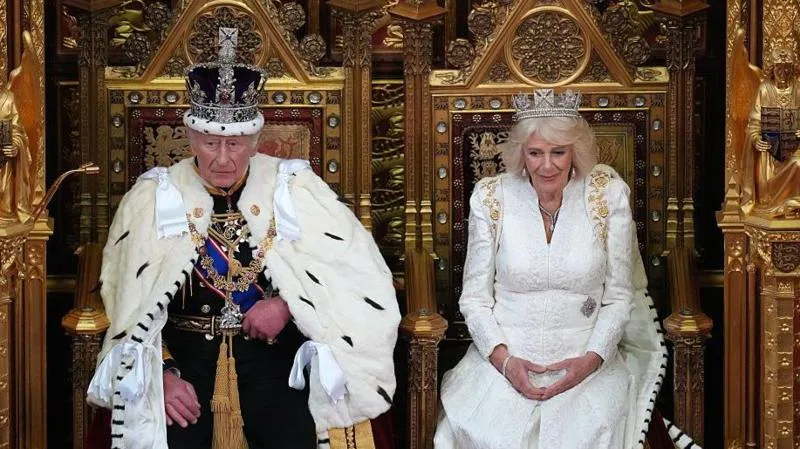
King Charles III delivered a speech to Parliament on May 12, 2026, outlining the government's law-making plans for the next parliamentary session.
The speech included a promise to invest £45bn in major improvements to rail services between key cities in northern England. The plan, known as the Northern Powerhouse rail bill, aims to electrify and improve routes between Leeds and Bradford, as well as Sheffield and York. A new high-speed route between Liverpool and Manchester via Warrington and Manchester Airport is also part of the plan.
The government also plans to introduce a digital ID scheme. This scheme, which isn't compulsory, will allow people to prove their identity without needing a passport or driving licence. It aims to help people who have no other official form of identification.
The King's Speech also included a proposal to nationalise British Steel, which employs 2,700 people in Scunthorpe. The government took operating control of the business in April 2026 to prevent furnaces running out of fuel.
The government has announced plans to reform the leasehold system. They'll introduce a new model of tenure called commonhold. This will allow flat owners to purchase their home and the building and land beneath it, rather than it being owned by a freeholder.
A tourist tax is on the cards. Regional mayors are calling for it to raise more income to invest in local priorities and support economic growth. The Overnight Visitor Levy will bring England in line with Scotland and Wales, where local authorities can already raise a tourist tax if desired.
The government is planning significant reforms to policing. They'll create a National Police Service and reduce the number of larger police forces in England and Wales.
The Cyber Security and Resilience Bill will bring more companies under regulatory scrutiny. This includes those supplying and running electric vehicle charging points and home heating appliances.
The NHS Modernisation Bill will introduce a single patient record. This record will combine all health and social care information in one place, easily accessible by both clinicians and patients.
The Tackling State Threats Bill will give the home secretary the power to ban organisations that are part of other countries' state apparatus.
Key Facts
- £45bn: the amount invested in major rail improvements in northern England
- 2,700: the number of people employed by British Steel
- 2029: the expected year for the introduction of the commonhold tenure
- 2028: the expected year for the £250 cap on ground rents
- 35%: the increase in the number of individuals investigated for involvement in state threat activity, according to MI5
The government's plans have been met with a mixed reception. Some people welcome the investment in infrastructure, while others express concerns about the impact on certain industries.
The speech outlined a wide range of proposals, from infrastructure investment to reforms in policing and healthcare.
The government's agenda for the next parliamentary session is ambitious. Many of the proposed bills aim to boost economic growth and tackle threats to national security.
The King's Speech is a key event in the parliamentary calendar. It outlines the government's plans for the upcoming session.
The speech marks a significant moment for the government. They've faced speculation about their leadership and policies.
The government's plans will have a significant impact on various sectors. These sectors include rail, energy, healthcare, and policing.
The proposed legislation will need to be debated and passed by Parliament before it becomes law.
The government's ability to deliver on its promises will be closely watched by the public and the media.
The King's Speech has set out a clear agenda for the government. The government now needs to implement its plans.