

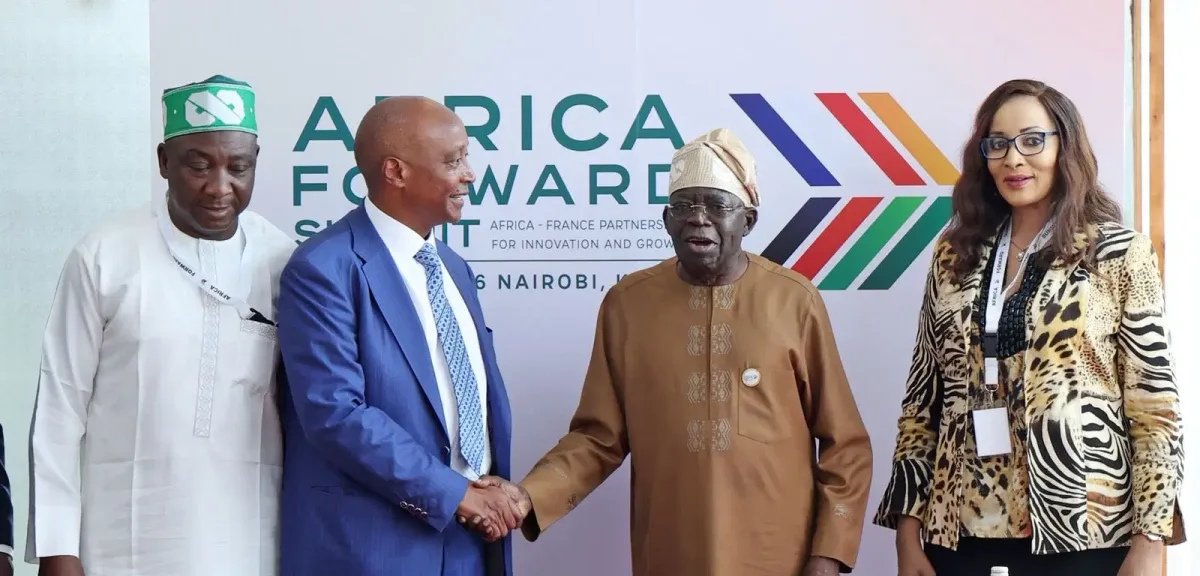
President Bola Tinubu has revealed that Nigeria's debt servicing will hit $11.6 billion in 2026, consuming half of the country's wealth. He made the statement at the Africa Forward Summit in Kenya, criticizing the global financial architecture for stifling Africa's growth. The summit, co-hosted by Kenyan President William Ruto and French President Emmanuel Macron, drew leaders and senior officials from more than 30 African countries. Tinubu's statement highlights the challenges faced by Nigeria and other African countries in managing their debt.
The President's statement was met with attention from global leaders, including United Nations Secretary-General António Guterres and Chairman of the African Union Commission Mahamoud Ali Youssouf. Tinubu argued that the current financial system is structured against Africa's industrial development, leading to a persistent export of raw materials and importation of finished goods at premium prices. He cited Nigeria's own struggles, including a debt-to-GDP ratio projected at 32.3 per cent in 2026 and a financing gap for infrastructure projects.
Tinubu also highlighted the reforms undertaken by Nigeria, including the removal of fuel subsidies, unification of exchange rates, and recapitalisation of the banking sector with over $3.4 billion. He stated that these measures have helped deliver a declining debt-to-GDP ratio, stronger external reserves of $45.5 billion, and renewed investor confidence. However, he lamented that even reforming African economies remain trapped by an unfair financial system.
The President advocated for a financial system that intentionally enables Africa to industrialize, process its own minerals, refine its own crude oil, manufacture its own pharmaceuticals, and compete fairly in global markets. He emphasized the need for stronger regional cooperation in maritime security and blue economy development, describing ocean governance as central to Africa's future prosperity. Tinubu also called for expanded safe, orderly, and legal migration pathways while urging international partners to address the economic conditions fuelling irregular migration.
Key Facts
- Nigeria's debt servicing will hit $11.6 billion in 2026.
- The amount represents nearly 50% of the government's expected income for 2026.
- President Bola Tinubu made the statement at the Africa Forward Summit in Kenya.
- The summit was co-hosted by Kenyan President William Ruto and French President Emmanuel Macron.
- Tinubu criticized the global financial architecture for stifling Africa's growth.
- Africa's share of global manufacturing value remains below 2%.
- Nigeria has undertaken economic reforms, including the removal of fuel subsidies and unification of exchange rates.
- The country's debt-to-GDP ratio is projected at 32.3 per cent in 2026.
- Nigeria's external reserves stand at $45.5 billion.
The Debt Burden on Nigeria
Nigeria's debt burden has been a longstanding challenge for the country. The $11.6 billion debt servicing for 2026 is a significant drain on the country's resources, consuming nearly half of its expected income. This has implications for the country's ability to invest in critical sectors such as infrastructure, healthcare, and education. The President's statement highlights the need for a more sustainable financial system that allows African countries to manage their debt more effectively.
The debt burden is also a major concern for other African countries. Many countries on the continent struggle with high debt levels, which limit their ability to invest in development projects. The African Union has been advocating for a more equitable global financial system that takes into account the unique challenges faced by African countries.
The Africa Forward Summit
The Africa Forward Summit is a significant event that brings together leaders and senior officials from across the continent to discuss critical issues facing Africa. The summit provides a platform for African leaders to engage with global leaders and discuss solutions to the challenges facing the continent. This year's summit focused on leveraging Africa's demographic strengths through youth engagement and entrepreneurship.
The summit also tackled critical drivers of growth, including AI, digitalization, and agro-industrial development. Participants worked on frameworks to turn political promises into actionable industrialization strategies, covering sectors from healthcare and trade to climate change and the creative arts. The summit's agenda reflects the need for a more comprehensive approach to addressing the challenges facing Africa.
Implications for Nigeria's Economy
The President's statement has significant implications for Nigeria's economy. The country's debt burden is a major challenge that needs to be addressed in order to ensure sustainable economic growth. The government's efforts to reform the economy, including the removal of fuel subsidies and unification of exchange rates, are steps in the right direction.
However, more needs to be done to address the country's debt burden and promote economic growth. The President's call for a more equitable global financial system is a recognition of the need for a more sustainable approach to debt management. It remains to be seen how the international community will respond to Nigeria's call for reform.
The Way Forward
The President's statement at the Africa Forward Summit highlights the need for a more comprehensive approach to addressing the challenges facing Africa. The continent needs a financial system that enables it to industrialize, process its own minerals, and compete fairly in global markets. This requires a fundamental transformation of the global financial architecture.
The President's advocacy for stronger regional cooperation in maritime security and blue economy development is also a step in the right direction. Africa's oceans have the potential to drive economic growth and development, but this requires effective governance and management. The President's call for expanded safe, orderly, and legal migration pathways is also a recognition of the need for a more comprehensive approach to addressing the challenges facing Africa.
A Call for Action
"We are not asking for charity. We are demanding a financial system that intentionally enables Africa to industrialise; to process its own minerals, refine its own crude oil, manufacture its own pharmaceuticals, and compete fairly in global markets."
The President's statement is a call to action for the international community to take concrete steps to address the challenges facing Africa. The continent needs a more equitable financial system that allows it to manage its debt more effectively and promote economic growth. It remains to be seen how the international community will respond to Nigeria's call for reform.
Conclusion
In conclusion, President Bola Tinubu's statement at the Africa Forward Summit highlights the challenges facing Nigeria and other African countries in managing their debt. The country's debt burden is a major challenge that needs to be addressed in order to ensure sustainable economic growth. The President's call for a more equitable global financial system is a recognition of the need for a more sustainable approach to debt management.
The summit provided a platform for African leaders to engage with global leaders and discuss solutions to the challenges facing the continent. The President's advocacy for stronger regional cooperation in maritime security and blue economy development is also a step in the right direction. It remains to be seen how the international community will respond to Nigeria's call for reform.