

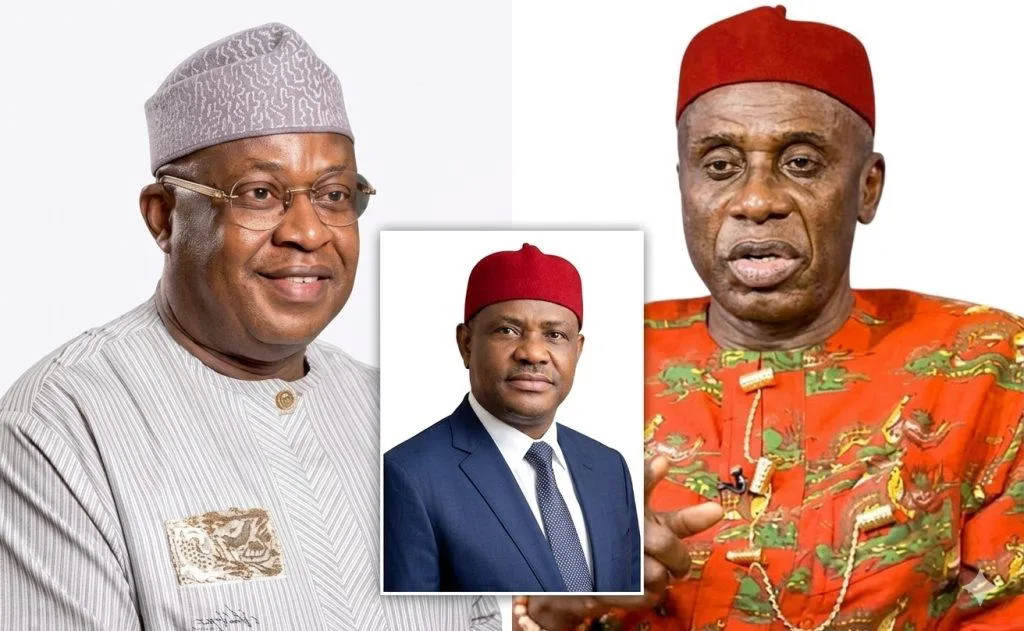
It wasn’t just Edo State that felt Chief Dan Orbih’s political muscle. Back in 2012, the Edo State PDP chairman played a crucial role in a dispute that reshaped the political landscape of Rivers State. This action set Nyesom Wike on his path to becoming one of Nigeria's most influential political figures.
At the heart of the drama was a PDP congress in Rivers State on March 17, 2012. Rotimi Amaechi, then the governor and the undisputed leader of the PDP in Rivers, had his political ally, Chief Godspower Ake, emerge as the party chairman from that congress. Orbih, then leading the PDP in Edo, was the head of the panel sent to conduct this very congress. Who would have thought his account of that day would later become the deciding factor in a major political clash?
By 2013, the once-close political alliance between Amaechi and Wike had completely shattered. Wike, who had served as Amaechi’s Chief of Staff and played a key role in his 2007 governorship victory, had become one of the governor's fiercest opponents at home. This was happening as Amaechi found himself increasingly at odds with the presidency under Goodluck Jonathan. His leadership of the Nigeria Governors’ Forum also caused friction.
Amaechi, however, still held sway over the PDP machinery in Rivers State. He controlled the Government House, most local government chairmen, and a large majority of PDP lawmakers. For Wike to seriously challenge his former mentor, gaining control of the party structure was absolutely vital. This is where the chaos surrounding the 2012 congress came into play.
Felix Obuah and Walter Opuene took the matter to court. They argued they had been the validly elected chairman and secretary at the March 17 congress, not Ake and his secretary. The case landed before Justice Ishaq Bello of an Abuja High Court. Crucially, the court needed the testimony of the man who led the congress panel: Dan Orbih.
Orbih then submitted an affidavit to the court. In it, he disputed the results that the Ake faction was presenting. His sworn testimony stated that the outcome Amaechi’s side was parading didn't actually come from the congress he had overseen. Orbih's evidence backed the results submitted by Obuah.
This was a political bombshell. The Amaechi camp fought back hard, insisting there was video evidence showing Orbih conducting the congress where Ake was chosen. They also claimed that Independent National Electoral Commission (INEC) officials had observed the process. But, it seems, they didn't do enough to officially document their case, perhaps relying too much on the governor's authority.
Ibim Semenitari, who was Amaechi’s Commissioner for Information at the time, publicly expressed her confusion. She couldn't understand how Orbih, whom they believed had run the congress that produced Ake, could give evidence against them. Yet, Orbih had put his account on record, under oath.
On April 15, 2013, Justice Bello delivered a judgment that dramatically changed the game in Rivers politics. He sacked the Godspower Ake-led executive, loyal to Amaechi, and officially recognized the executive led by Felix Obuah, who was aligned with Wike. Orbih's affidavit was a key piece of evidence.
The PDP national leadership didn't waste any time. The very next day, April 16, the party's National Working Committee inaugurated the 27-member Obuah executive in Abuja. This gave the Obuah group national recognition and effectively transferred the official Rivers PDP structure away from Amaechi's control.
It was a stunning political reversal. Amaechi remained governor, holding onto Government House and enjoying the support of most PDP lawmakers in the Rivers House of Assembly. Indeed, 25 out of 32 PDP legislators even rejected the Obuah leadership. The state’s 23 local government chairmen also reportedly sided with Ake. But politically, Amaechi had lost control of the recognised machinery of his own party, leaving Wike with the platform he needed to build his political future.