

The Federal Government is reaffirming its commitment to partnering with Taraba State to unlock the wealth of opportunities in agriculture, energy, tourism, infrastructure, and minerals. This declaration comes as Taraba celebrates its 35th anniversary and officially launches its Regional Development Master Plan.
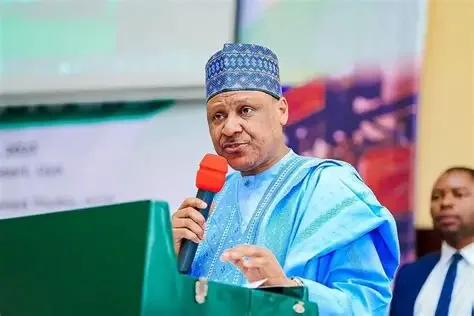
Speaking at the gala night in Jalingo, the Minister of Information and National Orientation, Mohammed Idris, conveyed President Bola Tinubu’s greetings and lauded the state's progress since its creation in 1991. He described the newly unveiled Master Plan as a crucial blueprint for sustainable growth and a clear roadmap for the state's future. Idris stressed that the plan's true success won't be measured by the ceremony itself, but by tangible improvements in citizens' lives.
"The success of this Master Plan won't be measured by the ceremony at which it's unveiled, but by the roads built, businesses created, jobs generated, communities connected and lives improved,” the minister stated.
Idris highlighted Taraba's immense potential, calling it one of Nigeria's most promising economic frontiers, particularly in agriculture and agro-processing, livestock, hydropower, tourism, manufacturing, and mineral development. He also commended Governor Agbu Kefas's administration for its focus on education, healthcare, infrastructure, security, and economic development. This focus is especially evident in the policy of free and compulsory primary and secondary education.
As evidence of this commitment, the state government allocated over N1.8 billion in 2026 to cover examination registration fees for public school students in NECO, BECE, and NABTEB exams. Yet, the real game-changer might be the approximately $268 million in financing agreements signed between Taraba State and the ECOWAS Bank for Investment and Development. These funds are earmarked for an integrated industrial park, 10,000 hectares of irrigated rice production and processing, and a 50-megawatt solar power plant in Jalingo.
These initiatives are exactly what's needed, according to Idris, to transform Taraba's natural advantages into actual production, value addition, jobs, and lasting economic growth. The Federal Government isn't just watching; it's actively supporting these efforts with major federal infrastructure projects.
These include key road constructions such as the Gembu–Mbamnga–Yang (Lip) Road and the Bali–Serti–Gashaka–Gembu Road. Interventions are also planned along the Jalingo–Mutum Biyu–Tella–Wukari corridor. Further work is also slated for the Mayo Selbe–Gembu, Mutum Biyu–Garba Chede, and Jalingo–Numan roads. "These are more than roads," Idris emphasized. "They're investments in connectivity, trade, tourism, agriculture, security and the movement of people and goods."
The minister also reaffirmed the federal government's dedication to harnessing Taraba’s agricultural, energy, and mineral wealth. He made a special mention of the Mambilla Hydroelectric Power Project. On the security front, Idris pointed to ongoing federal reforms aimed at establishing State Police. He believes this would bring policing closer to communities, enhancing professionalism and accountability. This is particularly crucial for Taraba's vast terrain and dispersed border communities where local intelligence and rapid response are vital.
The recent establishment of the Nigerian Army’s 10 Division, headquartered in Jalingo and covering Taraba and Adamawa states, was cited as another testament to the federal government's commitment to regional security. "Security and development must go together," Idris stated. "People can't invest, farmers can't move their produce, tourists can't visit and businesses can't grow where communities feel unsafe."
He further explained that the federal government's economic reforms, like the removal of the petrol subsidy, have generated significant additional resources for the Federation. Between June 2023 and December 2025, this policy mobilized N15.8 trillion. The federal government received about N5.4 trillion, and states and local governments got approximately N10.4 trillion. This influx of funds is intended to boost infrastructure, education, healthcare, security, and human capital development across the country. The government remains firm in its opposition to reverting to the subsidy regime, prioritizing the consolidation of reform gains.