

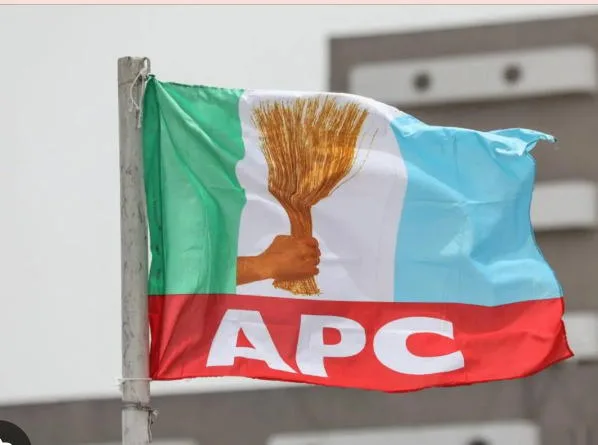
The All Progressives Congress (APC) has retreated from its push for consensus primaries, opting for direct primaries instead. This policy reversal is a result of intense pressure from aspirants and grassroots members across the country's 360 federal constituencies. The APC didn't resist the pressure for long, and it's now clear that direct primaries are the way forward.
The APC's Organising Department dispatched election materials and result sheets to all states on Thursday. Insiders interpreted this as a green light for direct primaries. The National Working Committee (NWC) had initially championed the consensus route as a mechanism for preserving party cohesion. However, the groundswell of opposition made that position increasingly untenable. It's clear that the NWC won't be able to impose its will on the party's members.
A high-ranking source within the party's administrative organ told our correspondent that reports from many states showed that members and aspirants would rather subject their aspirations to an election than concede to consensus. The source stated, mindful of the demand, 'the NWC has directed that everybody should go to the field where aspirants and stakeholders can't agree.' They're giving in to the demand for direct primaries, and it's a significant shift in the party's approach.
The revolt was most visible in Oyo State, where supporters of former Minister of Power Adebayo Adelabu stormed the party secretariat in Ibadan. They were protesting the endorsement of Senator Sharafadeen Alli as the consensus governorship candidate. One protester declared, 'Imposing a candidate denies others a fair opportunity. We demand transparency and the adoption of direct primaries.' They don't want the party to impose a candidate on them, and they're fighting for a fair process.
In the Ile-Oluji/Oke-Igbo and Odigbo Federal Constituency in Ondo State, tensions ran equally high. Reports emerged that Hon. Mathew Oyerinmade, popularly known as MATO, was being steered toward the House of Representatives seat following a failed senatorial bid. Critics dismissed this move as a 'consolation prize' dressed up as consensus. They don't think it's a genuine attempt to find a consensus candidate, and they're resisting the move.
Resistance was no less fierce in the North. Former Minister of Communications Prof. Isa Pantami publicly vowed to fight consensus arrangements in Gombe State. Former Inspectors-General of Police Abubakar Mohammed Adamu and Usman Alkali Baba - contesting in Nasarawa and Yobe states respectively - joined Benue's Mathias Byuan in demanding a competitive process. They're all pushing for direct primaries, and they won't accept anything less.
Thursday's House of Representatives primaries mark only the opening round of what promises to be a defining season of internal contests for the ruling party. The exercise serves as a litmus test for the APC's commitment to internal democracy ahead of a sequence of primaries. These primaries will culminate in the Presidential Primary scheduled for May 23. It's a critical test for the party, and it's not going to be easy.
The APC's decision to opt for direct primaries is expected to have significant implications for the party's internal dynamics. The move is likely to lead to a more competitive process. Aspirants will have to campaign and convince delegates to vote for them. This, in turn, could lead to a more representative and accountable leadership within the party. The party's leadership is likely to be more responsive to its members, and that's a positive development.
The APC's decision is also expected to lead to a more transparent process. The party won't be able to impose its will on the members, and that's a good thing. The members will have a say in who leads the party, and that's what democracy is all about. It's a significant step forward for the party, and it's a welcome development.
Key Facts
- The APC's National Working Committee (NWC) had initially championed consensus primaries.
- The party's Organising Department dispatched election materials and result sheets to all states on Thursday.
- The move is seen as a green light for direct primaries.
- Supporters of former Minister of Power Adebayo Adelabu protested the endorsement of Senator Sharafadeen Alli as the consensus governorship candidate in Oyo State.
- Former Minister of Communications Prof. Isa Pantami publicly vowed to fight consensus arrangements in Gombe State.
As the APC navigates this critical period, it's clear that the party will face significant challenges. The party will need to balance the need for internal democracy with the need for cohesion and unity. The outcome of the primaries will have significant implications for the party's chances in the upcoming general elections. The party can't afford to get it wrong, and they're aware of the stakes.
The APC's commitment to direct primaries is a welcome development. It will provide an opportunity for aspirants to test their popularity, and for the party to select its candidates through a transparent and competitive process. This move is expected to boost the party's credibility and enhance its chances of winning the upcoming elections. The party's reputation will benefit from this move, and that's a positive development.
In the coming days, the APC will face significant challenges as it navigates the complexities of its internal contests. The party will need to manage the expectations of its aspirants, delegates, and supporters. They'll also need to ensure that the process is free, fair, and transparent. The outcome of the primaries will be closely watched, as it will have significant implications for the party's future and its chances of retaining power in the upcoming general elections. The party's future is at stake, and they're aware of it.