

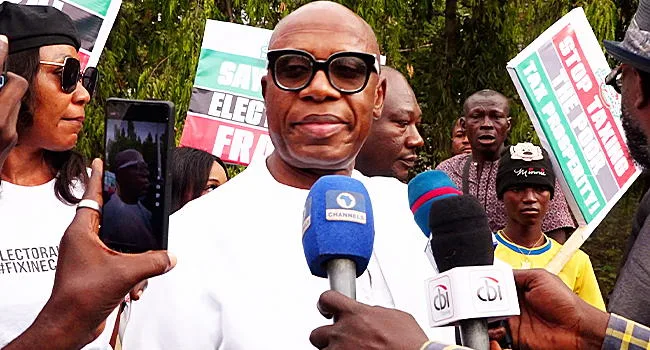
Rotimi Amaechi, the former Minister of Transportation and ex-governor of Rivers State, has slammed the All Progressives Congress (APC) over the current state of the economy. He made these comments on Thursday, May 14, 2026, in Abuja, shortly after submitting his presidential nomination form. Amaechi's decision to speak out against the APC is significant, as he's seeking to become the president of Nigeria in the 2027 election.
Amaechi blames the 'Emilokan' philosophy for the country's economic woes. 'Emilokan' is a Yoruba phrase that roughly translates to 'it's my turn'. He argues that this mindset has led to the suffering of Nigerians, as leaders are chosen based on ethnicity, religion, or whose 'turn' it is to rule, rather than their competence or performance. This approach doesn't work, as it's clear that Nigerians don't benefit from it.
Amaechi said, "It's what you call it, Emilokan, that brought us here. It's our turn that brought us here. It's the turn of Nigerians, because you see there's no market for Christians, neither is there a market for Muslims, or a market for northerners or southerners." He emphasized the need for Nigerians to vote based on merit rather than identity politics. Nigerians shouldn't choose leaders based on their ethnicity or religion, but rather on their ability to lead.
Amaechi also questioned the APC's decision to seek another term in office, given the current state of the economy. He thinks the party should be ashamed of its performance and allow other Nigerians to participate in the election and change the country. The former minister insisted that he has the experience and capacity to lead the country, citing his record as governor of Rivers State and Minister of Transportation. He believes he can make a difference, and that's why he's running.
The 2027 presidential election is expected to be a highly contested one, with several candidates already declaring their interest. Amaechi's comments are seen as a direct challenge to the APC and its leadership, and it's unclear how the party will respond to his criticisms. They might try to defend their record, but it won't be easy.
Amaechi's background is notable, having served as the governor of Rivers State from 2007 to 2015 and as the Minister of Transportation from 2015 to 2019. He was appointed by President Muhammadu Buhari, and his tenure was marked by several controversies, including allegations of corruption and mismanagement of funds. These allegations are serious, and they've had a lasting impact on his reputation.
The 'Emilokan' philosophy has been a topic of discussion in Nigerian politics, with many arguing that it has led to the promotion of incompetent leaders who are chosen based on their ethnicity or religion rather than their ability to lead. Amaechi's comments reflect this sentiment, and it's likely that the issue will continue to be debated in the run-up to the 2027 election. Nigerians won't forget about it, and they'll be looking for answers.
In terms of next steps, Amaechi has expressed his preference for a direct primary to select the party's presidential candidate. He said, 'I'm going for primary. If the consensus is me, fine. But if it's not me, I'm going for primary.' This approach is seen as a more democratic way of selecting a candidate. It allows party members to have a say, and it's more transparent.
Key Facts
- Rotimi Amaechi is a former Minister of Transportation and ex-governor of Rivers State.
- He has declared his interest in the 2027 presidential election.
- Amaechi blames the 'Emilokan' philosophy for Nigeria's economic difficulties.
- He argues that leaders should be chosen based on competence and performance, rather than ethnicity or religion.
- Amaechi prefers a direct primary to select the party's presidential candidate.
The 2027 presidential election is shaping up to be a crucial one for Nigeria, with the country facing numerous challenges, including economic difficulties, insecurity, and corruption. As the campaign season heats up, it's likely that we'll see more candidates declaring their interest and making their case to the Nigerian people. They'll be trying to convince voters that they're the best choice, and it won't be an easy task.