

Typhoon Francisco Brings Heavy Rain and Strong Winds
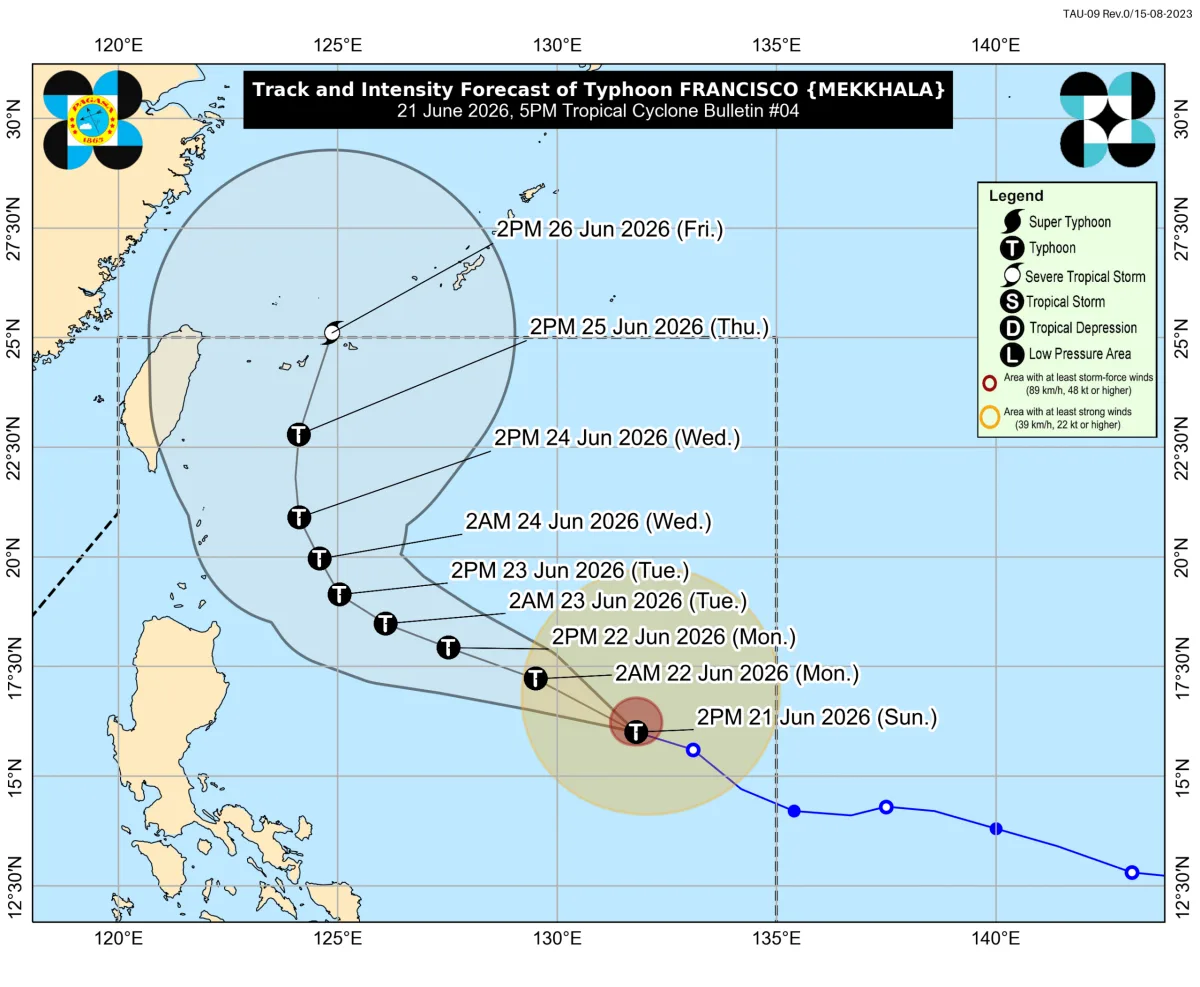
Typhoon Francisco, previously a severe tropical storm, has strengthened into a hurricane, with sustained winds of 120 km/h and gusts of up to 150 km/h. The Philippine Atmospheric, Geophysical, and Astronomical Services Administration (PAGASA) issued a bulletin at 5 pm on Sunday, June 21, warning of the storm's enhanced southwest monsoon.
The southwest monsoon is expected to bring heavy rain and strong winds to parts of Luzon and the Visayas on Monday, June 22, according to PAGASA. Specific rainfall advisories will be issued in the coming days as the storm approaches.
### PAGASA Warns of Strong Winds PAGASA reiterates that Francisco is likely to remain over the Philippine Sea, with a possible closer approach to extreme Northern Luzon if the typhoon's track shifts further westward.
### Enhanced Southwest Monsoon The enhanced southwest monsoon may start bringing heavy rain to parts of Luzon and the Visayas on Monday, June 22. In the meantime, on Sunday evening, the trough or extension of the typhoon may continue to trigger scattered rain and thunderstorms in Bicol.
### Signal No. 1 to be Raised In anticipation of strong winds from Francisco, Signal No. 1 might be raised for portions of Cagayan, Babuyan Islands, and Batanes by Monday morning.
### Coastal Areas to Take Precautions Small vessels should take precautionary measures, or avoid sailing, if possible, as rough seas are expected in various parts of the country.
### Philippines' Sixth Tropical Cyclone for 2026 Francisco is the Philippines' sixth tropical cyclone for 2026, and the second for June. It could leave the Philippine Area of Responsibility (PAR) on Friday, June 26.
### New Low Pressure Area Being Monitored Meanwhile, PAGASA is monitoring a new low pressure area (LPA) outside PAR, located 3,020 kilometers east of southeastern Luzon as of 3 pm on Sunday. This LPA has a low chance of developing into a tropical depression within 24 hours.
The Philippine Atmospheric, Geophysical, and Astronomical Services Administration (PAGASA) has announced the onset of the southwest monsoon last May 30, and the start of the rainy season on June 4.
### No Filipino Connection, But Global Consequences Although the Philippines is not directly connected to Nigeria in this story, it is essential to note that the Philippines and Nigeria can both benefit from better forecasting and early warning systems for natural disasters like typhoons and hurricanes.
### Philippines' History with Typhoons The Philippines has been hit by numerous typhoons in the past, with the country's geography making it vulnerable to storms and floods.
Typhoon Francisco is a reminder to the Philippines and the world that natural disasters can happen anywhere, and it is essential to be prepared and take necessary precautions to minimize damage and loss of life.