

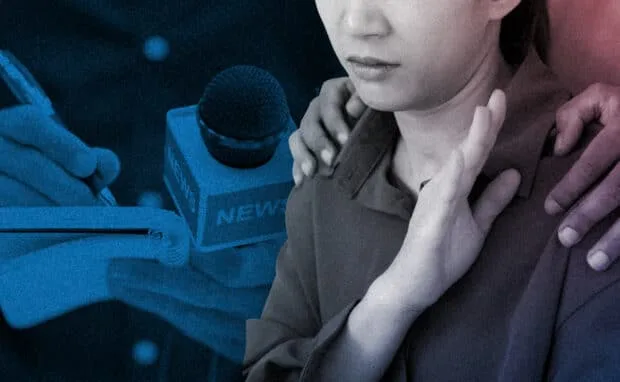
Your news feed might be filled with stories about the world, but there’s a quiet, ugly truth hiding inside the very places that report them: the newsroom. A sweeping 2025 study involving 2,878 media professionals has confirmed that sexual harassment isn’t just an occasional bad experience; it’s a stubborn, global virus. The research, conducted by the World Association of News Publishers (WAN-IFRA) Women in News (WIN), City St George’s, University of London, and BBC Media Action, spans 21 countries. It’s one of the largest deep-dives into media workplace culture ever attempted.
Most of these incidents never see the light of day. While you might see campaigns and hear talk of new company policies on the news, those words rarely change the actual culture behind the desk. Women from sub-Saharan Africa, the Arab region, and Southeast Asia—including right here in our own backyard—are reporting that their bosses and colleagues often make the environment toxic. It isn’t just about the loud, aggressive acts. It’s the constant, grinding pressure that makes some journalists walk away from the profession they love.
The research team surveyed 2,878 professionals across 21 diverse countries. Participants included journalists, editors, managers, producers, technical staff, and human resources personnel. The study was a joint effort between WAN-IFRA Women in News, City St George’s, University of London, and BBC Media Action. Policy reforms often fail because they lack enforcement mechanisms. Data collection focused on regions with high rates of reported media-related trauma, specifically sub-Saharan Africa, the Arab region, and Southeast Asia.
"Sexual harassment persists across media workplaces worldwide, with most cases still going unreported despite years of policy reforms, newsroom campaigns and global conversations on workplace safety."
Think about what that means for a young woman starting her career in Manila or Lagos. You walk in with big dreams of writing the next award-winning investigative piece, but instead, you spend your energy navigating predators or whispers in the corridor. When policies are just pieces of paper stuck on an office notice board, they don’t protect anyone. The study shows that the gap between a written rule and actual safety is wide enough to swallow careers whole.
In the Philippine context, where our newsrooms are often close-knit, community-driven spaces, harassment feels even more personal. It’s like a betrayal by your own tribe. If you’re a junior reporter, complaining about a senior editor who’s been in the business for twenty years feels like a career suicide mission. Ano ba yan; the system seems designed to keep the victim quiet and the status quo loud.
Current approaches to safety are simply not enough. The researchers argue that we need a complete shift in how media houses handle these reports. It shouldn’t fall on the victim to lead the charge against a manager who holds all the cards. We need real, independent bodies that can punish bad behaviour without the fear of retaliation. As long as these safeguards are missing, the best and brightest will keep leaving the industry, and the news we consume will lose the voices that matter most.
It isn’t just a women's issue—it’s an integrity issue for every media house out there.