

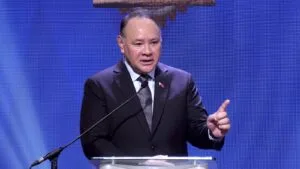
Department of National Defense Secretary Gilberto Teodoro Jr. made a bold stance this Sunday, positioning the Philippines as a primary defender of maritime liberty. Speaking from Manila, he highlighted how our nation's position at the crossroads of the Indian and Pacific Oceans makes us a central player in the stability of the entire Indo-Pacific region. The location of our country at this strategic crossroads makes us a key player in the region's stability.
"Our archipelagic waters are at the heart of busy and vital maritime trade routes that link the Indian and Pacific Oceans, making them indispensable to Southeast Asia and the Indo-Pacific. This positions the Philippines well to safeguard maritime liberty."
Teodoro didn't stop at geography; he doubled down on the legal framework that guides how we handle our seas. He emphasized that Manila will strictly stick to international laws, specifically citing the UN Charter and the 1982 United Nations Convention on the Law of the Sea (UNCLOS). For those who haven't brushed up on their maritime law lately, UNCLOS is basically the rulebook for the ocean, defining how much sea a country can claim as its own territory, including the extent of its exclusive economic zone, and how ships from other countries should behave when passing through.
The Strategic Importance of Our Backyard
The waters surrounding our islands aren't just for fishing or beach trips; they are like the major highways of global trade. Every single day, billions of pesos worth of cargo-passing through these routes, including fuel for cars and gadgets in your pocket, means that the Philippines plays a vital role in international trade. If there's any instability or obstruction in these lanes, the cost of goods in markets from Divisoria to Cebu would skyrocket instantly. When Teodoro talks about safeguarding maritime liberty, he's really talking about keeping these highways open for everyone so that trade keeps flowing, which ultimately affects the prices of goods for ordinary Filipinos.
This isn't the first time the DND has taken a hardline stance on our territorial waters. Since taking his post in the Marcos administration, Secretary Teodoro has consistently pushed for a stronger military presence, often stressing that our sovereignty isn't up for negotiation. He has previously worked as a member of the House of Representatives and once served as the head of the DND under the Arroyo administration, giving him a long, seasoned perspective on how the defense establishment handles pressure from bigger foreign powers.
Navigating the Geopolitical Web
Being the gatekeeper of the Indo-Pacific is a heavy task, especially when other nations also have their own ideas about who owns what. The Philippines has been involved in several high-profile diplomatic spats over the West Philippine Sea, where we've seen everything from radio challenges to close encounters between coast guard vessels. These incidents aren't just news headlines; they directly affect our fishermen who are often told they can't cast their nets in waters they've known their whole lives. The uncertainty surrounding these incidents affects the livelihood of our fishermen.
What happens next depends on how the DND translates these words into actual patrolling and defense capability. Teodoro is currently overseeing the 'Comprehensive Archipelagic Defense Concept,' which aims to shift our military focus from internal security—like fighting insurgents—to protecting our vast sea borders. This means more investment in radar technology, naval ships, and possibly stronger alliances with neighbors who share our interest in keeping the seas free. The successful implementation of this concept will determine the effectiveness of our defense capabilities in safeguarding maritime liberty.
It's a delicate balancing act that requires a lot of careful diplomacy and strategic thinking. While the Secretary talks about international law, the reality on the water remains unpredictable. For the ordinary Filipino, the hope is that these diplomatic maneuvers will eventually lead to lower prices and safer seas for our local fishing communities, who remain the heartbeat of our maritime industry.