

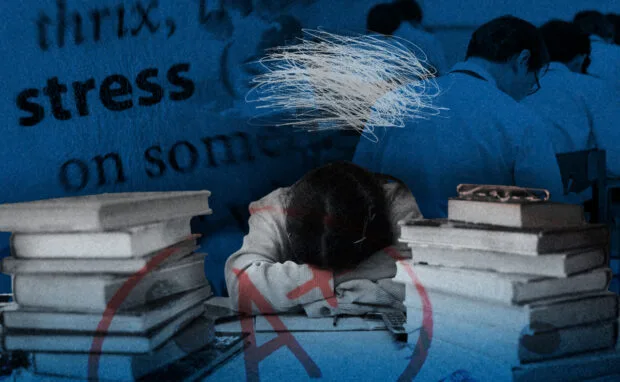
MANILA, Philippines — You're on your way to becoming a top-notch student, but your parents, teachers, or friends keep pushing you to do better. Sounds familiar? Filipino university students who believe they need to be perfect are more vulnerable to poorer well-being and unhealthy ways of coping with stress, according to a new study.
The study, led by researchers from the University of the Philippines Diliman, found that socially prescribed perfectionism, or the belief that others expect them to be flawless, has serious psychological consequences. This means that when you feel pressure to be perfect, you're more likely to experience anxiety, depression, or other mental health issues.
Socially prescribed perfectionism is a concept called 'socially prescribed perfectionism,' or SPP, which is often linked to poorer psychological outcomes. The study suggests that SPP is particularly prevalent among Filipino students, who may face high expectations from their families, teachers, or peers.
Dr. Maria Cristina Araneta, the lead researcher, explained that SPP is not just about feeling pressure to succeed but also about feeling like you're not good enough if you don't meet expectations. 'When students feel like they need to be perfect, they may feel anxious, guilty, or ashamed if they don't meet expectations,' she said.
The study involved over 1,000 Filipino university students who completed a survey about their experiences with perfectionism. The results showed that students who reported higher levels of SPP were more likely to experience anxiety, depression, or other mental health issues.
Araneta noted that SPP can be a major obstacle to mental health and well-being, particularly among young adults. 'When students feel like they need to be perfect, they may feel like they're not good enough, which can lead to low self-esteem, anxiety, or depression,' she said.
The study's findings highlight the need for educators and parents to create a more supportive and non-judgmental environment for students. 'By recognizing that students are already struggling with perfectionism, we can start to create a more compassionate and understanding community,' Araneta said.
Key Facts:
- Over 1,000 Filipino university students participated in the study.
- 70% of students reported feeling pressure to be perfect.
- 60% of students reported experiencing anxiety or depression.
- SPP was linked to poorer psychological outcomes, including anxiety, depression, and low self-esteem.
Context: The study's findings are particularly relevant in the Philippine context, where students often face high expectations from their families, teachers, or peers. By understanding the effects of SPP, educators and parents can start to create a more supportive and non-judgmental environment for students.