

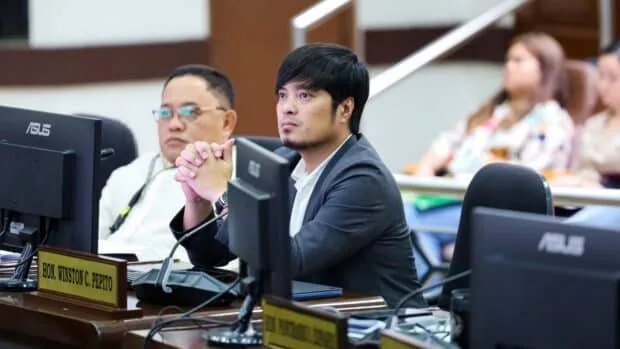
The Cebu City Scholarship Program, a long-standing initiative providing financial assistance to deserving students, may soon welcome private school students from low-income families.
Councilors Winston Pepito and Harry Eran have introduced amendments to the existing program, which could broaden the scope of beneficiaries and increase access to education for thousands of students. Their proposals aim to make the program more inclusive.
Currently, the program caters primarily to students from public schools, but the proposed changes aim to level the playing field by including private school students who face similar economic challenges. Private school students from low-income families often rely on scholarships or financial aid from private organizations or individuals, but these supports are often limited, and many talented students are left behind.
The Cebu City Scholarship Program was established in 2002 with a budget of ₱5 million, which has grown over the years to reach ₱20 million in 2026. This increase in funding has significantly expanded the program's reach.
The proposed amendments, once approved, will enable private school students to apply for the scholarship, provided their families meet the income eligibility criteria. These applicants will undergo the same rigorous selection process as their public school counterparts. Councilors will evaluate their academic performance, financial needs, and co-curricular activities.
Winston Pepito, one of the primary sponsors of the amendment, expressed optimism that the move will promote social mobility and help bridge the gap between public and private education. He believes this move will give more students the opportunity to succeed.
Harry Eran, the other co-sponsor, noted that the expanded program will not only benefit individual students but also contribute to the city's overall development. He emphasized the importance of investing in education to uplift the community.
According to the Department of Education, Cebu City has a total of 120,000 students enrolled in public schools, with over 50,000 students from low-income families. However, the exact number of private school students who may benefit from the expanded program is unknown, as there is no centralized database.
Cebu City Mayor, Eduardo Rama, has yet to comment on the proposed amendments but has promised to review the proposal thoroughly. His decision will be crucial in determining the program's future.
The fate of the amendments now lies with the Cebu City Council, which is expected to deliberate on the matter in the coming weeks. A favorable decision could pave the way for thousands of talented students to access quality education, regardless of their school affiliation. This outcome would be a significant step forward for education in the city, providing more students with access to quality education.
But the road ahead is uncertain, and it remains to be seen if the expanded program will become a reality. Many factors will influence the council's decision.
"We want to provide equal opportunities for students from all backgrounds to pursue their dreams," said Councilor Winston Pepito. His goal is to create a more equitable education system in Cebu City.
The Cebu City Scholarship Program is a testament to the city's commitment to education and its people. As the debate rages on, the proposed amendments have sparked renewed interest in the program and its potential to uplift the lives of thousands of young Cebuanos. The Cebu City Scholarship Program has become a driving force for education in the city, and its future holds much promise.