

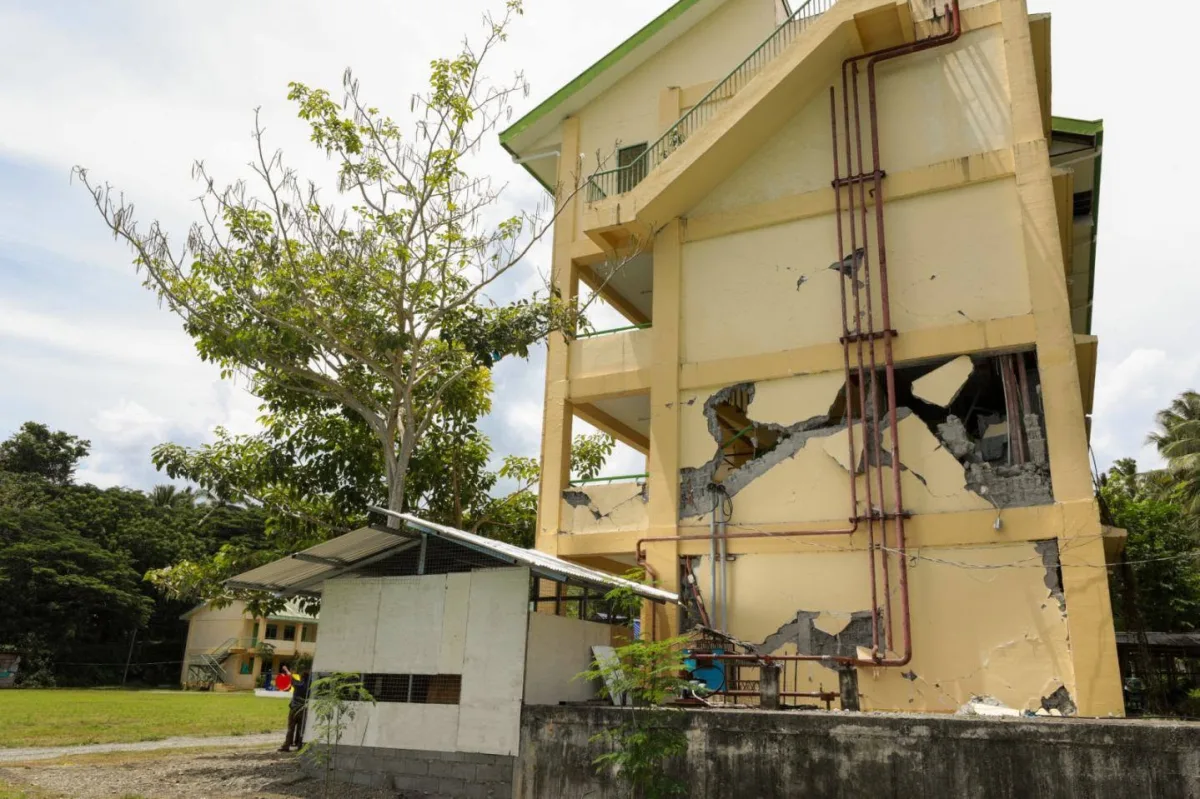
Thousands of students across Mindanao are still out of class a week after a magnitude 7.8 earthquake struck off Sarangani.
On Monday, June 15, the Department of Education (DepEd) said 3,500 schools — mostly in Soccsksargen and Davao Region — were still under suspension. That's down from 9,090 schools that halted classes when the quake hit on June 8, the first day of School Year 2026-2027.
In the worst-hit Soccsksargen region, most areas have now lifted class suspension orders. Cotabato, Kidapawan City, Koronadal City, Tacurong City, and Sultan Kudarat returned to in-person classes on Monday under Level 1-Hayo. In South Cotabato, only Surallah, Norala, Tantangan, and Santo Niño resumed face-to-face classes.
Hard-hit areas still on hold
General Santos City and Sarangani remain under Level 4-Hinto — the most severe classification under DepEd's emergency guidelines. School buildings there suffered major damage, aftershocks are still being felt, and residents face power outages and lack of clean water. Seven schools in Sarangani are also serving as evacuation centers.
“We can't force them to return to classes because their buildings are still unsafe and they still need to be given psychological first aid for their well-being,” Shienna Lyn Antenor, DepEd Soccsksargen chief education supervisor, told Rappler in Filipino.
No enrollment figures are available yet for SY 2026-2027 in these areas. But last school year, General Santos City had over 175,000 students in public and private schools, while Sarangani had around 149,000.
Gradual return, not abrupt
Even if local mayors lift suspension orders in the coming days, schools in General Santos City and Sarangani won't jump straight back to normal. Antenor said they'll first implement Level 3-Hinga or Level 2-Hinay — transitional stages that ease students back into learning.
Under Level 3-Hinga, academic demands are heavily reduced. Students use "family kits" for home-based learning. Level 2-Hinay allows schools to use online classes, digital modules, broadcast materials, or printed modules. Antenor said flexible learning programs could be implemented in case of prolonged disruption.
Catch-up plans and trauma care
Teachers across Soccsksargen are prioritizing "kumustahan" or check-in sessions this week before continuing opening block activities — orientations, diagnostic tests, and health profiling that were originally scheduled last week. They'll also identify students traumatized by the earthquake so experts can provide psychological first aid.
Schools will follow their learning continuity plans to determine schedules as they try to catch up with the new three-term calendar. The instructional block was supposed to begin this week.
Makeup classes or asynchronous activities may be held during the end-of-term block — the last nine to 10 days of each term — to compensate for missed days. The schedule is still under discussion. Under the three-term calendar, DepEd aims for 165 instructional days per year.
Damage and cost
DepEd assessed at least 1,501 schools with varying degrees of damage, totaling over 9,000 damaged classrooms. At least P363 million is needed for cleanup, clearing operations, and minor repairs.
Key Facts
- 9,090 schools initially suspended classes after the June 8 quake
- 3,500 schools still suspended as of June 11
- 1,501 schools damaged, with over 9,000 classrooms affected
- P363 million needed for cleanup and minor repairs
- 175,000+ students in General Santos City (last SY)
- 149,000+ students in Sarangani (last SY)