

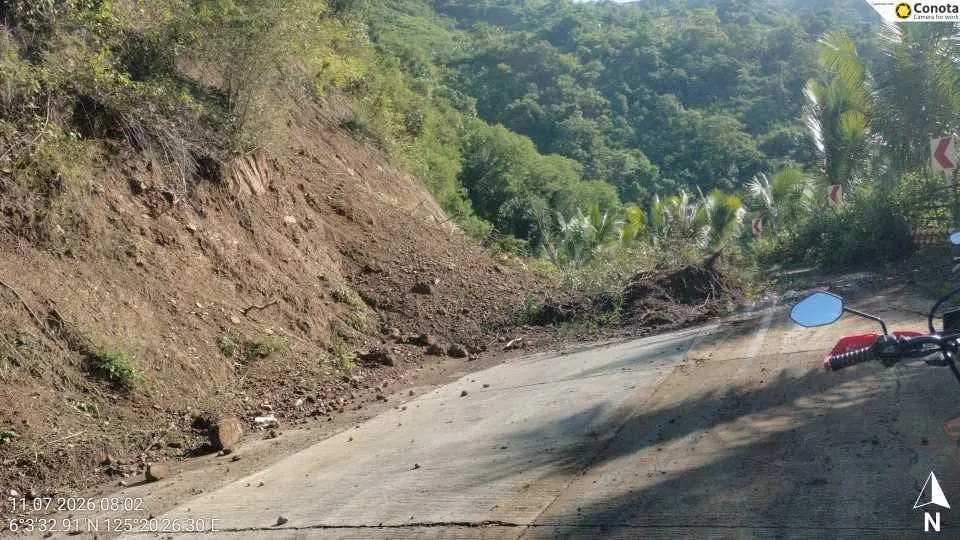
At least 17 people died due to drowning and landslides caused by the southwest monsoon or habagat, which is being enhanced by Typhoon Inday (Bavi), the National Disaster Risk Reduction and Management Council (NDRRMC) announced on Saturday, July 11.
The town of Malapatan, Sarangani, recorded 10 deaths. The municipality earlier reported that it had completed its retrieval operations on Saturday morning after recovering the bodies of the last two individuals that had been buried in the landslide in Purok Pandao, Barangay Poblacion.
Malapatan, which reported the highest number of deaths, has so far evacuated a total of 230 families in the affected barangays of Poblacion, Libi, and Sapu Padidu. Two households in Barangay Daan Suyan were "totally damaged" from heavy rains, according to the town's information office.
Meanwhile, Calanogas, Lanao del Sur, recorded five deaths due to a landslide, while Bukidnon's two casualties were due to drowning.
The NDRRMC reported that at least 514,700 individuals and 112,500 families have been affected by the enhanced southwest monsoon. While Typhoon Inday (Bavi) left the Philippine Area of Responsibility at 8:20 am on Saturday, its outer bands are still bringing strong winds and enhancing the southwest monsoon or habagat.
The Philippine Area of Responsibility (PAR) is the portion of the ocean where the Philippines is located, and the National Disaster Risk Reduction and Management Council (NDRRMC) is the country's main disaster management agency. The PAR is defined by the Philippines' borders with its neighboring countries, Indonesia and Malaysia.
Typhoon Inday (Bavi) made landfall in the Philippines on July 9, bringing strong winds and heavy rains that have caused widespread damage and disruption.
### Key Facts
- 17 reported casualties due to the enhanced southwest monsoon
- 9 missing individuals
- 514,700 individuals affected by the enhanced southwest monsoon
- 112,500 families affected by the enhanced southwest monsoon
- 230 families evacuated in Malapatan, Sarangani
- 10 deaths in Malapatan, Sarangani
- 5 deaths in Calanogas, Lanao del Sur
- 2 deaths in Bukidnon
### Full Story
The enhanced southwest monsoon, or habagat, has brought strong winds and heavy rains to parts of the Philippines, causing widespread damage and disruption. At least 17 people have died and 9 are missing, according to the National Disaster Risk Reduction and Management Council (NDRRMC).
The town of Malapatan, Sarangani, has been hardest hit, with 10 deaths reported. The municipality has completed its retrieval operations, and has evacuated a total of 230 families in the affected barangays of Poblacion, Libi, and Sapu Padidu.
Two households in Barangay Daan Suyan were "totally damaged" from heavy rains, according to the town's information office.
Calanogas, Lanao del Sur, recorded five deaths due to a landslide, while Bukidnon's two casualties were due to drowning.
The NDRRMC reported that at least 514,700 individuals and 112,500 families have been affected by the enhanced southwest monsoon. While Typhoon Inday (Bavi) left the Philippine Area of Responsibility at 8:20 am on Saturday, its outer bands are still bringing strong winds and enhancing the southwest monsoon or habagat.
The enhanced southwest monsoon is expected to continue until July 14, according to the NDRRMC. Residents in the affected areas have been advised to stay indoors and avoid traveling unless necessary.
The Philippine government has mobilized rescue teams and relief goods to the affected areas. The government has also set up evacuation centers for those affected by the enhanced southwest monsoon.
The enhanced southwest monsoon is a natural phenomenon that occurs when the southwest monsoon, or habagat, is enhanced by a typhoon or a low-pressure area. The habagat is a seasonal wind pattern that brings rain and strong winds to the Philippines during the pre-monsoon season.
Typhoon Inday (Bavi) made landfall in the Philippines on July 9, bringing strong winds and heavy rains that have caused widespread damage and disruption. The typhoon is expected to exit the Philippine Area of Responsibility by July 11.
The Philippine Area of Responsibility (PAR) is the portion of the ocean where the Philippines is located, and the National Disaster Risk Reduction and Management Council (NDRRMC) is the country's main disaster management agency. The PAR is defined by the Philippines' borders with its neighboring countries, Indonesia and Malaysia.
The NDRRMC is led by Secretary Rhona Mae E. Cancio, who has extensive experience in disaster management and response. The agency works closely with local government units to prepare for and respond to disasters.
The Philippine government has invested heavily in disaster risk reduction and management, and has established a network of early warning systems to alert residents of potential disasters.
The enhanced southwest monsoon, or habagat, is a natural phenomenon that occurs when the southwest monsoon is enhanced by a typhoon or a low-pressure area. The habagat is a seasonal wind pattern that brings rain and strong winds to the Philippines during the pre-monsoon season.
The NDRRMC has reported that the enhanced southwest monsoon has affected 112,500 families and 514,700 individuals, with a total of 17 reported casualties and 9 missing individuals.
According to the Philippine Statistics Authority, the Philippines has a high risk of landslides and flooding, particularly during the pre-monsoon season. The National Disaster Risk Reduction and Management Council (NDRRMC) has identified the top 10 most disaster-prone provinces in the country, which include Cagayan, Isabela, Nueva Vizcaya, Quirino, Ifugao, Mountain Province, and Benguet.
The NDRRMC has advised residents in the affected areas to stay indoors and avoid traveling unless necessary. The agency has also set up evacuation centers for those affected by the enhanced southwest monsoon.
The Philippine government has mobilized rescue teams and relief goods to the affected areas. The government has also set up a hotline for residents to report any emergency situation or request for assistance.
The NDRRMC has activated its emergency operations center to monitor the situation and provide assistance to those affected by the enhanced southwest monsoon.
The Philippine government has invested heavily in disaster risk reduction and management, and has established a network of early warning systems to alert residents of potential disasters.
The NDRRMC has identified the top 10 most disaster-prone provinces in the country, which include Cagayan, Isabela, Nueva Vizcaya, Quirino, Ifugao, Mountain Province, and Benguet.
The enhanced southwest monsoon is expected to continue until July 14, according to the NDRRMC. Residents in the affected areas have been advised to stay indoors and avoid traveling unless necessary.
The NDRRMC has reported that at least 514,700 individuals and 112,500 families have been affected by the enhanced southwest monsoon.
While Typhoon Inday (Bavi) left the Philippine Area of Responsibility at 8:20 am on Saturday, its outer bands are still bringing strong winds and enhancing the southwest monsoon or habagat.
The Philippine government has mobilized rescue teams and relief goods to the affected areas. The government has also set up evacuation centers for those affected by the enhanced southwest monsoon.
The enhanced southwest monsoon is expected to continue until July 14, according to the NDRRMC. Residents in the affected areas have been advised to stay indoors and avoid traveling unless necessary.
The NDRRMC has reported that at least 514,700 individuals and 112,500 families have been affected by the enhanced southwest monsoon.
Typhoon Inday (Bavi) made landfall in the Philippines on July 9, bringing strong winds and heavy rains that have caused widespread damage and disruption.
The Philippine Area of Responsibility (PAR) is the portion of the ocean where the Philippines is located, and the National Disaster Risk Reduction and Management Council (NDRRMC) is the country's main disaster management agency. The PAR is defined by the Philippines' borders with its neighboring countries, Indonesia and Malaysia.
The NDRRMC has reported that the enhanced southwest monsoon has affected 112,500 families and 514,700 individuals, with a total of 17 reported casualties and 9 missing individuals.
The Philippine government has invested heavily in disaster risk reduction and management, and has established a network of early warning systems to alert residents of potential disasters.
The NDRRMC has identified the top 10 most disaster-prone provinces in the country, which include Cagayan, Isabela, Nueva Vizcaya, Quirino, Ifugao, Mountain Province, and Benguet.
The enhanced southwest monsoon, or habagat, is a natural phenomenon that occurs when the southwest monsoon is enhanced by a typhoon or a low-pressure area.
The Philippine government has mobilized rescue teams and relief goods to the affected areas. The government has also set up evacuation centers for those affected by the enhanced southwest monsoon.
The NDRRMC has activated its emergency operations center to monitor the situation and provide assistance to those affected by the enhanced southwest monsoon.
The enhanced southwest monsoon is expected to continue until July 14, according to the NDRRMC. Residents in the affected areas have been advised to stay indoors and avoid traveling unless necessary.
The Philippine government has invested heavily in disaster risk reduction and management, and has established a network of early warning systems to alert residents of potential disasters.
The NDRRMC has identified the top 10 most disaster-prone provinces in the country, which include Cagayan, Isabela, Nueva Vizcaya, Quirino, Ifugao, Mountain Province, and Benguet.
The enhanced southwest monsoon, or habagat, is a natural phenomenon that occurs when the southwest monsoon is enhanced by a typhoon or a low-pressure area.
The Philippine government has mobilized rescue teams and relief goods to the affected areas. The government has also set up evacuation centers for those affected by the enhanced southwest monsoon.
The NDRRMC has activated its emergency operations center to monitor the situation and provide assistance to those affected by the enhanced southwest monsoon.
The enhanced southwest monsoon is expected to continue until July 14, according to the NDRRMC. Residents in the affected areas have been advised to stay indoors and avoid traveling unless necessary.