

Two senior commanders of the Islamic State West Africa Province (ISWAP) have surrendered to troops of Operation HADIN KAI — but instead of relief, the development has triggered fresh fears that Nigeria's approach to reintegrating former fighters is dangerously flawed.
Ismail Mohammed and Abu Umar gave themselves up on June 8, 2026, following sustained military operations across the Lake Chad axis. Mohammed was a close associate of ISWAP leader Baa Shuwa and deeply embedded in the group's command structure. Umar was a skilled explosives expert who built and maintained vehicle-borne improvised explosive devices (VBIEDs).
The military has presented the surrender as proof that sustained pressure is breaking insurgent ranks. But outside the battlefield, the question is different: does a fighter who lays down his weapon because he's hungry or under fire actually stop being a threat?
Rear Admiral Dickson Olisemelogor (rtd) said the answer is no — at least not under the current system. He argued that what Nigeria calls deradicalisation is really just disengagement.
“The idea of reintegrating de-radicalised deviants into society is good. However, what I see in our own case is disengagement rather than deradicalisation.”
He explained that deradicalisation means changing a person's ideology over time. That's not what's happening.
“As far as I'm concerned, most of the so-called repentant Boko Haram boys aren't de-radicalised because they come out when military pressure or hunger knocks hard on them.”
Olisemelogor also warned that some fighters are sent to gather intelligence and infiltrate security agencies. He said this is why they return to their old groups or form new terror outfits when the opportunity arises.
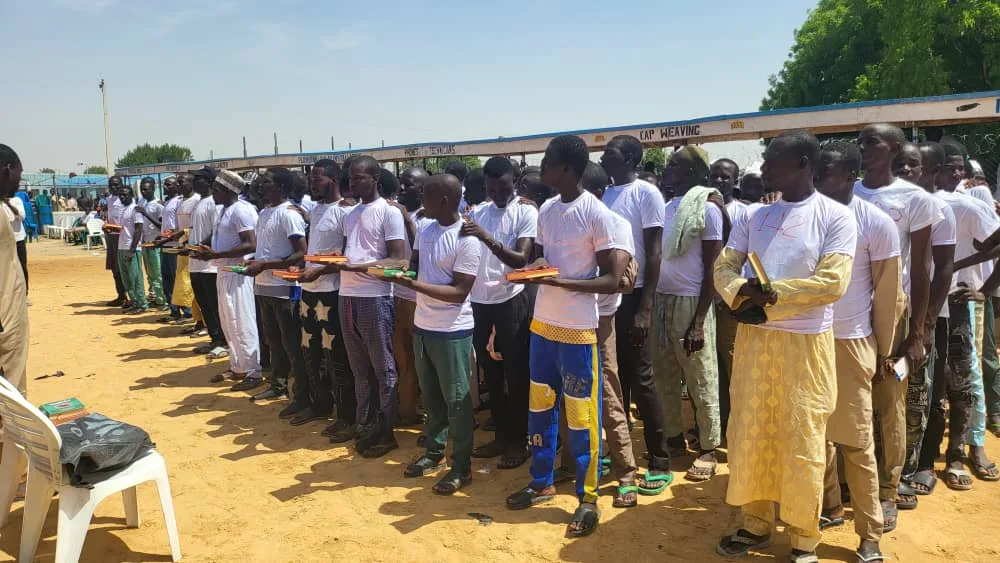
The debate was reignited on April 16, 2026, when the Federal Government announced that 744 former insurgents had completed rehabilitation under Operation Safe Corridor and would be reintegrated into society. The group included 597 from Borno State and nationals from Niger, Chad, Cameroon, and Burkina Faso. They underwent psychosocial therapy, vocational training, civic education, and religious reorientation.
Retired Brigadier General Makinde commended the troops for what he called a professionally executed pressure campaign. But he urged caution.
“Confidence doesn't remove caution. In fact, it should increase vigilance. We must also not be naïve. In insurgency warfare, surrender is sometimes tactical. Some individuals surrender not because they're defeated ideologically, but because they're seeking survival, access, or operational advantage.”
He stressed that community intelligence, local leadership structures, and security networks must remain alert.
A serving Major General who spoke anonymously because he wasn't authorised to address the media was even blunter. He said he was among those who criticised the Safe Corridor programme from the start.
“How would they integrate? Take Jilli market, where the Air Force bombed recently, it was a Boko Haram supply hub. After all that, you want to reintegrate them into a society where their former members still operate?”
He also alleged that some senior officers sympathise with the insurgents and that the system has been infiltrated.
“I've served as defence attaché in many countries, and I've come back to realise that we'll pay the price if things go wrong.”