

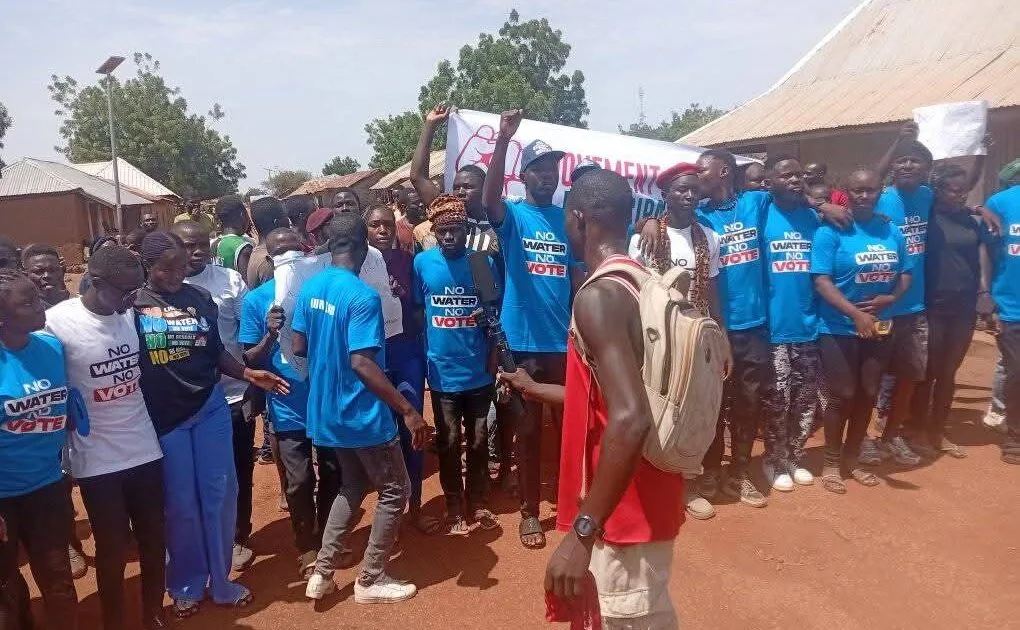
Young people in Mabudi, the headquarters of Langtang South Local Government Area of Plateau State, took to the streets on Wednesday to protest a severe water shortage. The protesters, many wearing 'No Water, No Vote' T-shirts, marched through the community, chanting slogans and carrying placards calling for potable water.
The protest aimed to draw the government's attention to the urgent need for a sustainable water supply scheme, said Mr. Nanlir Gambo, a youth leader. The community is forced to depend on unsafe water sources, a situation Gambo described as unacceptable.
The Langtang South LGA has implemented temporary measures, including providing water through tankers, said Mr. Butko Iliya, Chief Press Secretary to the Executive Chairman. The Plateau State Ministry of Water Resources and Energy has also started immediate and long-term interventions.
A high-powered delegation led by the Permanent Secretary of the Ministry, Mr. Lohnan V. Gambo, visited the area following an appeal by the council chairman to Governor Caleb Manasseh Mutfwang. A comprehensive geophysical survey has commenced in Mabudi and surrounding communities to identify sustainable water sources.
Key Facts
- 179 million people in Nigeria lack access to safely managed drinking water.
- 60-70 million people in Nigeria lack access to basic water.
- 114 million people in Nigeria lack basic sanitation.
- Over 70,000 child deaths occur annually due to diarrheal diseases caused by poor water and sanitation.
The crisis causes significant health challenges, especially for children and women, who often trek long distances for water. The youths have threatened to boycott future elections if their demands aren't urgently addressed.
The Langtang South LGA chairman, Nanfa Nbin, has been providing water through tankers since the dry season began. The government has assured residents it's committed to providing a lasting solution.
The Galadima of Mabudi, Chief Ringjul Dashe, commended the government for responding promptly, saying water is essential to life. The situation highlights Nigeria's broader water scarcity challenges and need for sustainable solutions.