

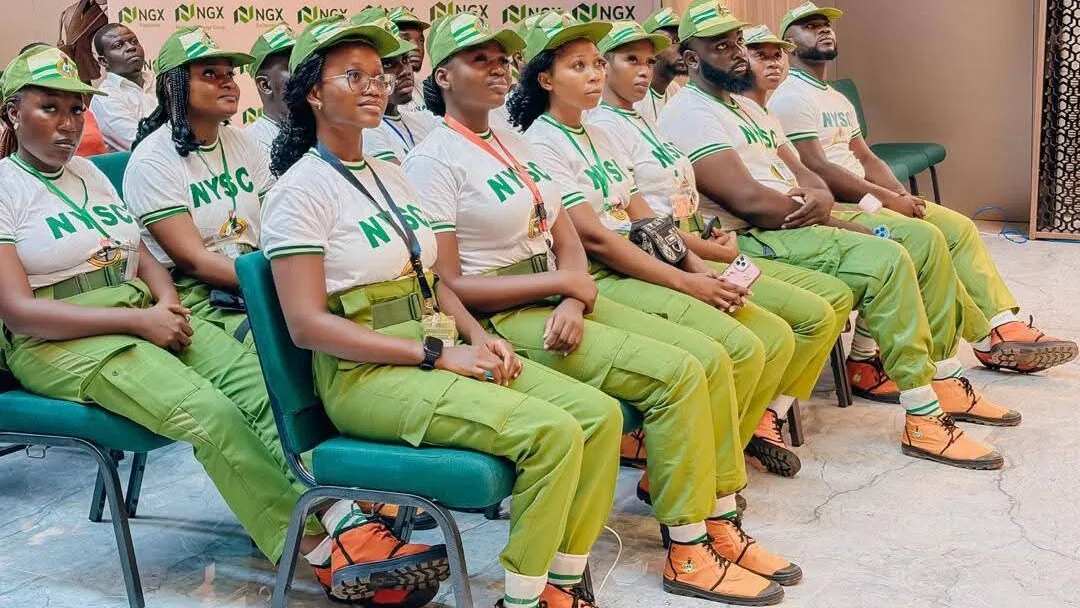
After 53 years of its existence, the National Youth Service Corps (NYSC) is set to undergo a raft of operational, administrative and identity reforms, with the decision taken at the Federal Executive Council meeting last Monday. The NYSC scheme was established in 1973 by the General Yakubu Gowon administration as a post-civil war mechanism for healing the wounds of the 1967-1970 fratricidal conflict with the objective of fostering national unity, integration and cohesion.
And as part of this reform, the government wants to transform the NYSC from a militarised mobilisation scheme to a civilian-led leadership and a national development platform focused on skills acquisition, productivity, and employability. This decision was made by President Bola Tinubu who has said that this move is part of his campaign promise to create meaningful opportunities for young Nigerians.
The NYSC scheme has been fostering national unity and integration since its establishment and yearly, graduates of universities and other tertiary institutions are mobilised and posted to states other than their state of origin for a mandatory 12-month service. However, critics have argued that the original objectives of national integration and strengthening the bonds of unity have been met, and thus, the scheme should be scrapped. But the government thinks otherwise, choosing instead to realign it with present realities.
As a result of this reform, the NYSC scheme will now have a six-week orientation camp programme instead of the present three-week one. During the period, corps members will be taught citizenship and national values; leadership development, life skills, national cohesion, career mapping, basic accounting and financial literacy; in addition to business planning and access to financing in a two-week segmentation. The deployment of corps members for primary assignments will equally align with designated corps streams, skills, or their academic backgrounds.
In the final two weeks, the participants will be in corps streams for specific training, such as the EducCorp, AgriCorp, MediCorp, TechCorp, LegalCorp, EntreCorp, and so forth. This reform aims to make the NYSC a national development platform that focuses on skills acquisition, productivity, and employability. And this, according to President Bola Tinubu, is part of his ambition to build a trillion-dollar economy that places renewed emphasis on productivity, skills relevant, innovation, and the efficient mobilisation of human capital.
The new structure also proposes a risk-sensitive approach in posting corps members to states ravaged by insecurity or identified as flash points, according to the federal government. In such cases, priority for posting to the affected states would be for corps members who either reside in, were educated there, or are indigenes. Conversely, those who have security concerns will be deployed to states within their geopolitical zones, or to states in proximate zones. This makes a lot of sense, as parents and corps members have for long been jettisoning such risky postings.
In 2011, 10 youth corps members were killed in post-election violence in Bauchi State. Some have been kidnapped, raped to death, or killed by bandits in the waves of insurgency endemic in the country. Keeping the heritage of NYSC standing deserves a revamp for better service delivery. But we believe that a much broader and all-inclusive national conversation should have preceded such a shake-up, beyond the consultations carried out, for a richer consensus and more impactful outcome.
The pioneers of the scheme who were 2,300 young Nigerians under the age of 30, were mobilised when the country had only six universities at Ibadan, Nsukka, Zaria, Ife, Benin, and Lagos. But at the last count, there are 312 universities which are federal, state and privately owned, from which about 650,000 graduates were mobilised in 2025 for the service. The financial cost of this enterprise is staggering. The NYSC scheme has served as a huge pool of cheap labour to many state governments and the private sector, mostly in the education, health, legal, and technical sectors, and in the conduct of general elections.