

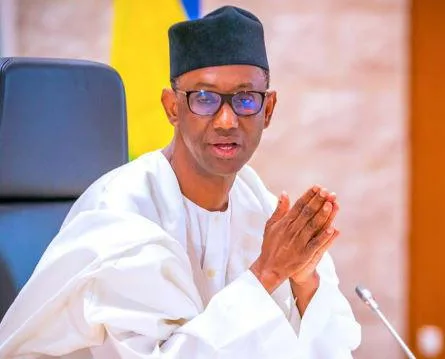
The sudden demise of Nuhu Ribadu as National Security Adviser has sent shockwaves through Nigeria's political landscape. But what led to his downfall? According to Suleiman A. Suleiman, Ribadu's fall isn't just an administrative adjustment, but a purely political move by President Bola Ahmed Tinubu to consolidate power. He didn't just lose his job - he lost the power struggle.
Ribadu's troubles began when he attempted to position himself as the head of the northern delegation within the Tinubu administration. This move brought him into direct conflict with Vice President Kashim Shettima, who is the natural head of the northern delegation. By seeking to undermine Shettima, Ribadu inadvertently weakened the entire northern flank of the party and government. He didn't realize that this would backfire.
Ribadu misread the political instincts of Tinubu and his circle. The Tinubu bloc sees itself as the true heir of Chief Obafemi Awolowo in Yoruba politics, and Tinubu himself as the first Yoruba president of Nigeria. This meant that Ribadu, a non-Yoruba appointee, was always an outsider looking in. His failure to recognize this dynamic ultimately led to his downfall. He didn't understand the dynamics of Yoruba politics.
The implications of Ribadu's fall are far-reaching. Northern Nigeria, which contributed 65% of the votes for Tinubu's victory, doesn't enjoy the status of an equal partner in this government. Instead, it's often treated as a subordinate, with Tinubu picking off northern politicians one by one. This has resulted in a lack of political coherence and a sense of collective identity among northern politicians. They're not united, and they can't negotiate effectively.
As Suleiman writes, 'This is exactly what has happened under Tinubu with the fall of Ribadu. The lessons must be learned, not just by Ribadu, but by all northern politicians and political elites.' They need to learn from his mistakes. Ribadu's downfall serves as a warning to them. They must understand the complexities of southern Nigerian politics and approach southern presidencies with a mix of caution and strategy.
By doing so, they can avoid the pitfalls that led to Ribadu's demise and work towards a more equitable and sustainable political partnership. They won't be able to change the system overnight, but they can start building a stronger foundation. Ribadu's fall is a reminder that politics is a game of power and alliances. Those who fail to navigate its complexities risk being left behind. They can't afford to make the same mistakes.
The northern Nigerian political elite looks to the future, and they would do well to heed the lessons of Ribadu's downfall. They need to work towards a more nuanced understanding of the political landscape. They can't just react to events - they must anticipate and plan. They must learn to navigate the complex web of alliances and interests.
Key Facts
- Nuhu Ribadu was removed as National Security Adviser
- Ribadu attempted to position himself as head of the northern delegation
- Vice President Kashim Shettima is the natural head of the northern delegation
- Tinubu's bloc sees itself as the true heir of Chief Obafemi Awolowo in Yoruba politics
- Northern Nigeria contributed 65% of the votes for Tinubu's victory
The future of northern Nigerian politics hangs in the balance. Will politicians learn from Ribadu's mistakes, or will they continue to succumb to the same pitfalls? They won't know until they try. The fate of northern Nigeria's political future depends on their ability to adapt and learn. They can't predict the future, but they can prepare for it. They must take control of their own destiny.