

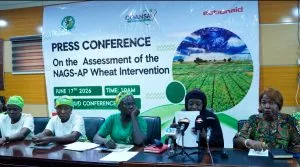
ActionAid Nigeria has called for urgent reforms in the National Agricultural Growth Scheme–Agro-Pocket (NAGS-AP) Wheat Intervention Programme, saying the $134 million project isn't working as planned.
The organisation presented findings from an independent assessment at a media briefing in Abuja on Wednesday, June 17, 2026. The study covered the 2023/24 and 2024/25 dry season farming cycles.
“We found a clear gap between programme design and implementation outcomes, with delays in input delivery and targeted inefficiencies affecting overall performance,” said Tunde Salman, the consultant researcher who carried out the assessment.
The programme was funded by the African Development Bank to boost local wheat production and expand dry season farming. But Nigeria still imports about 90 percent of its wheat, spending billions of dollars in foreign exchange every year.
Hajiya Suwaiba Muhammad Dankabo, Country Deputy Director of ActionAid Nigeria, said the assessment was necessary to test official claims against what farmers actually experience.
Salman explained that the research used focus group discussions, key informant interviews, and field visits across selected northern and southern states. The problems, he said, are systemic — not isolated — cutting across multiple states and implementation structures.
ActionAid made several specific recommendations. The group wants gender-sensitive agricultural financing to give women, youth, and vulnerable groups fair access. It's also demanding strict enforcement of seed delivery timelines, better access to redemption centres, and publication of verified beneficiary lists backed by digital tracking.
The organisation called for investigations into alleged corrupt practices, including input diversion and distribution of substandard agrochemicals. It recommended sanctions for any agro-dealers found guilty.
ActionAid also urged stronger support for state Agricultural Development Programmes (ADPs), including recruitment and training of extension agents — with emphasis on female extension workers — to improve grassroots support for farmers.
The briefing was attended by the Federal Ministry of Agriculture and Food Security, the Community of Agriculture Non-State Actors (COANSA), the Small Scale Women Farmers Organization (SWOFON), and development partners.
ActionAid urged the Federal Ministry of Agriculture and Food Security, the NAGS-AP Secretariat, the African Development Bank, and other stakeholders to act on the recommendations without delay. The group stressed that smallholder farmers deserve a more efficient and transparent system.
“The objective was to move beyond official reports and provide a rigorous diagnosis of the systemic processes affecting implementation.” — Tunde Salman, Consultant Researcher
Key Facts
- Nigeria imports about 90% of its wheat.
- The NAGS-AP programme is funded by the African Development Bank with $134 million.
- The assessment covered the 2023/24 and 2024/25 dry season farming cycles.
- Research used focus groups, key informant interviews, and field verification.
- ActionAid wants digital tracking of beneficiary lists and sanctions for corrupt agro-dealers.