

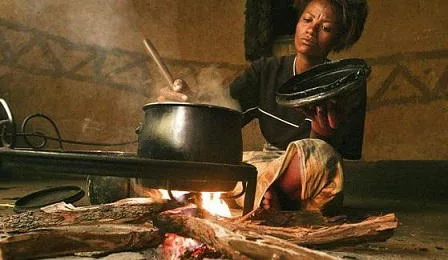
The severe domestic energy crisis in Nigeria has forced millions of households to abandon clean energy alternatives and revert to primitive cooking fuels. Driven by a surge in prices of Liquefied Petroleum Gas, LPG, commonly known as cooking gas, and kerosene, many families in both rural and urban areas are returning to firewood for cooking.
Data from the National Bureau of Statistics (NBS) reveals that the cost of refilling a 12.5kg cooking gas cylinder has surged to an average of N22,382.20. The data shows that households in rural and semi-urban areas, who were trying to improve their lifestyle by using cooking gas for cooking, have abandoned their gas cylinders because the retail prices for LPG have risen to a disruptive average of N2,000 per kilogram.
In far-northern states and border communities, a single kilogram of gas is being sold as high as N3,000. At the same time, household kerosene has effectively become a luxury item. According to the latest NBS Household Kerosene Price Watch, the average retail price of kerosene has approached a staggering N4,000 per litre in states like Sokoto, Kebbi, and Lagos, which is a huge leap from the pre-subsidy rates of N50 to N100 per litre.
The rapid financial squeeze has forced a sharp shift in consumer behavior. Mrs. Funmilayo Momoh, a fufu (half-baked cassava flour) seller, expressed her deep frustration over the current economic realities. 'Refilling my gas cylinder used to be a routine household chore, but at N2,000 per kilogram, it is completely unsustainable,' she said. 'Meals that require a long time to cook, like beans or local delicacies, are disappearing from our kitchen.'
Even small micro-enterprises are feeling the heat. Roadside food vendors, locally known as Mama Put, who long relied on the speed and cleanliness of LPG, are moving their operations back to woodpiles to protect their razor-thin profit margins. Mr. Felix Asuquo, a food seller, said, 'I can hardly cook with gas now. How much do I make from the food I sell? Before, I spent N10,000 on cooking gas for two weeks, but now such an amount hardly serves me for three days.'
Mrs. Rukayat Saliu, a cleaner, added, 'At N2,000 per kg, who can blame anyone for using firewood? My monthly salary cannot even refill a 12.5kg cylinder twice anymore.' Marketers attribute the persistent price hikes to structural gaps within the energy value chain.
Nigeria possesses Africa’s largest natural gas reserves, but a lack of local processing infrastructure forces the country to import a large percentage of its domestic LPG supply. This exposes local retail markets to international price shocks, high vessel charter costs, and foreign exchange volatility. The wholesale terminal prices have climbed dramatically, with marketers now paying up to N26.2 million for a single 20-metric-tonne truck of gas.
With this trend, millions of citizens returning to biomass fuels threatens to reverse decades of progress in clean cooking initiatives. Increased logging to satisfy the rising urban demand for firewood accelerates deforestation, drives soil erosion, and destroys natural wildlife habitats. Continuous exposure to thick firewood smoke will trigger a sharp rise in chronic respiratory diseases, cardiovascular issues, and optical complications among women and children.
Key Facts
- NBS data reveals the cost of refilling a 12.5kg cooking gas cylinder has surged to an average of N22,382.20.
- The average retail price of kerosene has approached a staggering N4,000 per litre in states like Sokoto, Kebbi, and Lagos.
- A single kilogram of gas is being sold as high as N3,000 in far-northern states and border communities.
- N2,000 per kilogram, the retail price of LPG that has caused many households to abandon their gas cylinders.
- N26.2 million, the price marketers now pay for a single 20-metric-tonne truck of gas.
- Millions of citizens returning to biomass fuels threatens to reverse decades of progress in clean cooking initiatives.