

Nigeria Unveils Plans to Manufacture Armoured Vehicles, Anti-Drone Systems Locally
The Nigerian government has announced plans to establish local production lines for armoured vehicles, anti-drone platforms, and other defence equipment, marking a significant shift towards indigenous defence manufacturing.
According to a statement by the Chief Executive Officer of the Defence Industries Corporation of Nigeria D7G (DICON-D7G), Mr Osman Chennar, the ambitious initiative is being pursued in partnership with Eagles International for Defence Systems. The partnership is expected to facilitate the transfer of advanced military technologies to Nigeria and create production lines capable of manufacturing a wide range of military platforms locally.
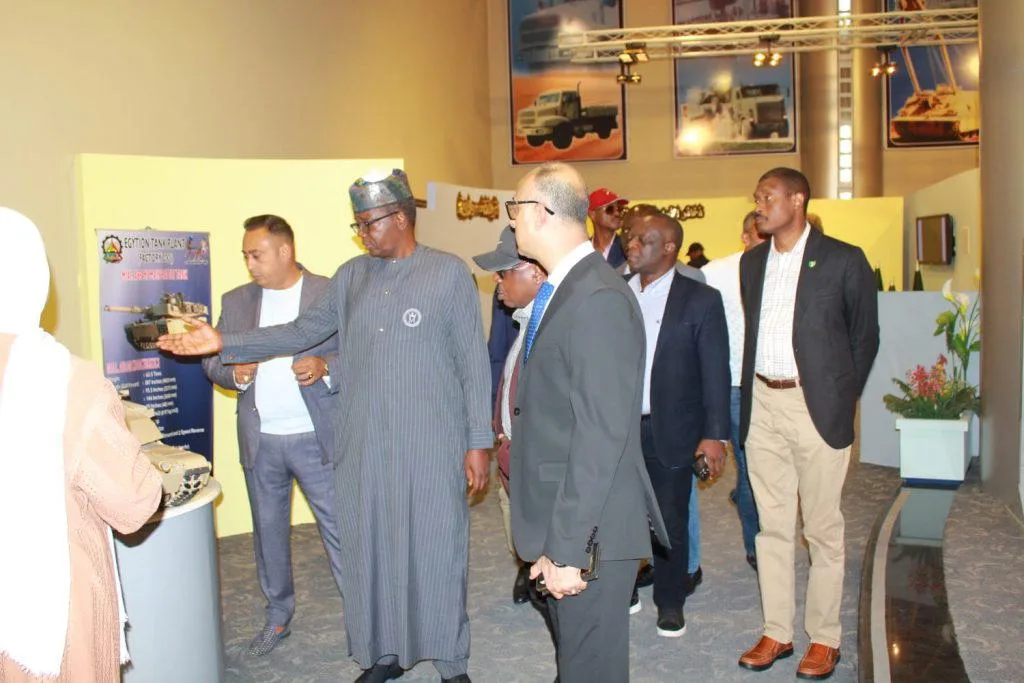
The development was disclosed after a two-day inspection tour of factories and military production facilities in Cairo by the Minister of State for Defence, Dr Bello Mohammed Matawalle, and his delegation. The Nigerian delegation was said to have assessed various defence production systems and platforms being considered as part of efforts to establish and expand local manufacturing capabilities for the Nigerian Armed Forces.
Among the platforms targeted for local production are the Armoured Multi-Purpose Vehicle BR6, a modular multi-mission defence platform, and a range of other vehicles designed for military operations. The proposed production portfolio also includes the MRAP Buffalo U.10 and M.12 armoured vehicles, MRAP-Buffalo F-4, Rhino Guard GXR anti-drone and RPG-protected vehicle, APC Moon PT6, GXR Phantom light vehicle, and BMP-2 Infantry Fighting Vehicle.
The development comes amid Nigeria's sustained efforts to strengthen indigenous defence manufacturing as the country confronts persistent security challenges. The Nigerian Army has already begun taking delivery of locally manufactured armoured vehicles, signalling a gradual shift from heavy reliance on foreign procurement towards the development of a domestic defence production chain capable of supporting military operations.
The planned expansion of indigenous defence production is expected to have far-reaching implications for Nigeria's economy and national security, including reducing exposure to foreign supply disruptions, retaining defence expenditure within the domestic economy, developing specialised technical manpower, and building industrial capacity capable of sustaining the military during prolonged security operations.
Mr Osman Chennar said the partnership would create employment opportunities both directly and indirectly, with the initial phase expected to create jobs for over 200 workers. The proposed military jetty in Lagos is also expected to create employment for more than 200 retired military personnel and over 1,000 civilians when the project becomes operational.
The DICON-D7G and Eagles International partnership is positioning Nigeria to export defence equipment to other African nations, with the long-term prospect of establishing the country as a major player in the defence industry.
Key Facts
- The Defence Industries Corporation of Nigeria D7G (DICON-D7G) is partnering with Eagles International for Defence Systems to establish local production lines for armoured vehicles, anti-drone platforms, and other defence equipment.
- The partnership is expected to facilitate the transfer of advanced military technologies to Nigeria and create production lines capable of manufacturing a wide range of military platforms locally.
- The proposed production portfolio includes the Armoured Multi-Purpose Vehicle BR6, a modular multi-mission defence platform, and a range of other vehicles designed for military operations.
- The development is expected to create employment opportunities both directly and indirectly, with the initial phase expected to create jobs for over 200 workers.
- The proposed military jetty in Lagos is expected to create employment for more than 200 retired military personnel and over 1,000 civilians when the project becomes operational.
Nigeria's sustained efforts to strengthen indigenous defence manufacturing are a response to the country's persistent security challenges. The Nigerian Armed Forces have long relied on foreign procurement for military equipment, but the government is now prioritising local production to reduce exposure to foreign supply disruptions and retain defence expenditure within the domestic economy.
The development is also seen as a strategic attempt to build a sustainable Nigerian defence-industrial ecosystem capable of designing, assembling, manufacturing, and maintaining critical military platforms. This will enable the country to compete for a share of the expanding African defence market and reduce its reliance on foreign defence suppliers.
The development of a domestic defence production chain will not only improve Nigeria's national security but also contribute to the country's economic development by creating employment opportunities and generating revenue.
The planned military jetty in Lagos will serve as a strategic logistics and distribution hub for the movement of raw materials, components, and finished military equipment within Nigeria and potentially across the African continent. This will reduce the burden on existing infrastructure and improve the efficiency of defence procurement.
The DICON-D7G and Eagles International partnership is a significant step towards establishing Nigeria as a major player in the defence industry. With the right investment and support, the partnership has the potential to create thousands of jobs and contribute significantly to Nigeria's economic growth.