

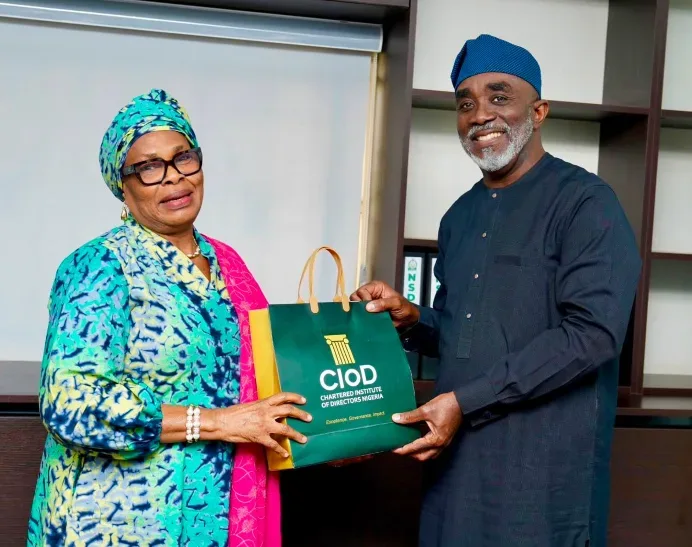
The National Sugar Development Council has announced a $1 billion investment pipeline to accelerate Nigeria’s drive towards sugar self-sufficiency. The council said the initiative was anchored on a $1 billion engineering, procurement and construction-plus-finance partnership with SINOMACH of China and a ₦10 billion Sugar Project Acceleration Fund established with the Bank of Industry.
Kamar Bakrin, the Executive Secretary and Chief Executive Officer of the NSDC, disclosed this when he received members of the Abuja chapter of the Chartered Institute of Directors on a courtesy visit to the council’s headquarters in Abuja. NSDC, in a statement on Sunday, said Nigeria consumes about 1.8 million metric tonnes of sugar annually, with an estimated $1 billion flowing each year to foreign producers.
Bakrin said the council viewed the situation as an opportunity to retain more value within the Nigerian economy through jobs, rural incomes, foreign exchange savings, and increased industrial capacity. “We don’t lack policy,” Bakrin said. “What we have struggled with is world-class execution,” adding that the challenge was more about governance than farming.
The Nigeria Sugar Master Plan 2.0 is an “acceleration mandate” aimed at shortening Nigeria’s path to self-sufficiency and producing about two million metric tonnes of sugar locally. According to Bakrin, sugarcane is capable of supporting the production of ethanol, animal feed, and electricity.
He said the council’s plan extended beyond sugar production and was focused on building a bio-industrial ecosystem around sugarcane. The council is also deploying satellite imagery and field inspections to independently verify activities at sugar production sites.
To enforce the new policies, Bakrin said the Backward Integration Programme had been rebuilt around four principles: “qualify, reward, verify and enforce.” Companies seeking import quotas would be required to demonstrate genuine commitment to backward integration, while major refiners would provide audited production commitments tied to their quotas.
Fatima Mede, the leader of the CIoD delegation, commended the council’s leadership on reforms in the sugar industry and its drive towards self-sufficiency. She said the institute was ready to collaborate with the council in areas of mutual interest to support the development of the sector.
Key Facts
- Nigeria consumes 1.8 million metric tonnes of sugar annually.
- The estimated annual cost of importing sugar is $1 billion.
- The National Sugar Development Council plans to produce two million metric tonnes of sugar locally.
- The $1 billion investment pipeline is anchored on a $1 billion engineering, procurement and construction-plus-finance partnership with SINOMACH of China and a ₦10 billion Sugar Project Acceleration Fund established with the Bank of Industry.
- The Backward Integration Programme has been rebuilt around four principles: “qualify, reward, verify and enforce.”
The council’s plan to make Nigeria self-sufficient in sugar production has been welcomed by many as a step in the right direction. The goal of producing two million metric tonnes of sugar locally is ambitious, but with the right policies and execution, it is achievable. The council’s commitment to backward integration and building a bio-industrial ecosystem around sugarcane is also a positive development.
However, the success of the council’s plan will depend on the implementation of the new policies. The council must ensure that companies seeking import quotas demonstrate genuine commitment to backward integration, while major refiners provide audited production commitments tied to their quotas.
The National Sugar Development Council has also deployed satellite imagery and field inspections to independently verify activities at sugar production sites. This is a positive step towards ensuring that the new policies are implemented effectively.
The council’s plan to make Nigeria self-sufficient in sugar production is a significant development that will have a positive impact on the Nigerian economy. It will create jobs, increase rural incomes, and save the country foreign exchange. The success of the plan will depend on the implementation of the new policies, and the council must ensure that it follows through on its commitments.
The council has also partnered with the Bank of Industry to establish a ₦10 billion Sugar Project Acceleration Fund. This fund will finance feasibility studies and project preparation, converting greenfield sites into investment-ready packages. These packages will in turn feed the $1 billion EPC-plus-finance agreement signed with SINOMACH of China, which provides a ready channel for construction and financing once projects are prepared.
The council has also deployed satellite imagery and field inspections to independently verify activities at sugar production sites. This is a positive step towards ensuring that the new policies are implemented effectively.
The council’s plan to make Nigeria self-sufficient in sugar production is a significant development that will have a positive impact on the Nigerian economy. It will create jobs, increase rural incomes, and save the country foreign exchange. The success of the plan will depend on the implementation of the new policies, and the council must ensure that it follows through on its commitments.