

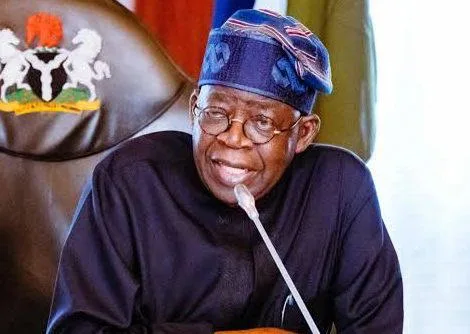
President Tinubu has approved certification and compliance procedures for five proposed deep seaport projects in Nigeria. This move is expected to strengthen the country's maritime economy and reclaim over 70% of Nigerian-bound cargo currently diverted to neighboring African countries.
The Minister of Marine and Blue Economy, Dr. Adegboyega Oyetola, announced this during the 2026 Graduation Ceremony of 492 newly trained Advanced Combat Personnel and the Capability Presentation of the Deep Blue Project Task Group. The event was held at the 5th Battalion Army Barracks, Elele, Rivers State. Dr. Oyetola explained that the Federal Government's approval of certification and compliance processes for the five proposed deep seaport projects underscores its commitment to strengthening Nigeria's maritime infrastructure.
The approved deep seaports are Lagos— Badagry Deep Sea Port, Ondo — Olokola Deep Sea Port, Ibom Deep Sea Port, Bakassi Deep Sea Port in Cross Rivers State, and Rivers State's Bonny Deep Sea Port. These ports are seen as critical infrastructure needed to position Nigeria for future trade expansion and continental commerce under the African Continental Free Trade Area (AfCFTA). They're expected to play a crucial role in Nigeria's economic growth.
Dr. Adegboyega Oyetola was appointed as the Minister of Marine and Blue Economy by President Tinubu. Before his appointment, he served as the Governor of Osun State from 2018 to 2022. Oyetola's background in politics and governance is expected to play a significant role in the development of Nigeria's maritime economy. He's got experience that'll help him make informed decisions about the country's maritime sector.
The planned deep seaports are expected to significantly strengthen Nigeria's blue economy. They'll improve customs and cargo processing efficiency. They'll attract foreign direct investment and create thousands of direct and indirect jobs across the maritime, transport, and logistics sectors. The development could also reduce pressure on ports in Lagos. It'll open up new economic corridors in coastal states earmarked for the projects.
The projects are further expected to enhance regional trade competitiveness. They'll lower the cost of doing business. They'll improve export potential and support the Federal Government's broader economic diversification agenda, said Dr. Oyetola. He didn't specify how soon these benefits will be realized, but they're expected to have a positive impact on the country's economy.
The initiative is also designed to address the limitations of Nigeria's existing ports. These limitations include congestion, high turnaround time, and inadequate infrastructure. With global shipping increasingly shifting towards larger vessels that require deeper draught channels, the proposed ports are seen as critical infrastructure needed to position Nigeria for future trade expansion. They're necessary for the country to remain competitive in the global market.
In terms of numbers, the five deep seaports are expected to create a significant impact on Nigeria's economy. The country is currently losing over 70% of its cargo to neighboring countries due to the limitations of its existing ports. The new deep seaports are expected to reclaim this cargo and create new opportunities for economic growth. This'll be a major boost to the country's economy.
- Five deep seaport projects have been approved by President Tinubu
- The ports are located in Lagos, Ondo, Akwa Ibom, Cross Rivers, and Rivers States
- The projects are expected to create thousands of direct and indirect jobs
- The deep seaports will improve customs and cargo processing efficiency
- The development will reduce pressure on ports in Lagos and open up new economic corridors
The approval of the five deep seaport projects is a significant development for Nigeria's maritime economy. It's expected to have a positive impact on the country's trade competitiveness, economic growth, and job creation. As the projects progress, it's important to monitor their development and assess their impact on Nigeria's economy. The government won't be able to deliver on its promises if it doesn't stay committed to the development of the maritime sector.
The Nigerian government's commitment to strengthening the country's maritime infrastructure is a welcome development. The approval of the five deep seaport projects is a significant step towards achieving this goal. The development of the maritime sector will play a critical role in the country's growth and prosperity. It's crucial for the government to stay focused on this goal.
In the coming months, it'll be important to watch how the development of the five deep seaport projects progresses. The government's ability to deliver on its promises and create new opportunities for economic growth will be crucial. The success of the projects will depend on various factors, including the government's commitment to the development of the maritime sector, the availability of funding, and the ability to address the challenges facing the sector. They can't afford to fail, or it'll have negative consequences for the country's economy.
As Nigeria continues to navigate the complexities of its maritime economy, the development of the five deep seaport projects will be a critical factor in its success. The government's commitment to strengthening the country's maritime infrastructure is a positive development. It'll be important to monitor the progress of the projects in the coming months. The government won't be able to achieve its goals if it doesn't stay committed to the development of the maritime sector.
The African Continental Free Trade Area (AfCFTA) is expected to play a significant role in the development of Nigeria's maritime economy. The agreement aims to create a single, unified market for the African continent. It's expected to increase trade and economic growth across the region. The development of the five deep seaport projects will be critical in positioning Nigeria to take advantage of the opportunities presented by the AfCFTA. They're necessary for the country to remain competitive in the global market.
The approval of the five deep seaport projects is a significant development for Nigeria's maritime economy. The projects are expected to create new opportunities for economic growth, improve customs and cargo processing efficiency, and reduce pressure on ports in Lagos. As the development of the projects progresses, it'll be important to monitor their impact on Nigeria's economy and assess their ability to deliver on their promises. The government won't be able to achieve its goals if it doesn't stay committed to the development of the maritime sector. It's crucial for them to stay focused on this goal, or they won't be able to achieve the desired outcomes.