

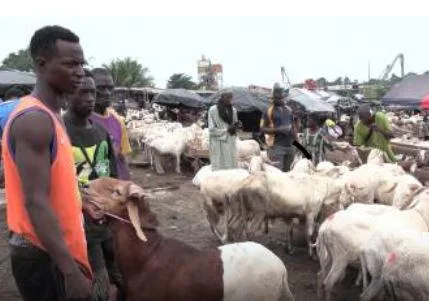
The cost of sheep in Nigeria has skyrocketed ahead of Eid-al-Adha, with prices ranging from 250,000 naira to 1.2 million naira. This increase is significant, as it's higher than last year's prices, which ranged from 150,000 to 1.0 million naira. The surge in prices is attributed to the economic crunch, rising petrol prices, and insurgency in the country. It's clear that these factors have driven up the cost of sheep.
Traders at the Kara Market, a major livestock hub along the Lagos-Ogun border, lamented sluggish sales as thousands of sheep stood in the pouring rain on Friday. The market receives thousands of animals daily from northern Nigeria, where most of the country's livestock is reared. Muslims in Nigeria, who make up roughly half of the population, are preparing for the annual festival, which typically sees a high demand for sheep. They're expecting to buy sheep, but the prices are a concern.
Abdullahi Bukar, a 29-year-old trader, traveled from northeastern Yobe state to trade at the market. He attributed the price increase to insurgency in the country's northeast, multiple taxes, and illegal toll collections by security officials. Bukar said, "We're always scared when we go to the market to buy livestock because terrorists usually attack the markets where we buy stock." He didn't mince words about the dangers they face.
The cost of transporting livestock to the market has more than doubled. Traders are traveling over 1,000 kilometers to sell sheep at the market. Abubakar Dauda, a 33-year-old trader from northeastern Adamawa, said truck drivers collect about 2.7 million naira to transport their livestock. This is nearly three times the cost in 2025. Dauda also mentioned that exchange rate volatility has pushed up import and sourcing costs. This, in turn, has driven prices in the market even higher.
Ibrahim Kosoko, a shopper, settled for a sheep that cost him around 400,000 naira. This was significantly lower than the 1.2 million naira he was initially quoted. Kosoko said, "It's not compulsory to buy sheep for Ileya. If we can't afford one, we'll find ways to celebrate regardless." He won't let the high prices ruin his celebration.
The price increase has also affected civil servants, such as 40-year-old Taibat Bashir. She said she can't afford to travel to her hometown for the festival due to rising fares. Bashir said, "I'll need to spend at least 80,000 naira on traveling to and from my hometown with my child. That's not something I can afford." She's struggling to make ends meet.
- Sheep prices in Nigeria range from 250,000 naira to 1.2 million naira
- The price increase is attributed to unrest, fuel costs, and insurgency
- Traders travel over 1,000 kilometers to sell sheep at the market
- Transport costs have more than doubled
- Exchange rate volatility has pushed up import and sourcing costs
The situation has left many Nigerians struggling to afford the traditional sheep for Eid-al-Adha. The country continues to grapple with economic and security challenges. The price increase is yet another burden on citizens. The Nigerian government won't be able to ignore this issue. They'll need to address the root causes of the price increase.
This will ensure that citizens can afford the basic necessities, including food and transportation, during the festive period. They can't afford to wait, as the festival is approaching quickly.