

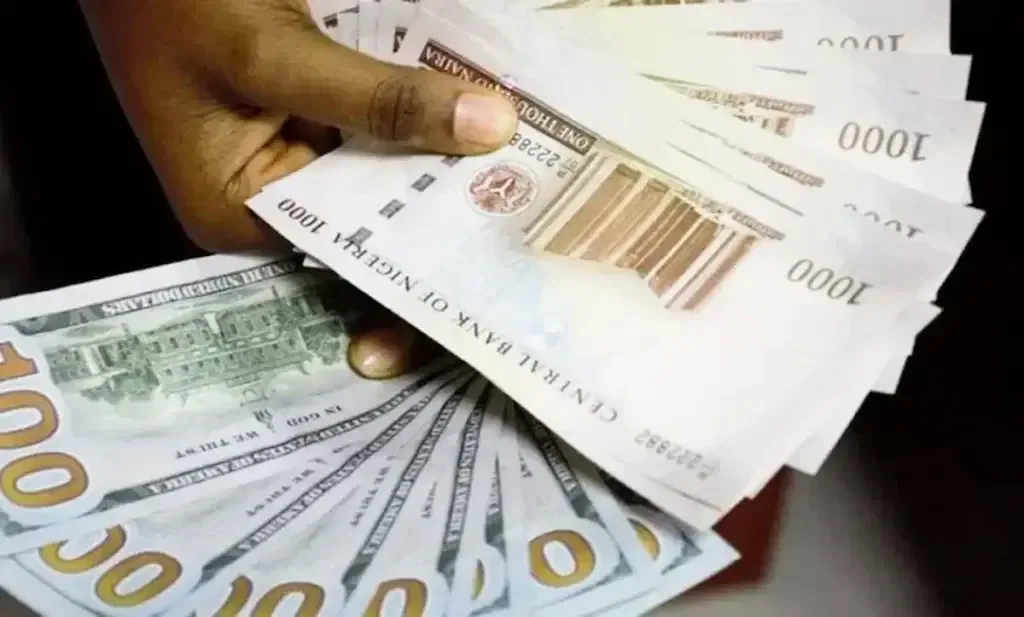
The naira traded with mixed performance against the United States dollar on Tuesday, July 7, 2026, as the official Nigerian Foreign Exchange Market (NFEM) remained relatively stable while the parallel market recorded a slight weakening.
The official Nigerian Foreign Exchange Market (NFEM) remained relatively stable, with the naira exchanging at approximately ₦1,367.29 to the US dollar. Market participants attributed the stability to ongoing liquidity management by the monetary authorities.
The parallel market, also known as the black market, recorded a slight weakening, with the dollar trading at about ₦1,400 per dollar, representing a modest depreciation of the naira compared with the previous trading session. The gap between the official NFEM rate and the parallel market remained relatively narrow at roughly ₦33 per dollar.
Foreign exchange analysts say the naira’s performance will continue to depend on dollar liquidity, inflows from oil exports, foreign portfolio investment, and the Central Bank of Nigeria’s interventions in the FX market. They also note that demand from importers and manufacturers remains a key factor influencing exchange rate movements.
According to a report on Vanguard News, data from the official exchange rate market showed that the naira exchanged at approximately ₦1,367.29 to the US dollar. The report also stated that the parallel market rate was around ₦1,400 per dollar. Market participants attributed the movement to persistent demand for foreign currency outside the official window.
The naira's performance is closely watched by investors and traders, who are waiting for clearer signals on whether the central bank will tighten or loosen its monetary policy. The Central Bank of Nigeria’s interventions have been seen as a way to moderate volatility in the FX market, but some analysts believe that more needs to be done to address the structural issues in the market.
Nigeria's economy has been struggling with a persistent trade deficit, and the exchange rate has been a key concern for policymakers. The country's foreign exchange reserves have been declining in recent months, and the naira has been under pressure.
Despite the recent weakness, the naira remains one of the best-performing currencies in Africa, and investors are watching the situation closely. The Central Bank of Nigeria has been implementing various measures to stabilize the FX market, including the introduction of a new foreign exchange policy. However, some analysts believe that more needs to be done to address the underlying issues in the market.
Key Facts
- The naira traded at approximately ₦1,367.29 to the US dollar in the official market.
- The parallel market rate was around ₦1,400 per dollar.
- The gap between the official NFEM rate and the parallel market remained relatively narrow at roughly ₦33 per dollar.
- Foreign exchange analysts say the naira’s performance will continue to depend on dollar liquidity, inflows from oil exports, foreign portfolio investment, and the Central Bank of Nigeria’s interventions in the FX market.
- Demand from importers and manufacturers remains a key factor influencing exchange rate movements.