

The single sharpest fact in one or two punchy sentences. Who did what, where, when, and why it matters. Not a summary of everything — the one thing that makes someone stop scrolling.
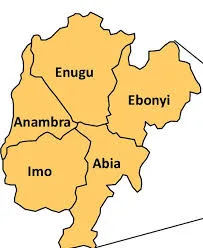
The Igbo people, known for their entrepreneurial spirit, have amassed an impressive share of Nigeria's wealth. However, their homeland in the South-East region is economically weak, contributing less than eight per cent to the country's GDP.
Governor Chukwuma Charles Soludo of Anambra State, a globally respected economist, has been advocating for a coordinated economic reconstruction strategy to address infrastructure deficits, capital flight, and the disruptions that have weakened the South-East economy.
Prof. Anthony Ejiofor, in an article published in Law and Society Magazine, argued that the South-East's importance cannot be measured solely by regional GDP. He maintained that Igbo entrepreneurs drive enormous economic activity across Lagos, Abuja, Kano, Port Harcourt, and other parts of Nigeria, and that their influence extends far beyond the five South-East states.
The irony is striking. Igbo sons and daughters own big and thriving businesses across Nigeria and beyond, but most of those investments are domiciled outside their region. Taxes are paid there, jobs are created there, and host communities enjoy their economic dividends. Meanwhile, the homeland receives comparatively little direct benefit from the immense wealth generated by its people.
The taxes paid by Igbo-owned businesses enrich host states of the ventures, while those communities enjoy the infrastructure, employment, and multiplier effects generated by those investments. The homeland that produced many of the investors derives comparatively little benefit.
Persons who choose to exploit political correctness or partisanship in the issue may not be helping Ndi Igbo in the long run. History offers numerous examples of societies transformed by deliberate diaspora investment.
One recurring theme has been the philosophy of Aku Ruo Uno — bringing wealth or parts of the wealth home. Successes recorded in communities that embraced the idea, including Nnewi and Abriba, provide impressive evidence of its results. Yet the scale of investment has not matched the developmental needs of the region.
A homeland cannot flourish if its industries, investments, and taxable economic activities are concentrated elsewhere. Individual prosperity does not automatically translate into regional prosperity. The South-East economy inevitably affects its share of national benefits, making it even more crucial that the region takes deliberate steps to bring wealth back home.
Today, the urgency has become even greater. During the inauguration and retreat of the governing board of the South East Development Commission (SEDC) in Abuja earlier this year, Governor Chukwuma Charles Soludo reminded the region of an uncomfortable truth: 'Economically speaking, the South-East is insignificant. Our wealth is largely outside the South-East.'
In March, Soludo advocated a coordinated economic reconstruction strategy — a regional 'Marshall Plan' — to address years of insecurity, infrastructure deficits, capital flight, and the disruptions that have weakened the South-East economy. He has been highlighting a painful reality: while Ndi Igbo are renowned for entrepreneurship and wealth creation, much of that wealth is invested outside the region, leaving the domestic economy underdeveloped.
While these arguments may scratch the surface of the matter, they do not invalidate Soludo's central thesis. The governor never suggested that the Igbo are economically unimportant. His concern was that the South-East itself remains economically fragile because much of the wealth created by its people is located elsewhere.
In other words, the region's economy is a reflection of the investments of its sons and daughters outside. The question that remains is: how can the wealth generated by Igbo entrepreneurs outside the South-East be harnessed to stimulate regional development?
This is the enduring paradox of the Igbo economy: a wealthy people with a relatively poor homeland. The time has come to address this issue and find a solution that brings wealth back to the source.