

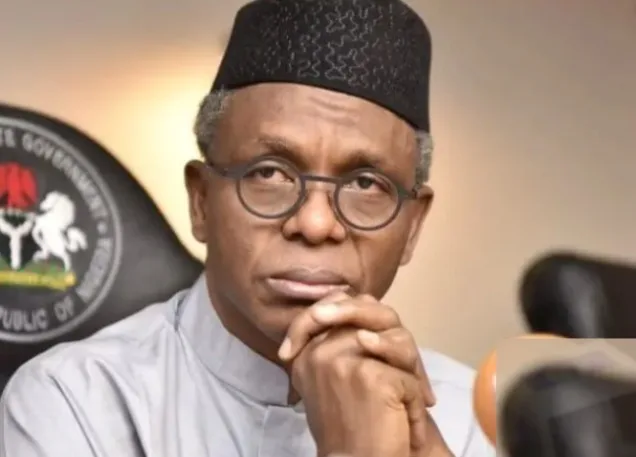
The Federal High Court in Abuja has granted former Kaduna State governor, Nasir El-Rufai, N100 million bail. However, his family claims the Department of State Services (DSS) re-arrested him, sparking concerns about his safety and the rule of law. They're worried about what might happen to him.
El-Rufai is facing trial over the alleged unlawful interception of the phone communications of the National Security Adviser, Nuhu Ribadu. This case has drawn attention to the use of phone-tapping in Nigeria. It's also raised questions about the potential for abuse of power.
Background on El-Rufai
Nasir El-Rufai is a prominent Nigerian politician who served as the governor of Kaduna State from 2015 to 2023. Before his governorship, he held various positions in the Nigerian government, including Minister of the Federal Capital Territory. El-Rufai has been a vocal critic of corruption. He's implemented several reforms in Kaduna State during his tenure. These reforms haven't gone unnoticed.
The Allegations
The allegations against El-Rufai stem from his alleged involvement in the phone-tapping of Nuhu Ribadu, the National Security Adviser. The prosecution claims El-Rufai used his position to intercept Ribadu's phone communications. This is a violation of the Nigerian Communications Act. They can't allow this kind of behavior to go unpunished.
Bail Conditions
The court granted El-Rufai N100 million bail, with strict conditions. He must produce a surety who is a federal civil servant not below Grade Level 17. This surety must be resident in either Maitama or Asokoro districts of Abuja. The surety must also deposit the original Certificate of Occupancy of a landed property. This property can't be valued below the bail sum. It's a tough condition, but it's what the court ordered.
Re-Arrest Allegations
El-Rufai's family claims the DSS re-arrested him after he was granted bail. His second wife, Hasiat, alleged the DSS took him into custody. This was despite a court order directing that he be remanded with the Independent Corrupt Practices and Other Related Offences Commission (ICPC). They didn't follow the court's instructions.
"We now live in constant fear. Every day we get a threat — DSS is coming to raid your house, ICPC is coming to raid your house, police are coming to raid your house. You are being followed. Our phones are tapped," Hasiat said. She's clearly scared.
ICPC Response
The ICPC has pushed back against allegations that it violated El-Rufai's rights. The agency claims its access control policy is applicable to all detainees, regardless of status. The ICPC spokesman, John Okor Odey, said the court didn't grant unrestricted access to El-Rufai. Instead, it granted access within the agency's regulations. They're trying to justify their actions.
ADC Reaction
The African Democratic Congress (ADC) has accused the federal government of turning El-Rufai into a political prisoner. The party claims El-Rufai's ordeal is "political persecution dressed up as prosecution." The ADC draws comparisons between El-Rufai's case and those of former Kogi State governor, Yahaya Bello, and former Delta State governor, Ifeanyi Okowa. They're facing separate corruption allegations. It's a complex situation.
Next Steps
The case against El-Rufai is ongoing, and the court has ordered an accelerated hearing. The ICPC will continue to investigate the allegations against him. The DSS will likely face scrutiny over its alleged re-arrest of El-Rufai. The outcome of the case will have significant implications. It won't just affect El-Rufai; it will impact the rule of law and the fight against corruption in Nigeria. They can't afford to get it wrong.
Key Facts
- El-Rufai was granted N100 million bail. This is a lot of money.
- He must produce a surety who is a federal civil servant not below Grade Level 17. This surety has to meet certain criteria.
- The surety must deposit the original Certificate of Occupancy of a landed property not valued below the bail sum. It's a big responsibility.
- El-Rufai's family alleges the DSS re-arrested him. This is a serious accusation.
- The ICPC claims its access control policy is applicable to all detainees. They're trying to cover their bases.
- The ADC accuses the federal government of turning El-Rufai into a political prisoner. This is a strong statement.