

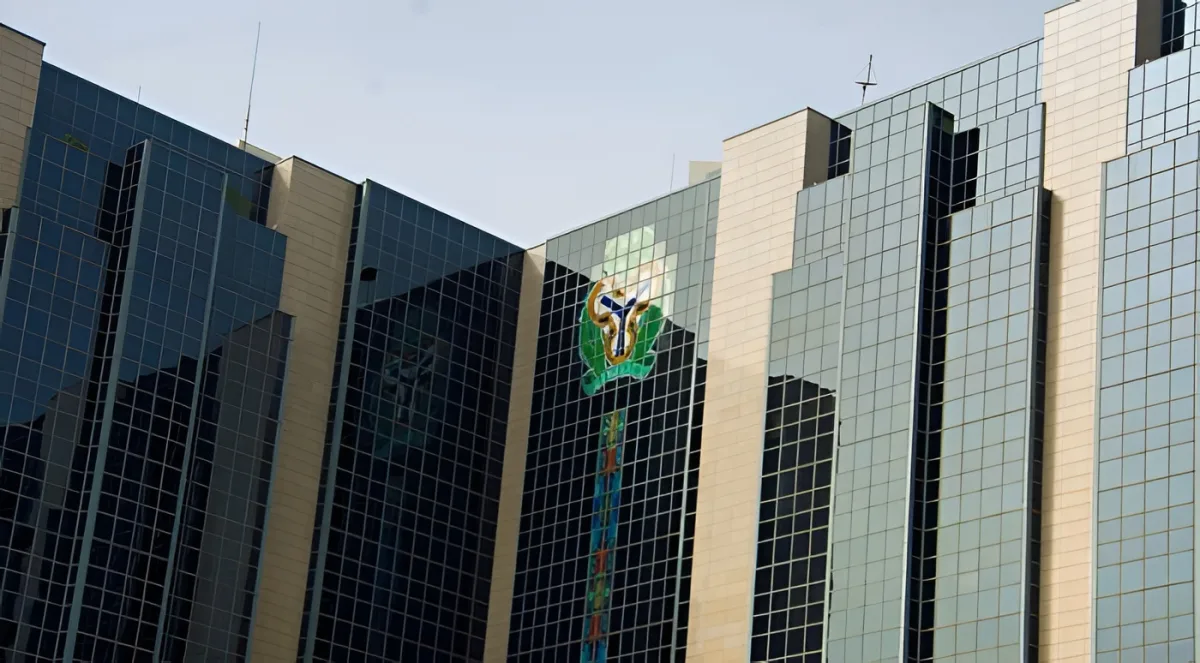
The Central Bank of Nigeria (CBN) has had enough of financial firms treating their sister companies like the same business.
On Thursday, the apex bank released draft guidelines that would force closely linked financial entities — banks, payment service providers, fintechs and others — to operate with clear boundaries between them. The goal: stop the mixing of customer funds, prevent one company's problems from spreading to another, and make sure regulators can actually see what's going on.
"The guidelines are intended to strengthen consumer protection, enhance transparency and accountability, mitigate contagion risks among closely linked entities, and preserve financial stability while supporting innovation and fair competition within the financial services sector," the CBN said in a circular.
The move targets a well-known problem in Nigeria's financial sector. Many banks and fintechs operate under holding companies that also own other financial businesses — microfinance banks, asset managers, payment processors, or even non-financial firms. Money and data often move between these entities with little oversight. The CBN calls it "commingling" and says it creates regulatory arbitrage, where firms exploit gaps between different licence categories to avoid stricter rules.
Under the proposed framework, each entity must maintain operational independence — separate governance, separate customer accounts, separate data. Intra-group transactions will face stricter scrutiny. Firms must also prepare recovery and resolution plans, so if one company fails, it doesn't drag down the rest.
The CBN warned that any breach will attract sanctions including penalties, replacement of management, and possible licence revocation under the Banks and Other Financial Institutions Act (BOFIA) 2020.
Where a CBN-regulated entity is linked to a company regulated by another financial services regulator — say, the Securities and Exchange Commission or the National Insurance Commission — the CBN says it will work with that regulator to extend the guidelines to cover the entire group.
The draft guidelines are now open for review and comment from stakeholders, including banks, payment service providers, financial institutions, and the public. The CBN didn't say how long the consultation period will last.
The move comes as Nigeria's financial sector grows more complex. Fintechs like Opay, PalmPay, and Moniepoint have exploded in popularity, often operating under holding structures that include multiple licences. The CBN has been tightening oversight in recent years — last year it introduced new capital requirements for banks, and this year it's been cracking down on unauthorised international money transfer operators.
For everyday Nigerians, the rules could mean safer digital banking. If a fintech's sister company goes bankrupt, your money in the fintech should be protected because it's held separately. But it could also mean stricter compliance costs for smaller firms, which may pass those costs to customers.
The CBN said the guidelines "shall be read in conjunction with the provisions of the CBN Act 2007, the Banks and Other Financial Institutions Act 2020, other subsidiary legislation made under the Acts, as well as written directives, notices, circulars, frameworks and other guidelines."
Key Facts
- CBN published draft guidelines on June 11, 2026
- Targets "closely linked entities" — banks, fintechs, payment firms under common ownership
- Aims to stop commingling of customer funds with sister companies
- Requires separate governance, accounts, data, and operational independence
- Sanctions include penalties, management replacement, and licence revocation
- Consultation open to stakeholders including banks, fintechs, and the public