

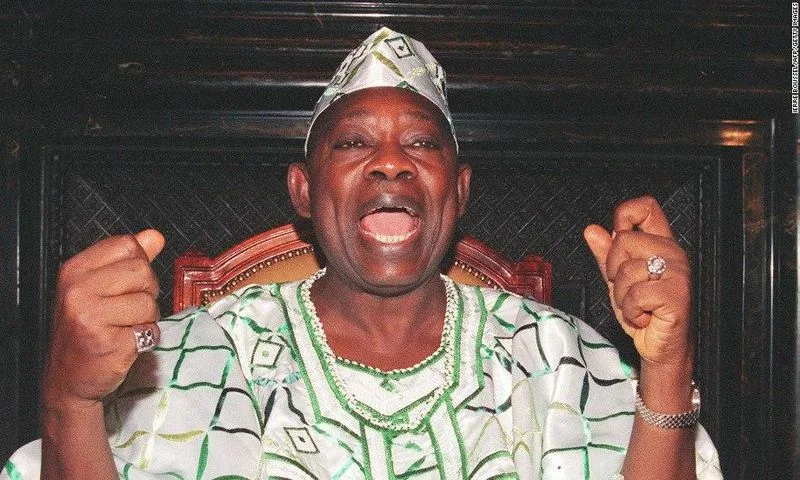
On June 12, 1993, Nigerians queued behind their preferred candidates in a system called Option A4. No thumb-printing. No ballot boxes. Just people standing in lines, counted openly. The winner was clear: Chief MKO Abiola of the Social Democratic Party (SDP) got over 8 million votes. His opponent, Bashir Othman Tofa of the National Republican Convention (NRC), got about 6 million. Over 14 million voters took part.
Then the military annulled it. General Ibrahim Babangida's regime cancelled the election, plunging Nigeria into a bloody political crisis. It took six years and a transition to civilian rule in 1999 before the country began to heal — partially. Abiola died in detention in 1998, still fighting for his mandate.
That election, conducted by the National Electoral Commission (NEC) led by Professor Humphrey Nwosu, is still widely called the freest and fairest in Nigeria's history. Thirty-three years later, no other poll has matched it.
Today is also the eighth anniversary of the Federal Government's recognition of June 12 as Democracy Day. President Muhammadu Buhari did it in 2018 — he apologised to Abiola's family and gave him a posthumous award, the Grand Commander of the Federal Republic of Nigeria (GCFR). In 2019, Buhari signed a law making June 12 the official Democracy Day, replacing May 29. President Bola Tinubu is marking his third Democracy Day as president.
The contrast between 1993 and now is sharp. Last month, some political parties tried to use the same queue system for primaries. Videos went viral showing people being counted "geometrically" — meaning officials were inflating numbers instead of counting one by one. It was a far cry from the transparent process of 1993.
Abiola's campaign was built on "Farewell to Poverty" and "Hope 93". So how has poverty fared since? In 1992, about 39.2 million Nigerians (42.7% of the population) lived below the poverty line. After the annulment, that number jumped to 67.1 million (65.6%) by 1995. By 2018, the Brookings Institution said Nigeria had 87 million people in extreme poverty — more than India — and the number was growing by six people every minute. Today, over 131 million Nigerians are multi-dimensionally poor.
The 1993 election had no ballot snatching, no result falsification, no violence at polling units. Party agents from both SDP and NRC agreed on the results before they were officially announced. Since the Fourth Republic began in 1999, elections have been marked by card reader failures, intimidation, ballot box theft, and manipulated figures.
Nigeria has elections coming soon: the Ekiti governorship poll on June 20, bye-elections in six constituencies, and the general elections in January 2027. The question on many minds is the same every year: when will Nigeria have another election like June 12, 1993?