

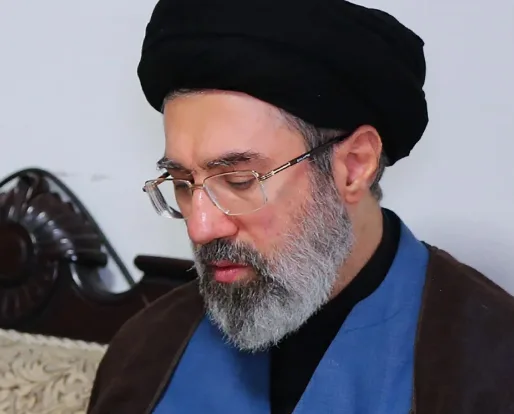
The man at the helm of Iran’s leadership has finally spoken, and he’s not mincing words about the wolves he sees at his door. In a written message broadcast across state television, Supreme Leader Mojtaba Khamenei claimed that the United States and Israel are running a calculated campaign to destabilize his country. He described this effort as a desperate move to make up for military losses by sowing discord among the Iranian people.
This marks the first time the 56-year-old leader has communicated directly with the public since he quietly ascended to the country’s highest office in March. His absence from the physical spotlight has sparked endless whispers in the streets of Tehran and beyond, as citizens try to grasp what kind of ruler he’ll be. The vacuum left by his predecessor’s sudden death turned the regional power balance on its head almost overnight.
The enemy’s blind plan, after the imposed war, the economic pressure, and the political and propaganda siege, is to create divisions and disintegration in order to compensate for military defeats and bring the nation to its knees.
His father, the former Supreme Leader Ali Khamenei, was killed on February 28. That death happened during the opening salvos of what quickly snowballed into a widespread conflict involving the US and Israel. That specific morning changed everything for the Middle East. It triggered a series of events that forced millions to re-evaluate their safety and daily routines as regional tensions reached a breaking point.
A Nation Under Strain
The anniversary of the founding of Iran’s national legislature served as the backdrop for this latest address. By tying his message to such a symbolic day, Mojtaba is projecting an image of stability and continuity in an era defined by chaos. He is pleading for national cohesion. He’s fully aware that a divided house can't stand against the weight of the sanctions and political pressure currently bearing down on the economy.
For the ordinary Iranian, the words translate into real-world struggle. Prices for basic goods continue to climb while the value of the rial remains under constant threat from foreign economic blockades. The government’s narrative of a "propaganda siege" is a tactic to redirect public frustration away from domestic failures and toward these historical external antagonists. It’s a classic move in the Iranian political playbook: when the economy bleeds, blame the outsider.
This leadership style is vastly different from the late Ali Khamenei, who held his position for decades and had developed a well-known, if iron-fisted, public persona. Younger observers are watching closely to see if Mojtaba can manage the same grip on power while the region remains locked in a direct military confrontation. The sheer scale of the shift is unprecedented in the modern history of the republic. The silence he kept for his first few months in power only amplified the intensity of public speculation.