

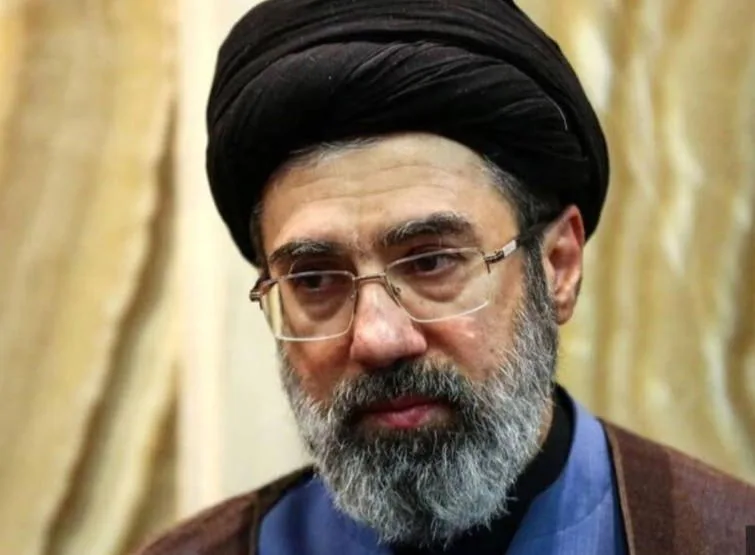
Iran's supreme leader, Ayatollah Mojtaba Khamenei, made a statement on Tuesday that regional countries won't be shields for US bases. This statement was carried by state television and marks a development in the ongoing tensions between Iran and the US. It's a significant development because it shows Iran's changing stance towards the US.
The statement was made in a written message marking the Eid al-Adha holiday. In it, Khamenei said, "What's certain is that time won't turn backwards, and the nations and lands of the region won't serve as shields for American bases." He also stated that the US "doesn't have any safe haven in the region for aggression and the establishment of military bases, and it's moving further away from its former position with each passing day."
These remarks come as Iran and the US are engaged in exchanges aimed at reaching a deal to end the war that began on February 28 and spread across the region. A fragile ceasefire has been in place since April 8. Iran's foreign ministry has said that Tehran and Washington have reached understandings on many issues in their exchanges, but they won't reach an agreement yet.
On Tuesday, Iran's Revolutionary Guards said they'd downed a US drone and shot at other aircraft attempting to enter the country's airspace, without specifying when the incidents took place. In a statement, the Guards further warned against any violation of the ceasefire by the US military and considers its right to reciprocal response legitimate and certain. They're watching the US closely, and they won't hesitate to respond if necessary.
Mojtaba Khamenei, 56, succeeded his father Ali Khamenei, who was killed in the opening US-Israel strikes of February 28, triggering retaliatory attacks by Tehran across the region. This succession has marked a shift in Iran's leadership and its stance towards the US. It's a significant change, and it's likely to have far-reaching implications.
The US Central Command said on Monday that forces attacked missile sites in southern Iran and boats trying to lay mines, despite the ceasefire. Iran hasn't officially confirmed the US attack, but state media reported blasts in the southern port city of Bandar Abbas without specifying their source. They're investigating the incident, and they won't comment until they have more information.
Khamenei said, "What's certain is that time won't turn backwards, and the nations and lands of the region won't serve as shields for American bases." The situation remains tense, with both sides exchanging warnings and engaging in military actions despite the ceasefire. The impact of Khamenei's statement on the region and the ongoing negotiations between Iran and the US remains to be seen.
The international community is watching closely, knowing that the outcome will have significant implications for the region and beyond. The fact that Iran and the US are talking is a positive development, but the road to a lasting agreement is long and fraught with challenges. They're facing many obstacles, and they won't reach an agreement easily.
The focus is on Khamenei's statement and what it means for the region. The fact that he said regional countries won't serve as shields for US bases is a significant development, and it's likely to have far-reaching implications. It's a significant shift in Iran's stance, and it's likely to change the dynamics in the region.
Iran's supreme leader, Ayatollah Mojtaba Khamenei, said regional countries won't serve as shields for US bases. The statement was made in a written message marking the Eid al-Adha holiday. A fragile ceasefire has been in place since April 8. Iran's Revolutionary Guards said they'd downed a US drone and shot at other aircraft attempting to enter the country's airspace. The US Central Command said forces attacked missile sites in southern Iran and boats trying to lay mines, despite the ceasefire.
It's clear that Mojtaba Khamenei, who succeeded his father Ali Khamenei after his death in the US-Israel strikes, has marked a significant shift in Iran's leadership. Khamenei's statement is a reflection of this new era. He's taking a different approach, and it's likely to have significant implications for the region.
The region is at a crossroads, and the outcome of the negotiations between Iran and the US will have significant implications, not just for the region, but for the world at large. The Middle East has been plagued by conflict and instability for decades, and the US-Iran tensions have been a major factor in this instability. A lasting agreement between the two countries could potentially pave the way for a more stable region. It's a complex situation, and it won't be easy to resolve.
The fact that Iran and the US are talking is a positive development, but the road to a lasting agreement is long and fraught with challenges. They're facing many obstacles, and they won't reach an agreement easily. The international community is watching closely, knowing that the outcome will have significant implications for the region and beyond.
The answer to what happens next is unclear, but the region is at a crossroads, and the outcome of the negotiations between Iran and the US will have significant implications for the world at large. The situation is complex, and the outcome is far from certain. But it's clear that the region won't be the same again, and the implications of Khamenei's statement will be felt for years to come.
The fact that the US and Iran are engaged in negotiations is a positive development, and it's a significant shift from the tensions that have characterized their relationship in recent years. But the road to a lasting agreement is long, and it's fraught with challenges. They're willing to engage in diplomacy to resolve their differences, and it's a significant step forward.
The outcome of the negotiations is far from certain, but it's clear that the region is at a crossroads, and the implications of Khamenei's statement will be felt for years to come. The world is watching closely, knowing that the outcome will have significant implications for the region and beyond. The situation is complex, and the outcome is far from certain. But it's clear that the region won't be the same again, and the implications of Khamenei's statement will be felt for years to come.
The future is unclear, but it's certain that the region won't be the same again, and the implications of Khamenei's statement will be felt for years to come. The world is watching closely, knowing that the outcome will have significant implications for the region and beyond. The situation is complex, and the outcome is far from certain. But it's clear that the region is at a crossroads, and the implications of Khamenei's statement will be felt for years to come.