

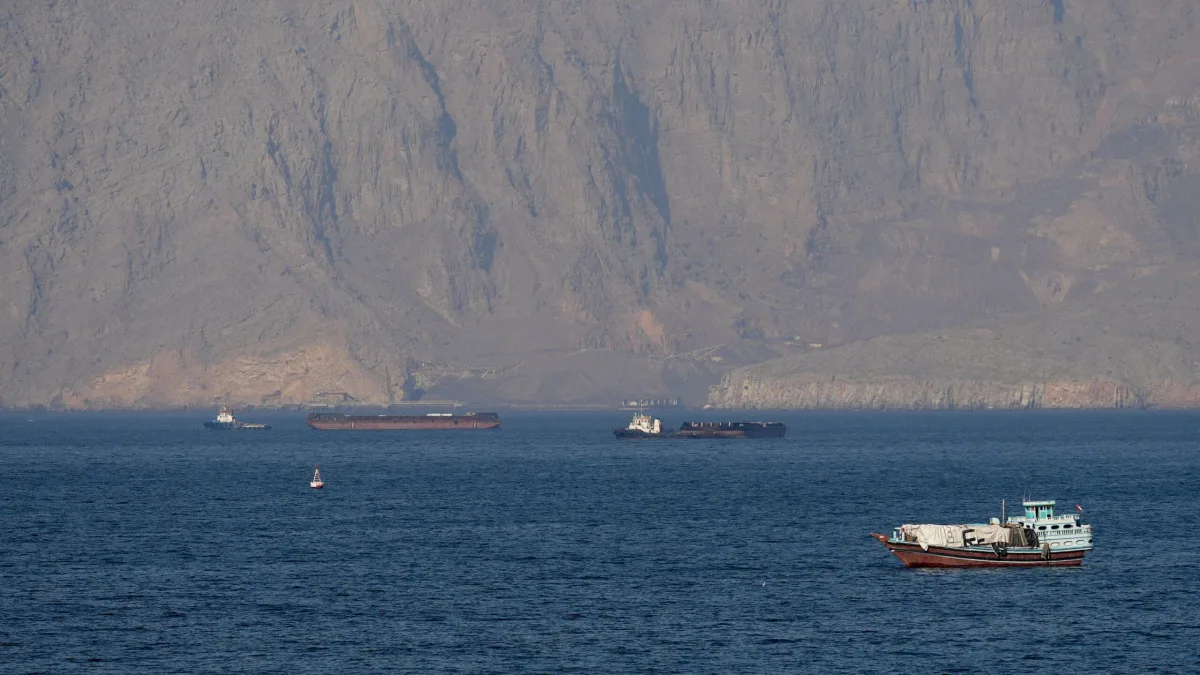
Iran's top negotiator and foreign minister were in Doha on Monday, May 25, for talks with Qatar's prime minister on a potential US deal to end the three-month-old war. The ongoing conflict between the US and Iran makes this development significant.
The discussions focused primarily on the Strait of Hormuz. They also discussed Iran's stockpile of highly enriched uranium. Iran's central bank governor attended to discuss the potential release of frozen Iranian funds as part of a final deal. Iran's foreign ministry spokesperson, Esmaeil Baghaei, said earlier that nuclear issues wouldn't be negotiated on unless the framework accord is agreed first.
US Secretary of State Marco Rubio told reporters in New Delhi that the US would give diplomacy every chance to succeed. They won't consider dealing with Iran in another way until then. Rubio mentioned that there was a pretty solid thing on the table in terms of their ability to open up the strait. They could get the strait open and enter into a very real, significant, time-limited negotiation on the nuclear matter.
US President Donald Trump said in a post on Truth Social that talks with Iran were going nicely. However, he warned of fresh attacks if they failed. He wrote that it'll only be a great deal for all, or no deal at all. Trump also called on more Arab and Muslim states to sign up to the Abraham Accords. He brokered these accords during his first term in office, and they're aimed at normalizing ties between those states and Israel.
The US Central Command said in a statement that the strikes were designed to protect their troops from threats posed by Iranian forces. US Central Command continues to defend their forces while using restraint during the ongoing ceasefire. Navy Captain Tim Hawkins, a Central Command spokesperson, said this.
As efforts to reach a deal continued on Monday, Iran said it had downed a hostile stealth drone using a new air defense system. This is a sign from them that no more stealth drones can penetrate the skies of the Persian Gulf. Fars quoted unnamed officials as saying this.
The standoff has caused a spike in oil prices. It's also driven up the costs of fuel, fertilizer, and food. On Monday, oil prices fell more than 4% to two-week lows. This happened amid optimism that a deal might come soon.
A Middle East diplomatic source told Japan's Nikkei newspaper that the US and Iran were discussing a plan. They'd open the strait about 30 days after reaching a deal to end hostilities. Iran would then clear mines from the strait during a 30-day window. After that, ships from all countries could navigate freely and safely.
The situation remains complex, with multiple parties involved and various interests at play. The potential deal between the US and Iran is crucial. It's crucial given the ongoing conflict and its far-reaching implications.
The talks are going nicely, but it'll only be a great deal for all, or no deal at all, Trump said.
Key Facts
- Iran's top negotiator and foreign minister met with Qatar's prime minister on Monday
- The discussions focused on the Strait of Hormuz and Iran's stockpile of highly enriched uranium
- US Secretary of State Marco Rubio said the US would give diplomacy every chance to succeed
- US President Donald Trump warned of fresh attacks if the talks fail
- The US Central Command said the strikes were designed to protect US troops from Iranian forces
- Iran said it had downed a hostile stealth drone using a new air defense system
There isn't a direct connection between this story and Nigeria. However, the global implications of the conflict and any potential deal between the US and Iran could affect the global economy, including Nigeria's.
The US and Iran have been engaged in a conflict for months. The US launched strikes on Iran on February 28. The standoff has caused a significant spike in oil prices, affecting the global economy. The potential deal between the US and Iran is crucial, given the ongoing conflict and its far-reaching implications.
The situation remains complex, with multiple parties involved and various interests at play. Other countries, such as Qatar and Israel, are involved, which adds to the complexity of the situation.
As the situation continues to unfold, it's essential to monitor the developments and their potential implications. The conflict between the US and Iran has far-reaching consequences, affecting not only the Middle East but also the global economy.
The diplomatic talks between Iran and the US are a significant development in the ongoing conflict. They're significant because the potential deal between the two countries could have far-reaching implications. It could affect not only the Middle East but also the global economy. The outcome of these talks will likely have a significant impact on the global economy, and it's crucial to continue monitoring the situation.