

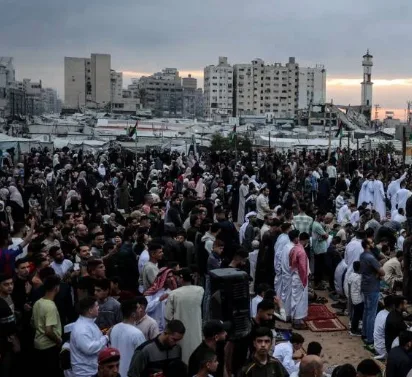
Imagine preparing for a major celebration like Sallah, but the market stalls you usually visit are either empty or charging prices that feel like a cruel joke. That's the reality for millions of people in Gaza today, where the joyous sounds of Eid al-Adha have been replaced by the heavy silence of survival. Families aren't buying new clothes for their children, and the tradition of sacrificing a sheep has become a luxury only a tiny fraction of the population can even dream of.
Nadia Abu Shamala, a 40-year-old mother from Gaza’s north who has been displaced to Deir al-Balah for two years, spends her time wandering markets she can't afford. She describes returning home heartbroken every time she checks the price tags. For people like her, the holiday serves as a sharp reminder of what they've lost rather than a reason for festivity.
"This year, Eid comes with none of the joy we once knew in Gaza because of the effects of the war, the soaring prices, and our inability to provide even the simplest needs for our children."
Even with a US-brokered ceasefire in effect since October 2025, the daily struggle hasn't let up. While the heavy artillery might have quieted in some areas, the infrastructure is in ruins. Eight out of every ten buildings are damaged. Most residents remain entirely dependent on aid trucks that are restricted by Israeli-controlled entry points. NGO workers on the ground warn that these supplies aren't nearly enough to lower the cost of living.
Abu Abdullah al-Mosadar, a 59-year-old former property dealer, represents the few who are trying to keep traditions alive at an immense cost. He pooled 13,000 shekels—roughly $4,570—with his brother just to secure a single sheep for the religious sacrifice. This amount is a small fortune for a community that's seen its economy decimated by years of conflict and isolation.
The math behind these costs is grim. According to the United Nations' Food and Agriculture Organisation, only 15,000 sheep are left in the entire coastal territory. That's barely a quarter of what existed before the war started for a population of 2.1 million people. Raafat Asaliya, a spokesperson for the local agriculture ministry, explains that the collapse of farms and the high cost of feed have driven prices from a pre-war average of 1,000 shekels to as high as 15,000 shekels today.
For residents like 50-year-old Ahmed Abu Salem, the situation is beyond desperate. He notes that families who once made sacrifices every year now find it impossible to purchase even a single kilogram of meat for their household. The holiday, which commemorates the Prophet Ibrahim’s faith, has become a test of endurance rather than a time for communal gathering.
It isn't just the meat that's missing from the table; the ability to bake traditional sweets like maamoul has also vanished. Cooking gas is so scarce that families are forced to rely on makeshift clay ovens. In Khan Yunis, one family was seen preparing dough under a tarp bearing a UNICEF logo. This highlights the stark contrast between their living conditions and the holiday spirit.
Abu Ahmed Wafi, 42, currently living in a shelter in the south, says the markets are full of sweets that people can only stare at. He dreams of baking at home like his family did before the conflict. But with no fuel and no money, he and many others are left waiting for the day when the fear and exhaustion finally lift. For now, their Eid is spent in tents, marked more by prayers for safety than by the feasting that usually defines the season.