

Hezbollah's chief, Naim Qassem, received a message from Iran's Foreign Minister, Abbas Araghchi, saying Iran won't give up its support for the militant group. This message came as Israel struck south Lebanon on Saturday, despite a ceasefire.
The Lebanese militant group said Araghchi's message indicated Iran won't abandon its support for Hezbollah. This development is significant in the ongoing conflict between Israel and Hezbollah because it shows Iran's commitment to the group.
Israel's military has been pounding Lebanon, despite an April 17 ceasefire in the country announced by US President Donald Trump. The ceasefire was recently extended for several weeks. Hezbollah has also kept up attacks on Israeli targets in south Lebanon and in northern Israel.
The conflict between Israel and Hezbollah started on March 2, when Hezbollah drew Lebanon into the Middle East war with rocket fire at Israel. The rocket fire was in retaliation for the killing of Iran's supreme leader in US-Israeli strikes.
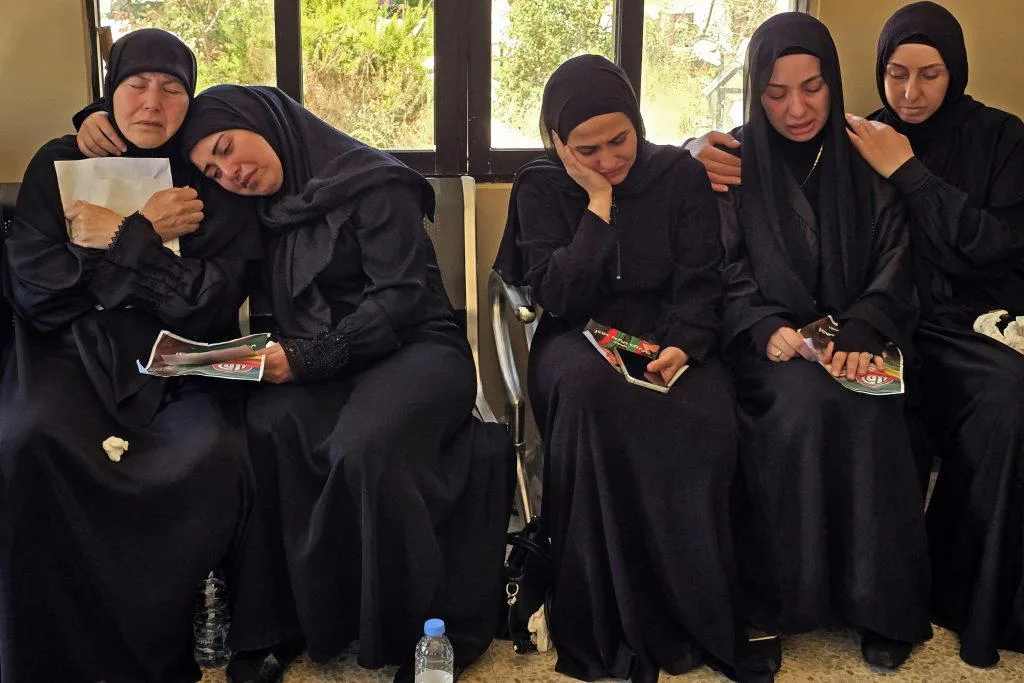
Lebanon's health ministry said Israeli attacks have killed 3,123 people since March 2. The ministry also reported that an overnight strike damaged a hospital in the southern city of Tyre.
'We took the patients to a safer location' elsewhere inside the hospital, said Dr Salman Aydibi, the hospital's CEO. 'No patients were harmed, but some 30 staff sustained minor injuries.'
The hospital was still operational, despite the damage. Israel's army said it had targeted 'Hezbollah infrastructure sites in Tyre'. They added that 'prior to the strike, steps were taken to mitigate harm to civilians'.
Under the terms of the ceasefire published by Washington, Israel reserves the right to act against 'planned, imminent or ongoing attacks'. Israeli troops who invaded Lebanon are operating inside an Israeli-announced 'yellow line' that runs around 10 kilometres deep along Lebanon's southern border.
Lebanese authorities have insisted that the country's ongoing talks with Israel under US auspices must be independent from the Iran-US negotiations. Security talks with Israel are scheduled at the Pentagon for May 29. A fourth round of negotiations is planned for June.
Hezbollah has vehemently rejected the direct talks between Lebanon and Israel. The militant group has continued to launch attacks on Israeli targets, including targeting Israeli air defence platforms across the border on Saturday.
The conflict has also affected other groups in the region. Lebanon's Hamas-aligned Islamist group, Jamaa Islamiya, and its armed wing, the Al-Fajr Forces, said one of its members was killed in a strike in the east.
Key Facts
- 3,123 people have been killed in the conflict since March 2
- Iran's Foreign Minister Abbas Araghchi said Iran won't give up its support for Hezbollah
- The conflict started on March 2, when Hezbollah launched rocket fire at Israel
- Israel has been pounding Lebanon despite an April 17 ceasefire
- Hezbollah has continued to launch attacks on Israeli targets
The ongoing conflict between Israel and Hezbollah has significant implications for the region. It's a complex issue with multiple parties involved. A resolution seems difficult to reach.
The international community has been trying to broker a peaceful resolution to the conflict. The US has been hosting talks between Lebanon and Israel. However, a lasting solution has yet to be found.
As the conflict continues, the humanitarian situation in Lebanon is becoming increasingly dire. The country's health ministry has reported a significant number of casualties. The damage to infrastructure is extensive.
The situation is further complicated by the involvement of other groups in the region. The conflict has the potential to escalate into a wider regional war. This would have devastating consequences.
It's essential for the international community to continue working towards a peaceful resolution to the conflict. The US and other countries must use their influence to bring the parties to the table. They must negotiate a lasting ceasefire.
The people of Lebanon are suffering the most in this conflict. They deserve a peaceful and stable environment. It's the responsibility of the international community to help achieve that.
The conflict between Israel and Hezbollah is a complex issue with no easy solution. However, with continued efforts from the international community, it's possible to find a peaceful resolution. This can bring an end to the suffering of the people of Lebanon.