

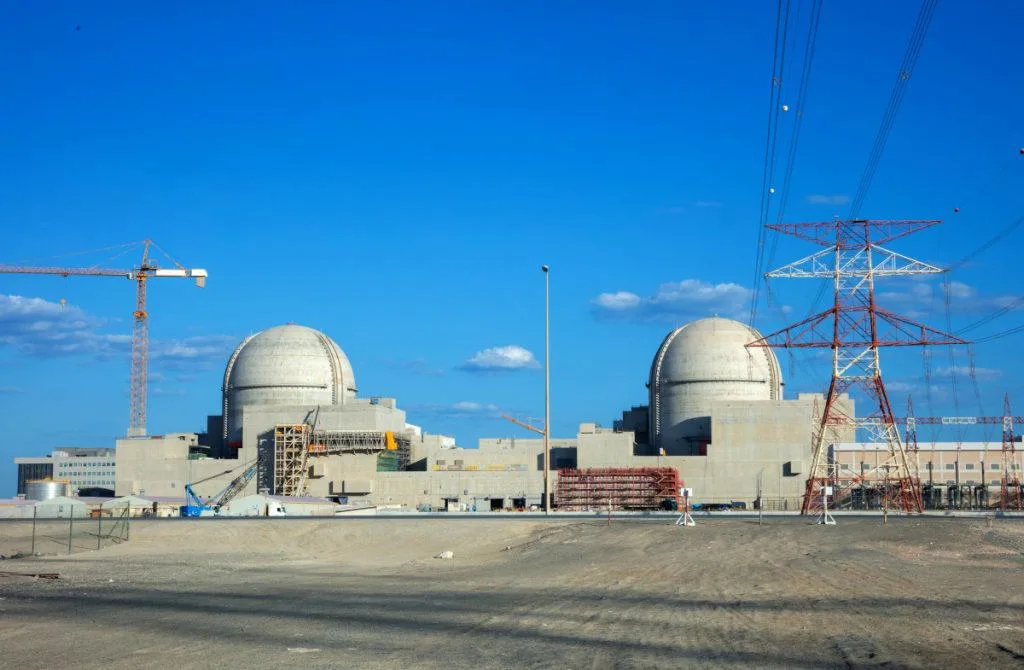
A drone strike triggered a fire near a nuclear power station in Abu Dhabi on Sunday, with the UAE's ministry of defence confirming the incident. The drone, one of three that entered the country from the western border direction, struck an electrical generator outside the inner perimeter of the Barakah Nuclear Power Plant in the Al Dhafra area. It's worth saying that the strike didn't directly target the plant.
The Barakah Nuclear Power Plant, which began operations in 2020, provides up to a quarter of the UAE's electricity needs. The state-owned operator Emirates Nuclear Energy Company said in 2024 that the plant is 200 kilometres west of Abu Dhabi, near the borders with Saudi Arabia and Qatar. They're aiming to reduce the country's dependence on fossil fuels with this plant.
According to the Abu Dhabi Media Office, no injuries were reported, and there was no impact on radiological safety levels. The Federal Authority for Nuclear Regulation confirmed that the fire didn't affect the safety of the power plant or the readiness of its essential systems, and that all units are operating as normal. They're operating as they should be.
An official from the Korea Electric Power Corporation, which operates the Barakah plant, said there were no casualties and the plant hadn't been damaged. 'It doesn't appear that there was a direct attack on the nuclear plant we manage and operate. It seems a fire broke out at other power facilities on the outskirts,' the official said. They don't think it was a direct attack.
Rafael Grossi, the head of the UN's nuclear agency, condemned the attack. The International Atomic Energy Agency said in a social media post that Grossi expressed 'grave concern about the incident and says military activity that threatens nuclear safety is unacceptable'. He's concerned about the incident.
The UAE has condemned the attack as a 'dangerous escalation' and a 'direct threat to the country's security'. The foreign ministry statement added that the UAE won't tolerate any threat to its security and sovereignty under any circumstances. They can't tolerate threats to their security.
Iranian-backed armed groups equipped with drones are based in Iraq, while Tehran's allies in Yemen — the Houthi rebels — also possess combat-grade UAVs. The UAE has recently accused Iran of being behind attacks on its energy and economic infrastructure. They've accused Iran of being behind the attacks.
Tehran launched retaliatory strikes across the region after the United States and Israel struck Iran on February 28, killing senior leaders and triggering a broader war. Iran has accused the UAE and other US allies in the Gulf of allowing US forces to carry out attacks from their territory. The UAE has angrily denied Iranian reports that it has actively carried out attacks of its own. They've denied the reports.
Washington and Tehran agreed a truce on April 8, but peace negotiations have stalled and sporadic attacks have continued. The UAE's ministry of defence said investigations are ongoing to determine the source of the attacks, and updates will be disclosed upon completion of the investigations. They're investigating the source of the attacks.
'These attacks constitute a dangerous escalation, an unacceptable act of aggression and a direct threat to the country's security,' the UAE foreign ministry statement said. They're an unacceptable act of aggression.
The incident highlights the ongoing tensions in the region and the potential risks to critical infrastructure. The UAE's condemnation of the attack and its commitment to protecting its security and sovereignty are clear indicators of the country's stance on the matter. They're committed to protecting their security.
The situation is unfolding, and it's essential to monitor the developments and assess the potential implications for the region. The international community's response to the incident will also be crucial in determining the next steps and the potential consequences for the parties involved. They need to respond to the incident.
Key Facts
- A drone strike triggered a fire near the Barakah Nuclear Power Plant in Abu Dhabi.
- The plant provides up to a quarter of the UAE's electricity needs.
- No injuries were reported, and there was no impact on radiological safety levels.
- The UAE has condemned the attack as a 'dangerous escalation' and a 'direct threat to the country's security'.
- Iranian-backed armed groups equipped with drones are based in Iraq, while Tehran's allies in Yemen — the Houthi rebels — also possess combat-grade UAVs.
The UAE's nuclear program is a significant aspect of the country's energy strategy, aiming to reduce its dependence on fossil fuels. The Barakah Nuclear Power Plant is a crucial component of this strategy, and the recent attack highlights the potential risks and challenges associated with the program. It's a crucial component of the strategy.
The international community's response to the incident will be crucial in determining the next steps and the potential consequences for the parties involved. The UAE's commitment to protecting its security and sovereignty is clear, and the country will likely take all necessary measures to prevent future attacks and ensure the safety of its critical infrastructure. They'll take necessary measures to prevent future attacks.
In the context of the ongoing tensions in the region, the incident serves as a reminder of the potential risks and challenges associated with the conflict. The UAE's role in the regional dynamics and its relations with other countries, including Iran, will be critical in determining the outcome of the situation. They're critical in determining the outcome.
The situation highlights the need for continued diplomacy and dialogue to resolve the ongoing conflict and prevent further escalation. The international community's support for a peaceful resolution will be essential in achieving a stable and secure environment in the region. They'll need to support a peaceful resolution.
As the situation continues to unfold, it's essential to monitor the developments and assess the potential implications for the region. The UAE's response to the incident and its commitment to protecting its security and sovereignty will be crucial in determining the next steps and the potential consequences for the parties involved. They'll need to monitor the developments. The incident will have significant implications for the region, and the international community will need to respond accordingly.