

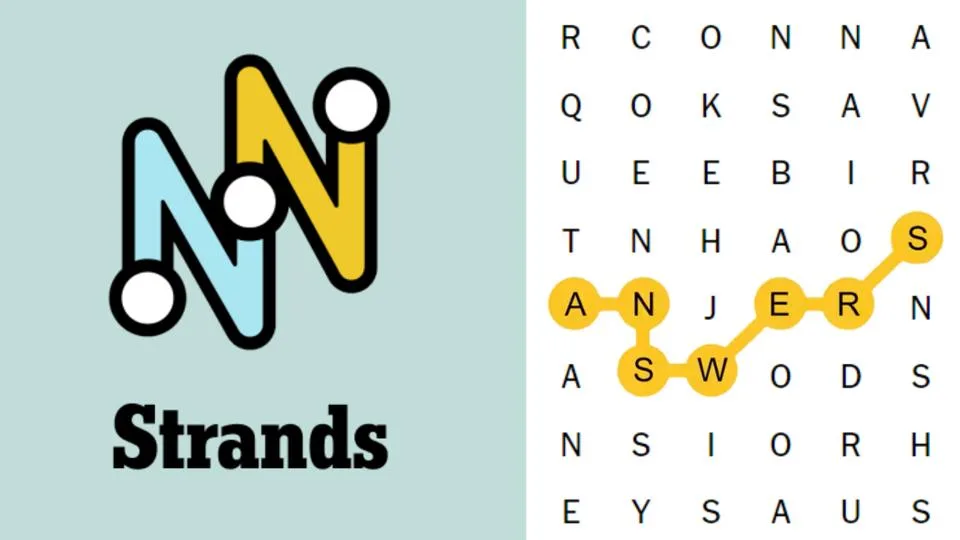
If you opened your New York Times app this morning expecting the usual workout for your brain, you might have found yourself sniffing the air instead. The daily Strands puzzle has taken a sensory turn, asking players to hunt down a collection of common and not-so-common smells hidden within a six-by-eight grid of letters.
For the uninitiated, Strands is the latest word game sensation from the media giant, currently operating in its beta phase. The objective is to identify a series of theme words based on a specific hint. Once a player locates these words, they remain highlighted in blue on the screen.
The real trick to the game is the spangram. This is a special, often longer word that stretches from one side of the grid to the other, effectively explaining the connection between all the other words you’ve uncovered. Unlike standard theme words which are never proper nouns, the spangram occasionally breaks this rule, acting as the ultimate key to the day’s mystery.
Tracy Bennett, the editor in charge of both Wordle and Strands, clearly enjoys keeping players on their toes. She designs these puzzles to offer a varied difficulty level throughout the week, often throwing curveballs that force even the most seasoned word-game fans to second-guess their strategies.
Today’s specific puzzle explores the olfactory world. The spangram for this session is an exploration of distinct scents that most of us encounter in our daily lives. While you might be tempted to rely on your nose, the game relies entirely on your ability to spot the correct sequence of letters in that jumbled grid.
Several terms included in today’s challenge might test your knowledge of essential oils and citrus-based aromas. For instance, you will likely encounter 'Neroli,' which is the essential oil harvested specifically from the blossoms of the bitter orange tree. It’s a sophisticated addition that might trip up anyone who isn't a fan of aromatherapy or high-end perfume production.
Then there is 'Bergamot,' a scent that is frequently used in perfumes and teas like Earl Grey. It’s a vibrant, uplifting citrus aroma derived specifically from the thick, fragrant rind of the bergamot orange fruit. If you find yourself struggling to differentiate between these, don’t feel bad; many players admit they usually just lump these complex botanical notes into the simple category of 'orange' and move on.
The game's mechanics rely on users returning daily to ensure it remains part of the permanent NYT suite. If the player base drops off, the project could disappear entirely. It’s a high-stakes environment for a word game, turning every morning scroll into a vote on whether the app keeps its current features.
Whether you are an expert at finding hidden patterns or you just enjoy the satisfaction of clearing the board before your morning tea gets cold, today’s puzzle is a reminder that even the simplest grids can hide nuances. You are essentially racing against the editor's attempt to humble you. If you get stuck, the game offers two-letter hints, but let's be honest—that takes the fun out of the chase.
Ultimately, this puzzle is a reminder that we often take our senses for granted. We interact with thousands of smells every single day, yet we rarely have to name them in a structured, competitive setting. If you manage to find every scent, you’ve earned your bragging rights for the day. Just don't blame the game if you end up spending your lunch break Googling the difference between types of citrus peels.