

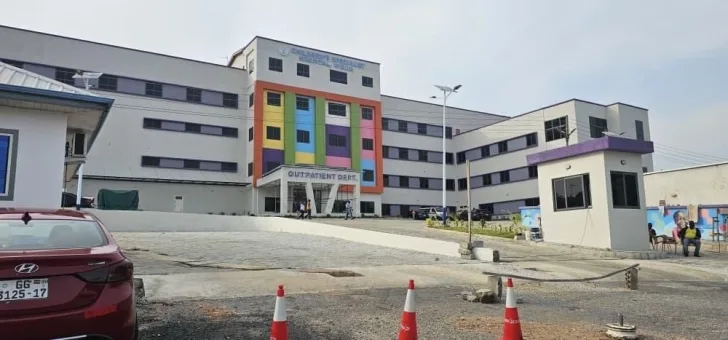
The dust is settling on a project that should have been a lifeline for families in the southern sector, but instead, it's become a monument to bureaucratic frustration. The 120-bed Weija Paediatric Hospital, a facility born from the urgent lessons of the COVID-19 pandemic, remains locked. Patients wait in long queues elsewhere, while this multimillion-dollar infrastructure gathers cobwebs over claims of mismatched invoices and questionable procurement procedures.
Dr Nana Ayew Afriyie, the Ranking Member on the Health Committee of Parliament, isn't buying the government's narrative. During a press briefing in Accra today, he pushed back against the Ministry of Health's insistence that the project was mismanaged. He argued that the contractor did exactly what was required and that the Public Procurement Authority, which oversees such high-stakes government deals, already gave its nod at every critical stage.
"If you've been set up, then the World Bank has set you up," Dr Afriyie said. "Now, they've issued a statement ahead of you (MoH), saying that the hospital should be opened, and nobody is talking about the mis-procurement now."
At the heart of the standoff is the original scope of the building. What started as a 40-bed structure was scaled up to a 120-bed facility to serve more children. This expansion meant the equipment list had to change, and naturally, costs went up. Dr Nana Ayew Afriyie maintains that this enhancement was done with the full knowledge of the World Bank, which provided the $10.15 million funding for the project. According to the Minority, the government is essentially fighting its own shadow by questioning processes it was part of from the very beginning.
The Financial Disconnect
The ministry has pointed to specific equipment, such as the CT scan, arguing that the pricing doesn't reflect current market realities. However, the Minority contends that simply calling something 'overpriced' without producing alternative invoices or concrete evidence isn't a serious way to handle public money. They suggest that if there truly is a discrepancy, the ministry should have handled the paperwork properly instead of using it as a reason to keep the doors bolted shut. The $3.8 million portion of the budget, which covers major diagnostic tools, is currently the main point of contention.
Thousands of young graduates in nursing and laboratory sciences remain at home despite the country's desperate need for skilled workers in facilities like this one. By keeping the hospital closed, the state is not only denying children access to specialist care but also wasting the potential of medical professionals who are currently unemployed. The Minority insists that there is no logical reason for this continued silence from the Ministry of Health, given that the World Bank has already issued a statement urging the hospital to be opened.
Beyond the political friction, the reality for the average parent in the Weija area is grim. When an emergency strikes, the distance to the nearest specialist pediatric centre remains a massive hurdle. This hospital was supposed to bridge that gap. With the World Bank pushing for the facility to be opened, the pressure on the government to resolve these procurement squabbles is reaching a breaking point. The public is waiting for the authorities to stop the blame game and start putting patients in beds.