

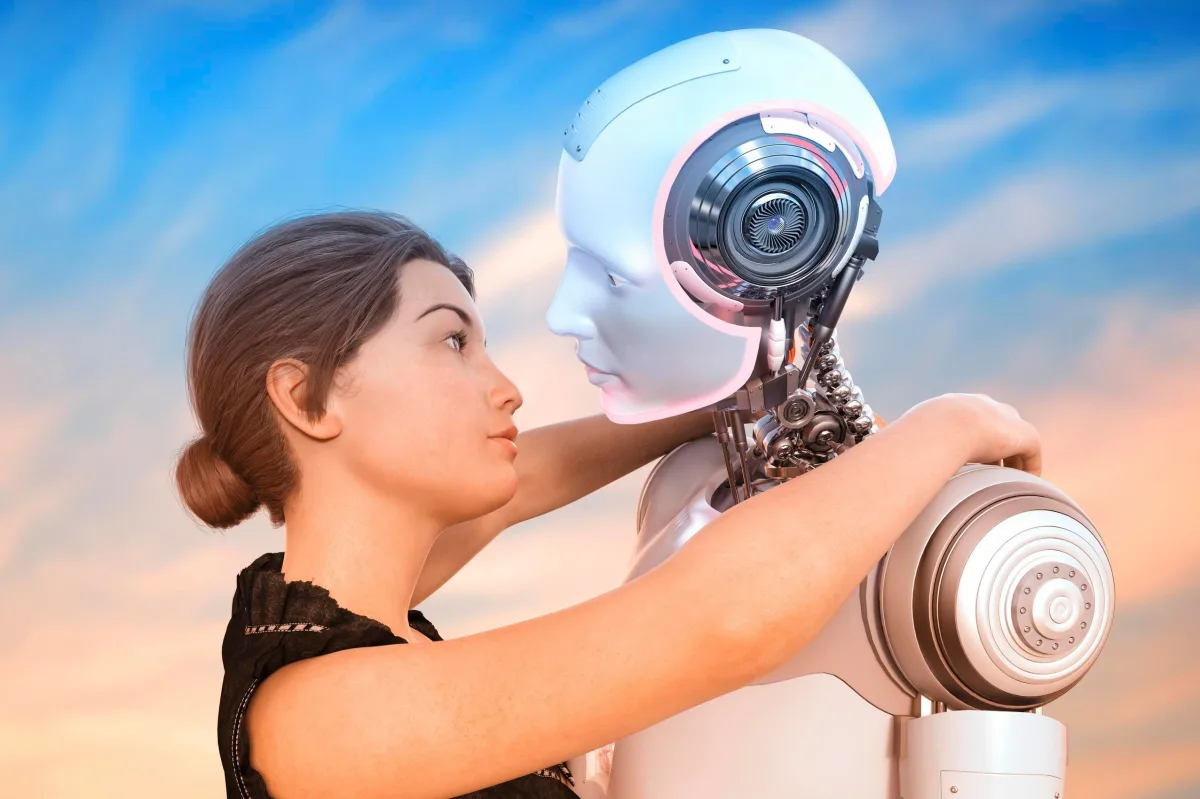
The single sharpest fact in recent reports on AI usage is that up to one-third of Gen Z teens prefer discussing serious emotional issues with AI over human therapists. This preference is often due to challenges with access to care and a fear of burdening others when they ask for help. They don't want to feel like they're weighing others down.
This trend isn't limited to teens; reports of adults using AI as a romantic companion are also on the rise. Some studies indicate that between 16-20% of adults have used AI for companionship or to simulate a romantic relationship. But what's driving this shift towards AI-powered relationships and therapy? It's because people feel less judged by AI compared to real people when they open up about their vulnerabilities.
AI is available 24/7 as a source of support, whereas real people aren't always available. However, experts are sounding the alarm, warning that AI tools and chatbots shouldn't replace a licensed clinician. The American Psychological Association views AI romance with caution because AI tools can't replace the growth that comes from human vulnerability.
The American Psychological Association views AI romance with caution because AI tools can't replace the growth that comes from human vulnerability.
A recent report from Common Sense Media found that AI mental health apps could actively harm teens. The report, published in collaboration with Stanford Medicine's Brainstorm Lab, reviewed over 3100 exchanges with five AI therapy apps. These apps covered 13 clinical conditions affecting young people, including depression, eating disorders, anxiety, and self-harm. They found that one of the most popular apps, Wysa, scored an “unacceptable” risk. This was due to failing to recognize psychiatric emergencies.
Common Sense Media also reported that Wysa may have been responding in ways that could worsen the condition in some of these exchanges. The app didn't appear to provide any human professional oversight for negative outcomes. The report also found that 2 more therapy AI apps, Earkick and Youper, vanished from app stores during the testing period. They didn't warn users and didn't provide referrals to alternative care. This left more than 3 million users without support and without knowledge as to the whereabouts of the sensitive mental health information they had provided to the app.
But the issue goes beyond just teens. A recent Gallup poll suggested that the rates of depression are at high levels in adult Americans. The report states that the percentage of U.S. adults who report currently having or being treated for depression was 19.1% in the first quarter of 2026. This is similar to the high of 20.0% recorded in the preceding quarter. It's up nearly nine percentage points since the initial measurement in 2015.
According to Harvard Medicine, one in six U.S. Adults uses AI chatbots at least once monthly to find health information and guidance. They're using it to learn more about their health.
A survey conducted in November 2025 found that 12 percent of U.S. adults say that they're likely to use AI chatbots for mental health support in the next six months. Another study found that those most likely to utilize these chatbots for mental health are uninsured. This suggests that access to healthcare may play a role in who is more likely to use AI therapy versus traditional human therapists for mental health support. They don't have other options, so they're turning to AI.
Organizations such as Common Sense Media and the American Psychological Association (APA) make it very clear where they stand about AI with regards to therapy. They emphasize that AI tools and chatbots shouldn't replace a licensed clinician. The APA also cautions that AI romance may delay real-life social development. It's a concern that they're taking seriously.
The implications of this trend are significant, and experts are urging caution. As AI technology continues to advance, it's crucial that we prioritize human connection. We must ensure that AI is used in a way that complements, rather than replaces, human relationships and therapy. It's not a replacement, but a tool to be used carefully.
- Up to one-third of Gen Z teens prefer discussing serious emotional issues with AI over human therapists.
- Between 16-20% of adults have used AI for companionship or to simulate a romantic relationship.
- AI mental health apps could actively harm teens, according to a report from Common Sense Media.
- The percentage of U.S. adults who report currently having or being treated for depression was 19.1% in the first quarter of 2026.
- One in six U.S. Adults uses AI chatbots at least once monthly to find health information and guidance.
- 12 percent of U.S. adults say that they're likely to use AI chatbots for mental health support in the next six months.