

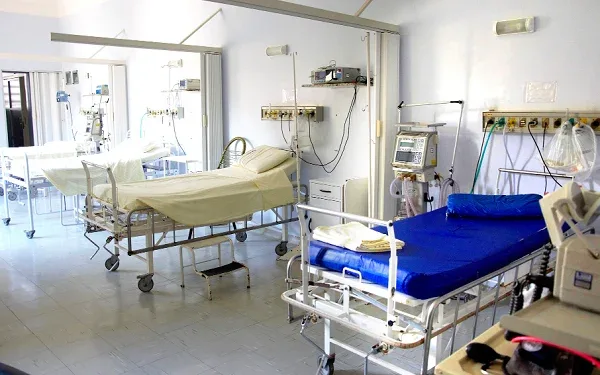
Nearly 3,000 patients are being treated in corridors and converted rooms across England's hospitals every day, according to fresh NHS data that's laid bare the severity of the country's bed shortage crisis.
During May 2026, an average of 2,241 patients per day received care in accident and emergency department corridors, while another 669 were treated in makeshift locations elsewhere in hospitals, including converted rooms and temporary spaces. The figures, released by the NHS and reported by the BBC, provide one of the clearest pictures yet of a practice health professionals have long described as unsustainable.
Under NHS guidelines, "corridor care" happens when a patient waits more than 45 minutes for an appropriate treatment area or hospital bed. In emergency departments, this can mean treatment in hallways or side rooms that lack proper equipment and privacy. On wards, it refers to patients left waiting for beds for prolonged periods after doctors have decided they need to be admitted.
The problem is concentrated in a relatively small number of hospitals. NHS analysis found that just 20 hospital trusts accounted for more than half of all corridor care cases recorded in emergency departments, while another 20 trusts were responsible for over two-thirds of similar cases elsewhere in hospitals.
The NHS has attributed the pressure to growing demand for emergency care, an ageing population, delays in discharging patients, and broader capacity constraints. The data is expected to intensify calls for more investment and reforms to reduce overcrowding.
For healthcare professionals, the issue goes beyond statistics. Every patient deserves treatment in a safe, dignified, and properly equipped environment — a standard that becomes harder to maintain when hospitals rely on corridors and makeshift spaces.
The developments in England will sound familiar to many Ghanaians who've experienced the country's recurring "no bed syndrome," especially at major referral hospitals like Korle Bu Teaching Hospital and Komfo Anokye Teaching Hospital. Over the years, these facilities have periodically struggled with overcrowding, forcing health workers to improvise. At the height of some crises, health authorities urged facilities to use chairs, corridors, and temporary holding areas rather than turn patients away.
While such measures ensure access to treatment, healthcare advocates have consistently warned that caring for patients outside designated wards raises concerns about privacy, infection prevention, monitoring, and overall quality of care.
Health policy experts say the NHS figures show that even advanced healthcare systems can face serious operational difficulties when infrastructure expansion fails to keep pace with rising patient demand. They argue that increasing hospital bed capacity, improving emergency care systems, strengthening community healthcare, and expanding staffing levels remain critical to preventing overcrowding and preserving patient dignity.
"Every patient deserves treatment in a safe, dignified and properly equipped environment" — a standard that becomes increasingly difficult to maintain when hospitals are forced to rely on corridors and makeshift spaces.
As governments worldwide grapple with rising healthcare demands and finite resources, the NHS experience serves as a reminder that bed shortages remain one of the most persistent challenges confronting modern healthcare systems.