

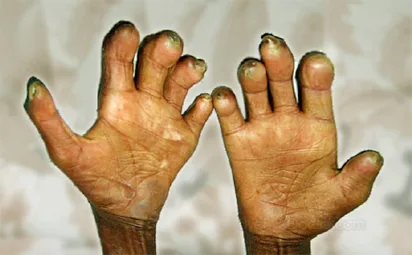
The Uzuakoli Leprosy Colony in Abia State, established in 1931 by Methodist missionaries, was once the foremost leprology centre in Africa. It pioneered the Dapsone treatment that cured thousands of patients. However, the colony hasn't received government funding since 2009 and now relies on charity.
The colony's decline is a symbol of Nigeria's failure to tackle leprosy. In 2023, Nigeria recorded 2,425 new leprosy cases. The Grade 2 disability rate was 10%. This means one in every ten new patients already had visible, permanent deformities. Early treatment could have prevented these deformities.
The situation is worse in the conflict-torn Northeast. In Adamawa State, 87.7% of new patients had Grade 2 disabilities. In Borno State, 81% of new patients had Grade 2 disabilities. Nigeria achieved leprosy elimination in 1998, defined as fewer than one case per 10,000 population. However, the programme was scaled back.
This left behind a system where over 3,500 people are diagnosed annually. Approximately 25% of patients present with disabilities, and treatment defaulting persists. The National Tuberculosis and Leprosy Control Programme (NTLCP) must be adequately funded and staffed to address this crisis. They can't afford to wait any longer.
A 2024 study found that 94.3% of leprosy settlement residents reported a very poor quality of life. 60.4% of residents experienced severe stigma. This stigma affects their daily functioning and livelihoods. The Uzuakoli centre and other settlements need direct capital investment, not just promises. They won't be able to recover without it.
Rehabilitation must involve skills training, cooperative farming, and microcredit. This will help patients reintegrate into their communities. Governor Alex Otti's administration must extend its health reforms to the Uzuakoli Leprosy Centre. It should set a template for the rest of the country. Nigeria must reclaim its position as a leader in leprosy care in Africa.
The current situation is a national embarrassment, and it's time for change. The Leprosy Mission Nigeria, German, and Belgian NGOs have been supporting the Uzuakoli centre with donations, but it's not enough. The centre needs funding for rehabilitation, physiotherapy, vocational training, and dignified housing.
The Nigerian government must take responsibility for providing these essential services to its citizens. They can't ignore the needs of their people. The fact that 9.9% of new leprosy cases involve children under 15 is a sign of active, ongoing transmission. This transmission occurs in communities where the disease should be vanishing.
This is an emergency that requires immediate attention. The NTLCP must launch active case-finding campaigns in high-burden states and conflict-affected zones. They must detect and treat leprosy cases early. It's the only way to prevent further disabilities.
- 2,425 new leprosy cases were recorded in Nigeria in 2023
- 10% of new patients had Grade 2 disabilities
- 87.7% of new patients in Adamawa State had Grade 2 disabilities
- 81% of new patients in Borno State had Grade 2 disabilities
- 94.3% of leprosy settlement residents reported a very poor quality of life
- 60.4% of residents experienced severe stigma
The Uzuakoli Leprosy Colony's story is a reminder of Nigeria's neglect of its healthcare system. It's time for the government to take action and provide the necessary funding and support to tackle leprosy and other diseases. The people of Nigeria deserve better, and it's time for change. They won't settle for anything less.
'This must change. The National Tuberculosis and Leprosy Control Programme (NTLCP) must be adequately funded and staffed, with active case-finding campaigns in high-burden states and conflict-affected zones where the disability rates are a national embarrassment.'