

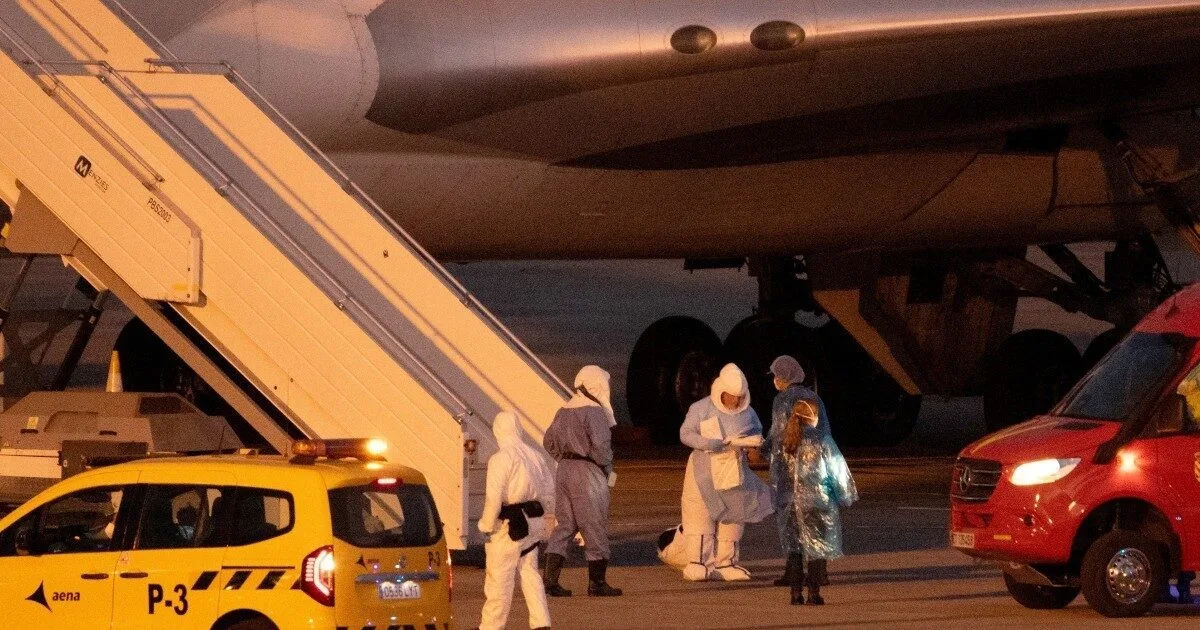
The news of a hantavirus outbreak on a cruise ship has sent shockwaves across the globe. The ship, which was carrying thousands of passengers, was hit by the outbreak, leaving many stranded and frightened. The UK government has taken swift action, evacuating 20 of its citizens from the ship and bringing them back to Manchester. The passengers will be quarantined and tested for the virus, which can be deadly if left untreated.
The hantavirus outbreak has raised concerns about the spread of the disease, which is typically found in rodents and other small mammals. The virus can be transmitted to humans through contact with infected animals or their droppings, and can cause symptoms such as fever, headaches, and muscle pain. In severe cases, the virus can lead to respiratory failure and even death. The UK government has assured the public that it is taking all necessary precautions to prevent the spread of the disease.
The cruise ship, which was sailing through the Caribbean, was forced to make an emergency stop after several passengers fell ill. The ship's crew and medical team worked quickly to contain the outbreak, but not before it had spread to several passengers. The UK government was notified, and a team of medical experts was sent to the ship to assess the situation and evacuate the affected passengers. The passengers were flown back to Manchester, where they will undergo further testing and treatment.
The hantavirus outbreak has highlighted the need for increased vigilance and preparedness in the face of emerging diseases. The UK government has been praised for its swift response to the crisis, but there are still concerns about the potential for the virus to spread further. The public has been warned to be aware of the symptoms of the disease and to take precautions to avoid contact with infected animals or their droppings.
Key Facts
- 20 UK citizens were evacuated from the cruise ship
- The passengers will be quarantined and tested for the virus
- The hantavirus outbreak occurred on a cruise ship sailing through the Caribbean
- The virus can be transmitted to humans through contact with infected animals or their droppings
- The UK government has taken swift action to contain the outbreak
- The passengers were flown back to Manchester for further testing and treatment
- The hantavirus can cause symptoms such as fever, headaches, and muscle pain
- In severe cases, the virus can lead to respiratory failure and even death
Hantavirus Explained
The hantavirus is a type of virus that is typically found in rodents and other small mammals. It can be transmitted to humans through contact with infected animals or their droppings, and can cause symptoms such as fever, headaches, and muscle pain. The virus can be deadly if left untreated, and has been responsible for several outbreaks around the world. The hantavirus is not contagious, meaning it cannot be spread from person to person, but it can be spread through contact with infected animals or their droppings.
The hantavirus is a complex virus that is still not fully understood. Researchers are working to develop a vaccine and more effective treatments for the disease, but so far, there is no cure. The virus is typically found in rural areas, where rodents and other small mammals are more common. However, the outbreak on the cruise ship highlights the potential for the virus to spread to urban areas and other unexpected locations.
The symptoms of the hantavirus can be similar to those of other diseases, making it difficult to diagnose. However, medical experts are working to develop more effective diagnostic tools and treatments for the disease. The UK government has assured the public that it is taking all necessary precautions to prevent the spread of the disease, and has warned the public to be aware of the symptoms and to take precautions to avoid contact with infected animals or their droppings.
Response to the Outbreak
The UK government has been praised for its swift response to the crisis. A team of medical experts was sent to the ship to assess the situation and evacuate the affected passengers. The passengers were flown back to Manchester, where they will undergo further testing and treatment. The government has also warned the public to be aware of the symptoms of the disease and to take precautions to avoid contact with infected animals or their droppings.
The response to the outbreak has been coordinated by the UK's National Health Service (NHS), which has worked closely with other government agencies and medical experts to contain the outbreak. The NHS has assured the public that it is taking all necessary precautions to prevent the spread of the disease, and has warned the public to be aware of the symptoms and to take precautions to avoid contact with infected animals or their droppings.
The UK government has also worked closely with international partners to coordinate a response to the outbreak. The World Health Organization (WHO) has been notified, and has offered its assistance in containing the outbreak. The WHO has warned that the outbreak has the potential to spread to other countries, and has urged governments to take precautions to prevent the spread of the disease.
Impact on the Cruise Industry
The hantavirus outbreak has had a significant impact on the cruise industry. The cruise ship where the outbreak occurred has been forced to make an emergency stop, and several other cruise ships have been affected by the outbreak. The cruise industry has been working closely with government agencies and medical experts to contain the outbreak and prevent its spread.
The outbreak has also raised concerns about the safety of cruise ships and the measures in place to prevent the spread of diseases. The cruise industry has been criticized for its response to the outbreak, with some arguing that it has been slow to react and has not done enough to protect passengers. However, the industry has argued that it has taken all necessary precautions to prevent the spread of the disease, and has worked closely with government agencies and medical experts to contain the outbreak.
The outbreak has also had an economic impact on the cruise industry. Several cruise ships have been forced to cancel or alter their itineraries, resulting in significant losses for the industry. The outbreak has also had an impact on tourism, with several countries affected by the outbreak experiencing a decline in visitor numbers.
Expert Opinion
The hantavirus outbreak highlights the need for increased vigilance and preparedness in the face of emerging diseases. The UK government has taken swift action to contain the outbreak, but there is still a risk of the virus spreading further. It is essential that the public is aware of the symptoms of the disease and takes precautions to avoid contact with infected animals or their droppings.
The expert opinion is that the hantavirus outbreak is a wake-up call for the medical community and the general public. The outbreak highlights the need for increased awareness and education about emerging diseases, and the importance of taking precautions to prevent their spread. The expert opinion is also that the UK government has taken the right steps to contain the outbreak, but that more needs to be done to prevent the spread of the disease.
The expert opinion is also that the hantavirus outbreak has significant implications for public health policy. The outbreak highlights the need for increased funding and resources for public health initiatives, and the importance of investing in research and development to combat emerging diseases. The expert opinion is that the UK government should take a proactive approach to addressing the outbreak, and work closely with international partners to coordinate a response.
What's Next
The UK government has assured the public that it is taking all necessary precautions to prevent the spread of the disease. The passengers who were evacuated from the cruise ship will undergo further testing and treatment, and the government will continue to monitor the situation closely. The government has also warned the public to be aware of the symptoms of the disease and to take precautions to avoid contact with infected animals or their droppings.
The UK government has also announced plans to increase funding and resources for public health initiatives, and to invest in research and development to combat emerging diseases. The government has also pledged to work closely with international partners to coordinate a response to the outbreak, and to share information and best practices to prevent the spread of the disease.
The hantavirus outbreak has highlighted the need for increased vigilance and preparedness in the face of emerging diseases. The UK government has taken swift action to contain the outbreak, but there is still a risk of the virus spreading further. It is essential that the public is aware of the symptoms of the disease and takes precautions to avoid contact with infected animals or their droppings. The government will continue to monitor the situation closely, and will take all necessary precautions to prevent the spread of the disease.