

A Crisis Without Precedent
The situation in the Democratic Republic of Congo is spiralling faster than anyone expected. Dr. Alan Gonzales, the deputy director of the medical charity Médecins Sans Frontières (MSF), describes the current state as deeply alarming. It has been exactly fourteen days since the outbreak was officially declared, yet the numbers are already staggering. Never in the history of monitoring this deadly virus have so many infections been recorded in such a short window of time.
More than 1,000 people are currently suspected of carrying the virus. Sadly, 246 individuals have already lost their lives. The fear is palpable, especially as the virus doesn't respect borders. Uganda has already reported nine confirmed cases, with one death linked to the same strain. This rare version of the virus, known as Bundibugyo, is particularly dangerous because there is currently no proven vaccine to stop it in its tracks.
Dr. Gonzales notes, "Never before has an Ebola outbreak recorded so many cases so soon after its declaration."
The Hurdles on the Ground
Dr. Tedros Adhanom Ghebreyesus, the head of the World Health Organization (WHO), touched down in the eastern province of Ituri to see the chaos for himself. His team is finding it incredibly difficult to deliver aid because of border and airport closures. Beyond the medical logistics, ongoing conflict in the region makes it dangerous for aid workers to reach the people who need them the most. It's a vicious cycle where instability breeds disease, and the disease makes life even more unstable.
The WHO team estimates that it's going to take several days to get aid to the hardest-hit areas.
One of the biggest roadblocks to stopping the spread is how people handle their dead. In many local communities, funeral rites involve washing or touching the bodies of those who have passed away. This practice, while culturally important, is a death trap. When someone dies of Ebola, their body remains highly infectious, and simple, loving gestures can trigger a new chain of transmission.
Testing Times for Science
For a long time, the delay in getting results was one of the biggest killers. Previously, samples had to travel over 1,500 kilometres to reach the capital, Kinshasa, for testing, which was a distance equivalent to travelling across a massive chunk of the continent. Now, the National Institute for Biomedical Research laboratory in Bunia can turn around test results within 24 hours. This is a massive win for health workers, but hundreds of other samples are still waiting in the queue to be tested.
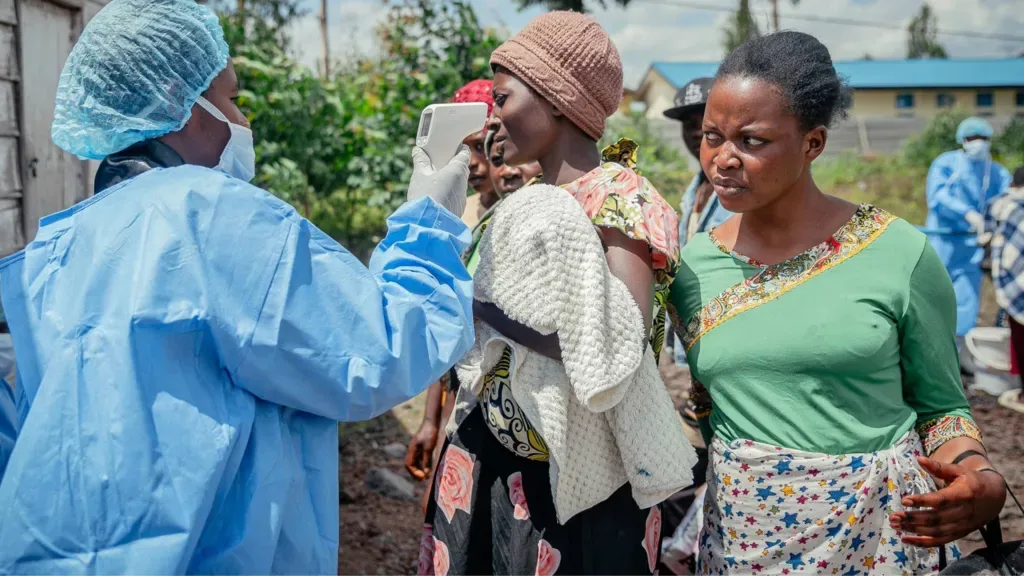
Life in Bunia is a strange mix of normalcy and caution. You see traders going about their business and children moving through the streets, yet the shadow of the virus is everywhere. At the airport, travellers are forced to wash their hands with soap and water before they can go anywhere. Public health messages are blasting over the radio and playing on TV in local languages to ensure no one misses the warning. The residents are taking these precautions seriously, which has reduced the number of cases.
Global Ripples of Fear
The reach of this outbreak isn't limited to the African continent. Health authorities in Brazil are currently isolating a 37-year-old man in São Paulo who recently returned from the DR Congo. He is showing symptoms that match the virus, and the world is watching to see if this triggers a wider scare. This development highlights just how quickly an outbreak in a remote province can become a national emergency thousands of miles away. It's a stark reminder that in our connected world, borders no longer protect us from global health crises.
- Total suspected cases: Over 1,000
- Total deaths in DR Congo: 246
- Confirmed cases in Uganda: 9
- Deaths in Uganda: 1
- Vaccine status: None proven for Bundibugyo strain
Health experts stress that the virus often jumps from animals to humans, particularly through the consumption of fruit bats or other bushmeat. Once a person is infected, it spreads through blood, vomit, sweat, or even contaminated bedding. If the response doesn't speed up soon, the number of untraced cases will continue to rise, making the final death count impossible to predict. This could lead to more people dying, making the situation even more devastating.