

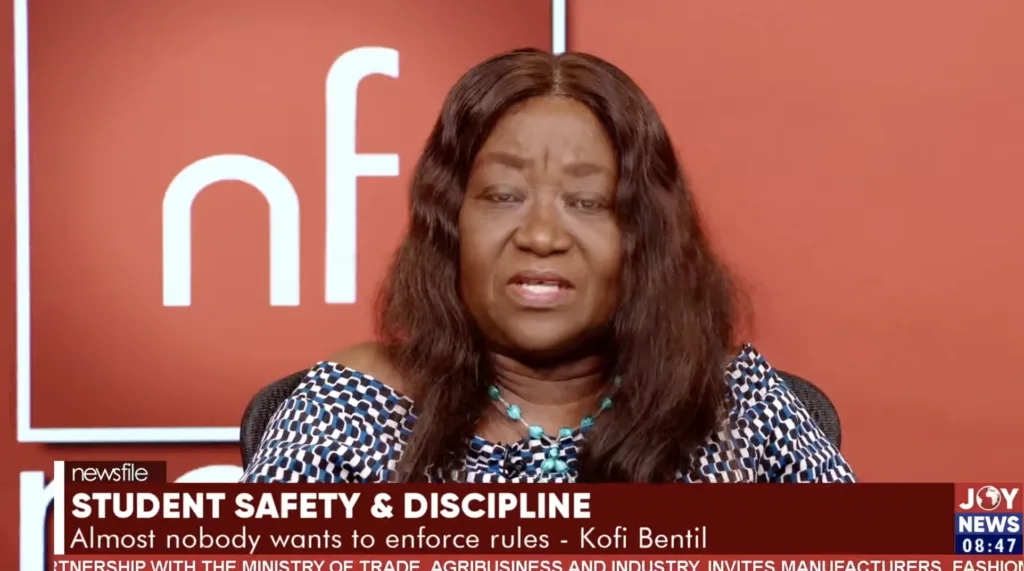
Ghanaian lawyer Gloria Ofori-Boadu has called for a comprehensive security policy across Ghana's university campuses after witnessing the level of insecurity students face firsthand. The managing legal practitioner of GOB Law Consult made the remarks on Newsfile, joining a broader conversation on student safety in the country.
Gloria Ofori-Boadu's shocking experience near the Kwame Nkrumah University of Science and Technology campus in Kumasi was a sobering reminder of the dangers students face every day. She said motorbike riders constantly harass and threaten road users, sometimes snatching bags or physically assaulting pedestrians. KNUST has recorded the highest number of student casualties, and Ofori-Boadu attributes this to the lawless environment surrounding the campus.
Ghana's tertiary institutions are supposed to provide a safe and conducive environment for learning, but the reality on the ground paints a different picture. As Ofori-Boadu noted, university authorities and government must take immediate action to institute formal security policies at their institutions. Mandatory orientation sessions should be held to educate incoming students on how to protect themselves.
Female students are particularly vulnerable in unsafe campus environments, and Ofori-Boadu urged that they be trained in basic personal safety responses. She advised that they be taught to scream, fight, and run if confronted by an attacker. Beyond physical safety, the lawyer also raised concerns about cybersecurity, calling for ethics education and digital safety policies to be integrated into student orientation programmes across the country's universities.
The absence of private sector development is leaving thousands of highly qualified young people idle at home, waiting for the public sector to absorb them. Ofori-Boadu argued that the public sector, which employs only around ten to twelve percent of the population, cannot absorb the volume of graduates being produced. The private sector is being neglected and, in some cases, actively undermined.
Ghana's education system has lost foundational safety education, such as road safety education, and Ofori-Boadu called for holistic interventions at all levels of the system. Student vulnerability is compounded by inadequate basic training, and the lawyer urged policymakers to implement comprehensive security policies.
"I'm so shocked as I'm sitting here — can we have a university campus, all this infrastructure, and there's no security?"
Ofori-Boadu has drawn attention to a critical issue that has been ignored for too long. Her revelations serve as a wake-up call for policymakers to take immediate action and ensure that university campuses are safe for all students.
Ghana's education system is failing its students on multiple fronts. The lack of security measures has created an environment where students are vulnerable to harassment, assault, and other forms of exploitation. It is imperative that policymakers address this issue urgently.
In a conversation on Newsfile, Gloria Ofori-Boadu's colleague, a security expert, echoed her concerns. He noted that university campuses were breeding grounds for crime and that it was high time for authorities to intervene.
The death of a student from Mfantsipim, the sex tape scandal involving a teacher and a student from Bole Senior High School, and the murder of an Innocentia Avinu, a Level 200 University of Cape Coast student, have all contributed to a heightened sense of insecurity on Ghana's university campuses.
Ofori-Boadu has called for a more holistic approach to addressing student safety, including training students in basic personal safety responses, and integrating ethics education and digital safety policies into student orientation programmes.
### Key Facts:
- Gloria Ofori-Boadu has called for a comprehensive security policy across Ghana's university campuses.
- The managing legal practitioner of GOB Law Consult made the remarks on Newsfile, joining a broader conversation on student safety.
- Gloria Ofori-Boadu witnessed motorbike riders harassing her taxi driver on two separate occasions during a single trip to Kumasi.
- KNUST has recorded the highest number of student casualties, and Ofori-Boadu attributes this to the lawless environment surrounding the campus.
- Ofori-Boadu urged that female students be trained in basic personal safety responses.
- The private sector is being neglected and, in some cases, actively undermined.
- Ghana's education system has lost foundational safety education, such as road safety education.