

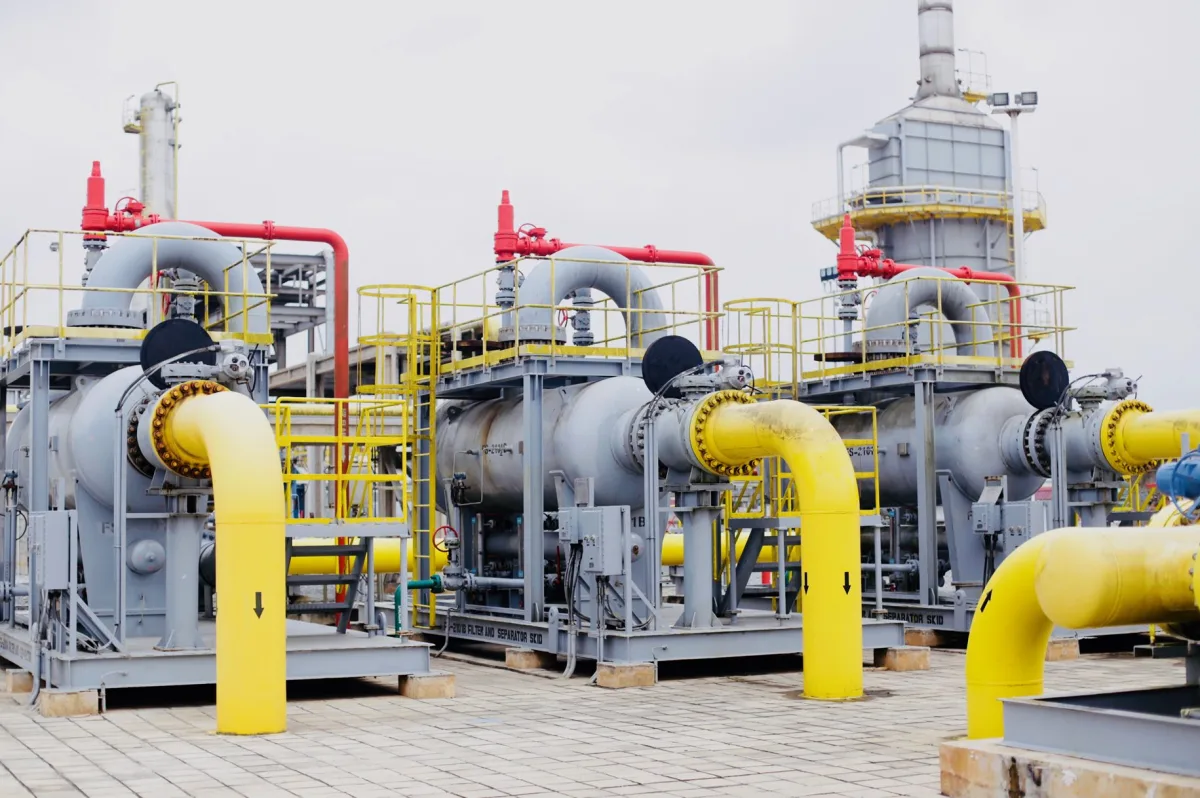
The decision by the Tema Oil Refinery (TOR) to refine crude from Ghana's Jubilee Field has been hailed as a major structural reform that could reduce pressure on the cedi and make the economy more resilient against global shocks.
Prof. Festus Ebo Turkson, an economist, believes that Ghana must seize the current period of economic stability to undertake long-term structural reforms instead of waiting for another crisis. In an interview on Joy News' PM Express Business Edition, he emphasized that resilience will come with a structural change.
According to Prof. Turkson, TOR's return to refining locally produced crude oil is a significant development. "I was excited to see that TOR has received some oil from our Jubilee fields to refine," he said. "That is a structural change. That is a change that is going to allow us to reduce our import of refined oil. That change will put less burden on the cedi."
Prof. Turkson pointed out that a stronger cedi would have ripple effects across the economy. "And if the cedi is relatively stable, inflation is low, the monetary policy rate is low, and interest rates are declining. That is a sort of environment that will allow businesses to expand," he said.
The economist identified affordable electricity as another critical ingredient for industrial growth. He warned that high energy costs make local manufacturers less competitive and increase dependence on imports. "When it is because of coal, they are not competitive, and they wind up. It is going to increase the pressure on the cedi because we need to import what they produce," he said.
Prof. Turkson also emphasized the importance of stronger reserve levels, improved fiscal management, and lower public debt in creating an ideal environment for the government to invest in roads, railways, and other infrastructure to expand production and reduce business costs.
"We are enjoying stability, and we need to build resilience. Resilience will come with a structural change," said Prof. Festus Ebo Turkson.
Prof. Turkson pointed out that local manufacturers are already exporting quality products, which is evidence that Ghana can transform its economy through industrialisation. "I'm excited that a company is done and is producing quality cows that are being exported out of them. This is the sort of transformation we need in the manufacturing sector," he said.
The Jubilee Field is Ghana's first oil field to produce crude oil, which began in 2010. The oil field is operated by Ghana National Petroleum Corporation (GNPC) in partnership with Tullow Oil, Anadarko Petroleum, and Kosmos Energy.
The Jubilee Field has produced over 200 million barrels of oil since its inception in 2010. The development of the oil field has been a major boost to Ghana's economy, generating revenue and creating jobs for Ghanaians.
The decision by TOR to refine crude from the Jubilee Field is a significant step towards reducing Ghana's dependence on imported refined oil. With a domestic refinery, Ghana can reduce its reliance on imported refined oil, thereby reducing the pressure on the cedi.
Ghana's economy is heavily dependent on oil exports, with oil revenues accounting for a significant proportion of the country's GDP. The decision by TOR to refine crude from the Jubilee Field could help reduce Ghana's exposure to fluctuations in global oil prices.
The Jubilee Field is a significant contributor to Ghana's oil production, with an estimated 600 million barrels of oil reserves.
Prof. Festus Ebo Turkson emphasized that the current economic stability provides an opportunity for Ghana to undertake long-term structural reforms. He expressed optimism that the decision by TOR to refine crude from the Jubilee Field is a step in the right direction, which could reduce pressure on the cedi and make the economy more resilient.
Key Facts
- TOR has started refining crude oil from the Jubilee Field.
- The Jubilee Field is Ghana's first oil field to produce crude oil.
- Over 200 million barrels of oil have been produced from the Jubilee Field since 2010.
- The Jubilee Field has an estimated 600 million barrels of oil reserves.
- TOR's decision to refine crude from the Jubilee Field could reduce Ghana's dependence on imported refined oil.
- A stronger cedi would have ripple effects across the economy, including lower inflation, lower monetary policy rate, and lower interest rates.